


Ultherapy Prime vs. Thermage FLX: What Are the Differences, and When Should They Be Combined?
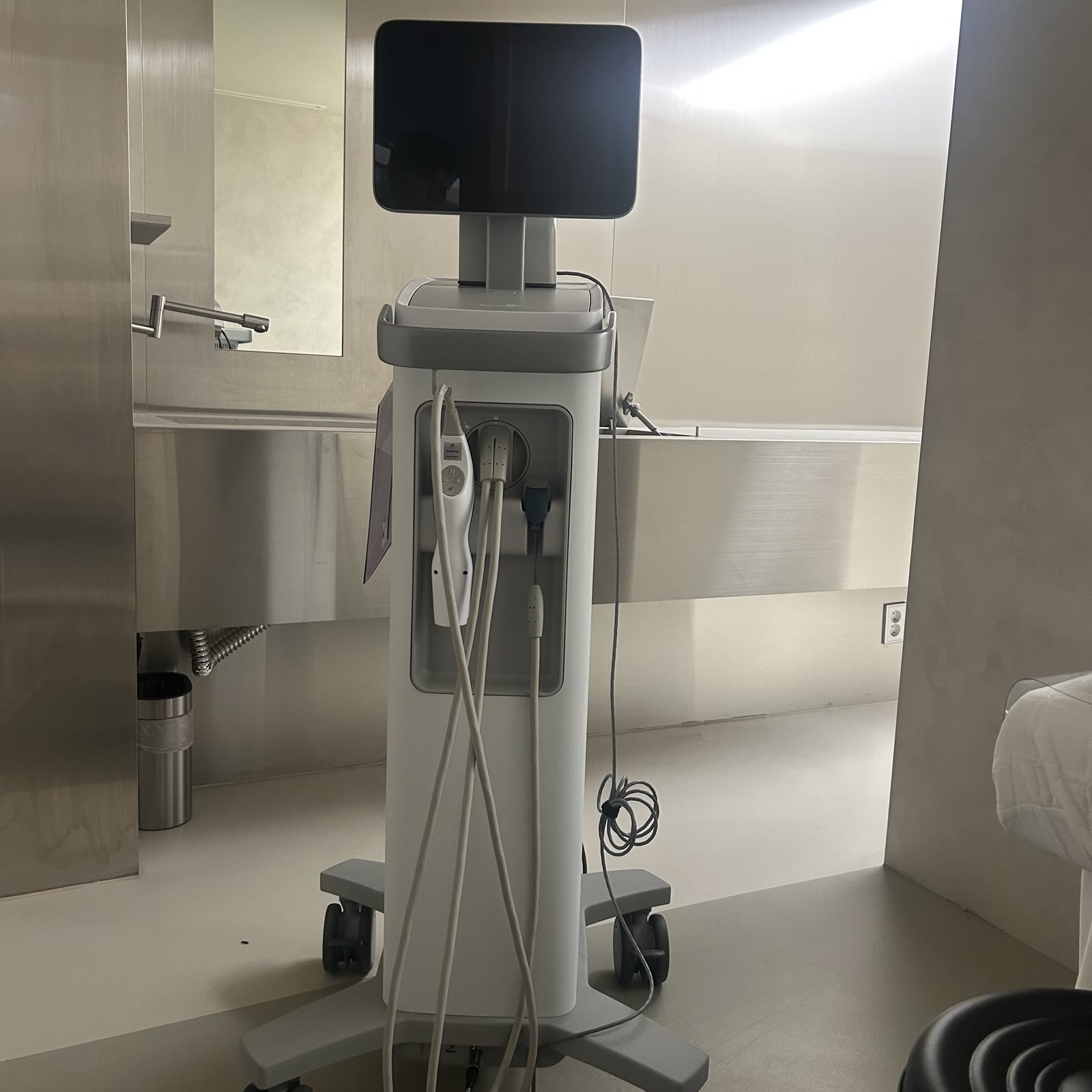
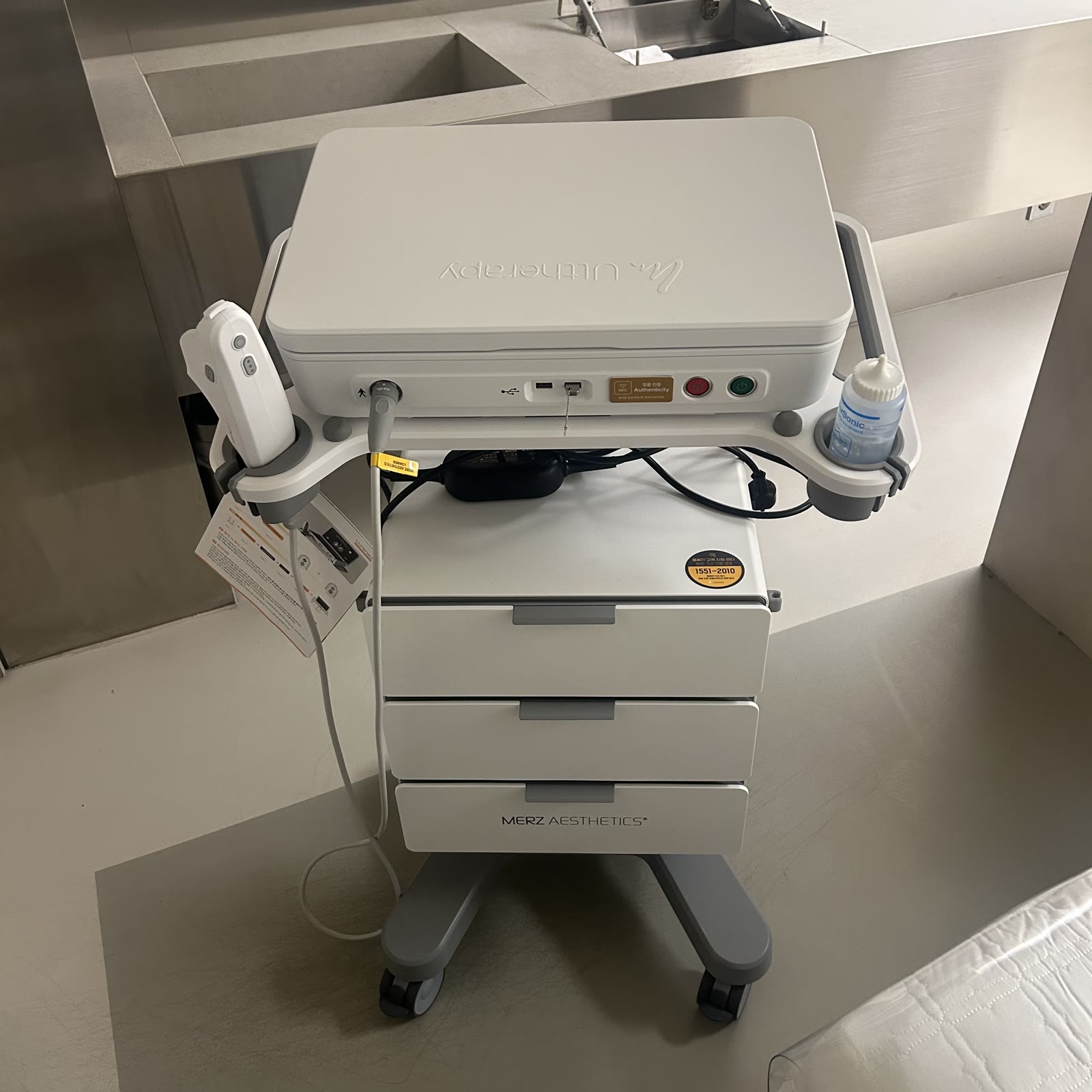
Ultherapy Prime uses focused ultrasound to create small thermal coagulation points at a set depth, while Thermage FLX uses monopolar radiofrequency to heat the dermis across the surface the tip contacts.
Both devices rely on the process by which heated tissue produces new collagen, but they differ in the shape of the heat and the layer it reaches. The starting point therefore depends on whether deeper-layer sagging, such as along the jawline and under the chin, is the priority, or whether thinning, loosened skin itself comes first. When both concerns are present in the same face, dividing the work between the two devices is what Ulthermage offers.
How the two devices work
Ultherapy PRIME
- Fixed-depth tips: Tips with fixed focal depths of 1.5mm, 3.0mm, and 4.5mm are selected. Targeting the dermis and the fascial (SMAS) layer, they leave thermal coagulation points in a dotted pattern.
- Image-guided treatment: Ultrasound imaging down to 8mm beneath the skin is used to confirm that the tip is properly in contact and the depth is correct.
Thermage FLX
- 6.78MHz monopolar radiofrequency: When radiofrequency is delivered through a single-use tip, heat is generated by the resistance of tissue within the skin. Rather than points, it heats the entire surface the tip contacts.
- Cooling and automatic adjustment: Heat is delivered while a coolant cools the epidermis. The device detects skin contact and adjusts energy to the skin's resistance, and a vibration function is also used.
- Tips by area: A 4.0cm² tip is used for the full face, and a dedicated eye tip for the eyelids and eye area.
Ultherapy Prime vs. Thermage FLX
| Category | Ultherapy PRIME | Thermage FLX |
|---|---|---|
| Shape of heat generated | Small points at a set depth | Broadly along the surface the tip touches |
| Primary concerns addressed | Sagging of the jawline, under the chin and neck, and brows | Fine lines, loosened skin, skin around the eyes |
| Monitoring during treatment | Ultrasound imaging down to 8mm below the skin | Skin contact detection and automatic energy adjustment |
| Anesthesia | Numbing Cream | Topical anesthetic, approx. 30–60 minutes |
| Common reactions after treatment | Throbbing, slight swelling, bruising, and redness for a few days | Redness and swelling |
| When changes appear | Gradually over 1 to 2 months | Progressively over 2 to 4 months |
| Retreatment interval | Typically 6 months–1 year | Maintenance treatment about once a year |
How to choose by concern
1. Faces where jawline and under-chin sagging come first
- Recommended device: Ultherapy Prime
- Recommended interval: typically every 6 months to 1 year
- Characteristics: We look at deeper-layer sagging, such as a blurred jawline, a sense of loosening under the chin and neck, or drooping brows. The US clearance documentation also lists lifting of lax tissue of the brow, under the chin, and neck as indicated uses.
2. Faces where fine lines and loosened skin come first
- Recommended device: Thermage FLX
- Recommended frequency: about once a year
- Characteristics: We look at facial skin that feels thinner and looser, and laxity of the skin around the eyes. The eye area is treated separately with a dedicated eye tip.
3. Faces with both sagging and loss of elasticity
- Recommended options: Ulthermage (Thermage FLX 300 shots with Ultherapy Prime 300 shots; Ultherapy Prime 300 shots with Thermage FLX 600 shots; or 600 shots of each device)
- Characteristics: We decide which device to use for each area and plan around how far the heat from the two devices overlaps in the same spot.
4. Faces with little facial volume or hollow-looking cheeks
- Characteristics: Whichever device is used, areas and intensity are chosen with extra care. Other treatments may be considered for comparison if needed.
Combining the two does not necessarily double the change or make it last longer. For this reason, Ulthermage is chosen only after confirming that both concerns are present.
Treatment process
For Ultherapy Prime, after a personalized consultation, you cleanse your face yourself and topical anesthetic cream is applied before treatment. The whole process takes about 1 hour, and you can return to daily life immediately afterward. For Thermage FLX, photos are taken before treatment, topical anesthetic cream is applied for about 30–60 minutes, and the treatment finishes with soothing care.
Precautions on the Day of Treatment (The Most Important 24 Hours)
- After Ultherapy Prime, you may wash your face and apply makeup right away. For 3 days, please cleanse with a gentle cleanser and lukewarm water.
- On the day of Thermage FLX, avoid hot saunas, alcohol, and strenuous exercise.
What to Avoid for One Week
- Treatments that irritate the skin, such as peels and scrubs
- Sauna and alcohol after Ultherapy Prime
Post-Treatment Care
- Moisturize generously, and apply sunscreen every time you go out.
- In rare cases, marks that look like white lines (white stripes) may appear after ultrasound treatment, and burns with blisters may occur after radiofrequency treatment. If you notice blisters, redness and swelling that worsen day by day, white line marks, or persistent numbness, please contact us right away.
- If you have an implanted electrical device such as a pacemaker or defibrillator, be sure to tell us before treatment. We also check in advance whether you are pregnant or breastfeeding, any medications you are taking, allergies, and any tendency toward keloids.
Booking and consultation
FACEFILTER Clinic Suwon offers Ultherapy Prime and Thermage FLX in 300 shots, 600 shots, and 1200 shots each, and the 1200 shots can be split across 2 sessions. During your personalized consultation, we look at where sagging appears and how thick your skin is to decide whether to use one device or combine both as Ulthermage.
View Ulthera treatment information
This content is provided as general treatment information and is not a substitute for diagnosis or treatment. Always consult a medical professional to decide whether and how to proceed with a treatment.