


Ulthera vs. ONDA lifting: how do they differ in mechanism, anesthesia, and recovery?
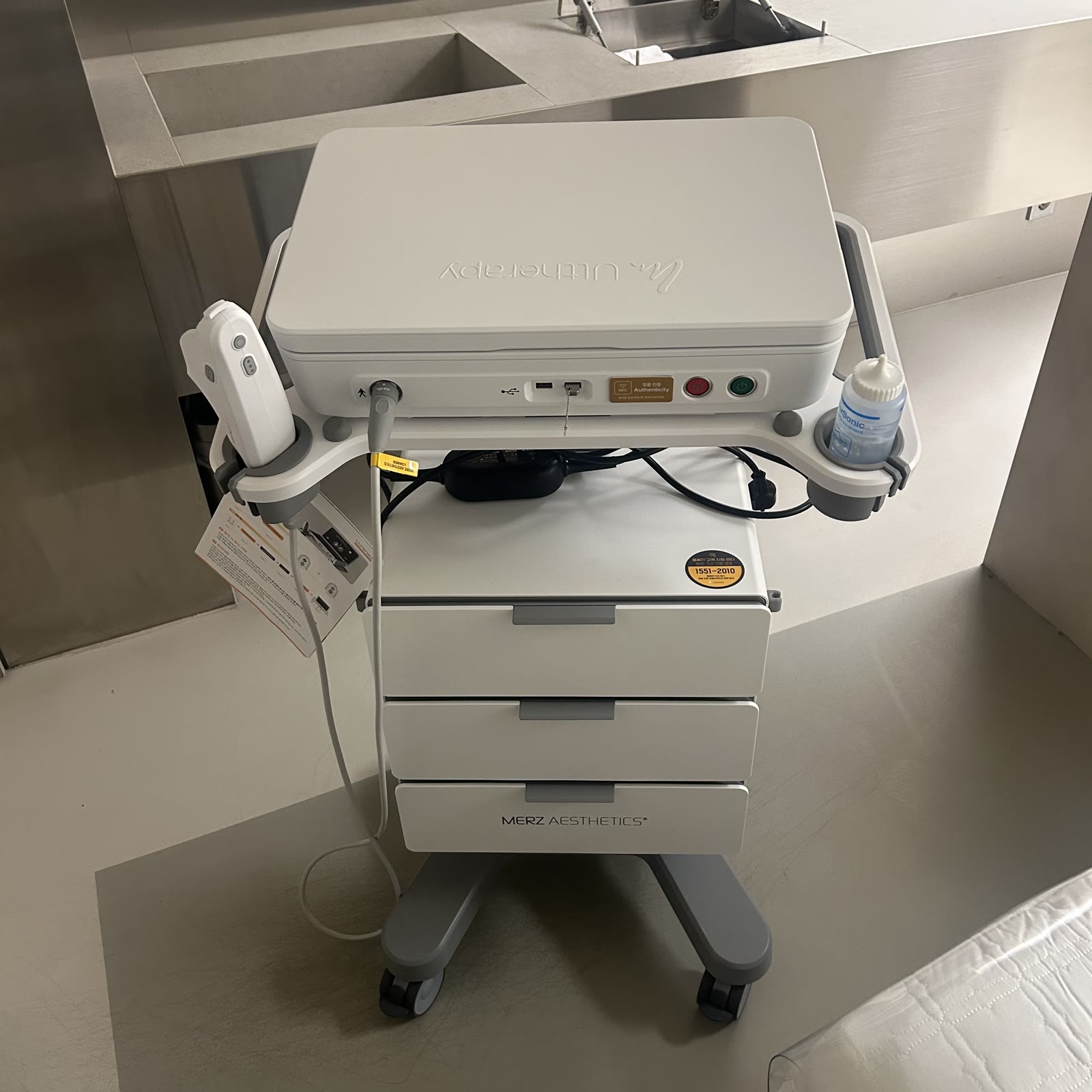
Ulthera focuses ultrasound onto single points in deep layers including the fascia (SMAS), while ONDA uses 2.45GHz microwaves to broadly warm the dermis and subcutaneous fat layer.
Both are lifting treatments that generate heat beneath the skin, but they differ in energy type and the layers they reach, as well as in anesthesia and the flow of the treatment day. Rather than one being the right answer, which device to consider first depends on whether your main concern is deep sagging, fat, or loose skin.
How the two devices work
Ulthera
- Focused ultrasound: A device made by Merz Aesthetics that concentrates high-intensity ultrasound onto a single point to create thermal stimulation points.
- Three depths: The manufacturer states that energy can be focused at depths of 1.5mm, 3.0mm, and 4.5mm, reaching the dermis and the fibromuscular layer including the fascia (SMAS).
- Imaging check: The depth is selected while viewing the layers beneath the skin on the treatment screen.
ONDA
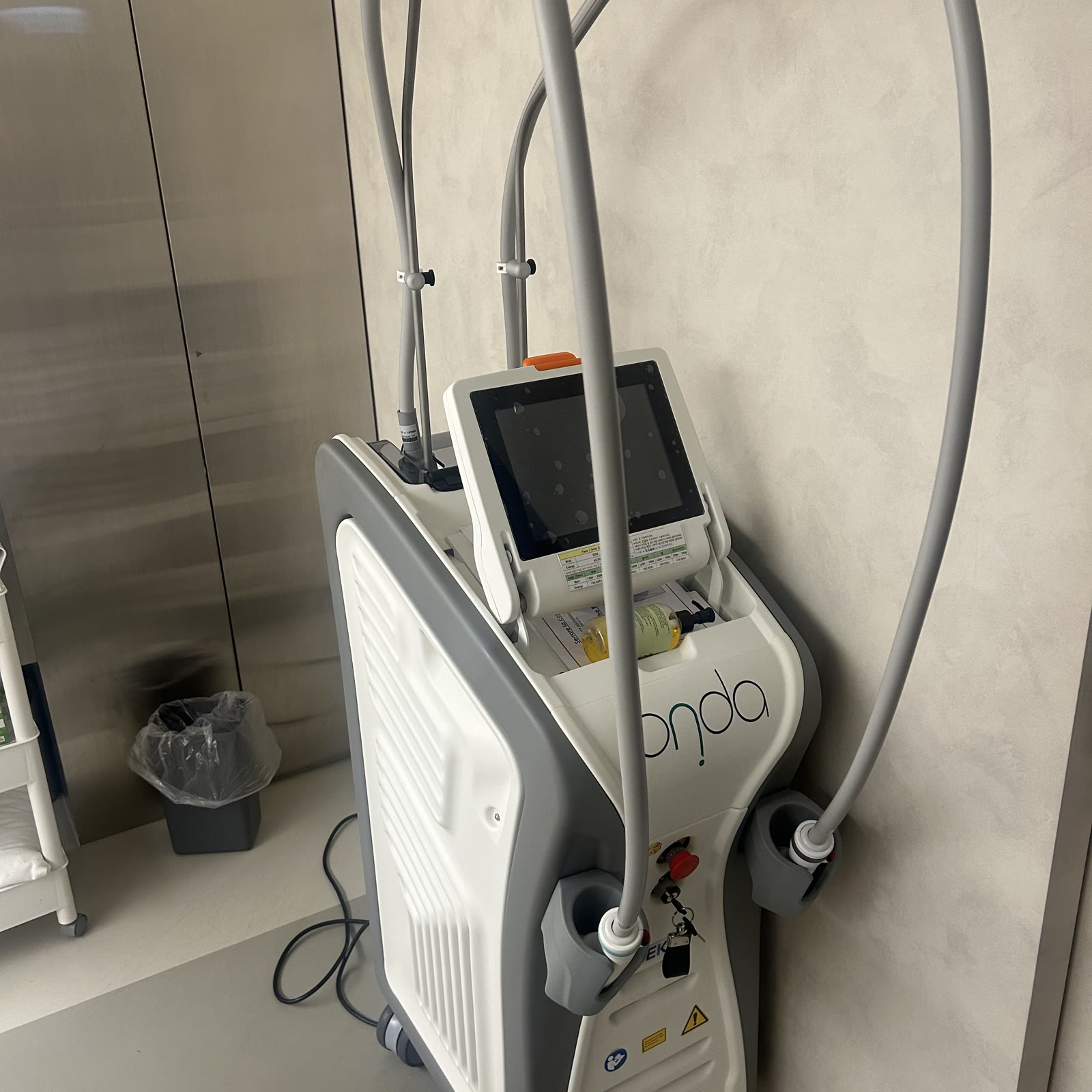
- Microwaves: A device by DEKA that uses 2.45GHz microwaves under the name Coolwaves.
- Fat layer and dermis: According to the manufacturer, heat is generated mainly in the subcutaneous fat tissue and also reaches the collagen fibers of the dermis.
- Surface cooling: A contact cooling system in the handpiece offsets heat at the skin surface.
Ulthera vs. ONDA comparison
| Category | Ulthera | ONDA |
|---|---|---|
| Energy | High-intensity focused ultrasound | 2.45GHz microwave |
| Main layer reached | Deep layers including the SMAS layer | Dermis and subcutaneous fat layer |
| How energy is delivered | Focuses on a single point to create thermal points | Moves the handpiece to deliver heat over a wide area |
| Selecting depth | 1.5mm, 3.0mm, 4.5mm tips | 3mm, 7mm handpieces |
| Sensation and anesthesia | Performed after numbing cream | Can be performed without anesthesia; warmth felt beneath the skin |
| Return to daily life | Possible right away; some throbbing or slight swelling may remain for a few days | Return possible immediately afterward; redness and warmth may linger briefly |
| Seeing changes | Gradually over 1 to 2 months | Assessed by monitoring the skin's response at each session |
| Unit for measuring the amount | Shots | kJ (kilojoules) |
When both may be considered together
If your concerns span several layers, we consider both treatments together; if only one is clearly prominent, we plan with a single treatment.
- If deep sagging is the main concern, we consider Ulthera first.
- If fat and loose skin are the main concerns, we consider ONDA first.
- If both concerns are present, we decide based on your skin condition whether to perform them on the same day or at an interval, and which to do first.
Aftercare
After Ulthera
- You may wash your face and apply makeup right away; for 3 days, cleanse with a gentle, low-irritation cleanser and lukewarm water.
- Avoid saunas, drinking, peeling treatments, and scrub products for about 1 week.
- Apply sunscreen and moisturizer thoroughly.
After ONDA
- On the day of treatment and for a few days afterward, wash gently with lukewarm water and avoid scrubs and deep-cleansing products.
- For about a week, avoid saunas, jjimjilbang (Korean spas), hot baths, strenuous exercise, alcohol, and smoking.
- As your skin may become dry, apply moisturizing cream and repair cream generously.
Please let us know before treatment
- If you are pregnant or breastfeeding
- If you have a pacemaker or metal implants
- If there are wounds or inflammation in the treatment area, or if you are prone to keloids
- If you have recently received fillers or other energy-based treatments in the same area
In rare cases, white lines (white stripes) may appear after Ulthera. If swelling and pain worsen day by day, or if blistering, white lines, or abnormal sensations persist, please contact us immediately.
Booking and consultation
Face Filter Clinic Suwon offers Ulthera as Ultherapy Prime in 300 shots, 600 shots, and 1200 shots, and ONDA for double chin and jawline at 20kJ, and full face at 40kJ, 60kJ, and 80kJ. During a personalized consultation, we assess the degree of sagging, fat distribution, and skin thickness to decide which treatment to consider first.
View Ulthera treatment information
This content is provided as general treatment information and is not a substitute for diagnosis or treatment. Always consult a medical professional to decide whether and how to proceed with a treatment.