


ONDA lifting design: how are areas, depth, and kJ decided?
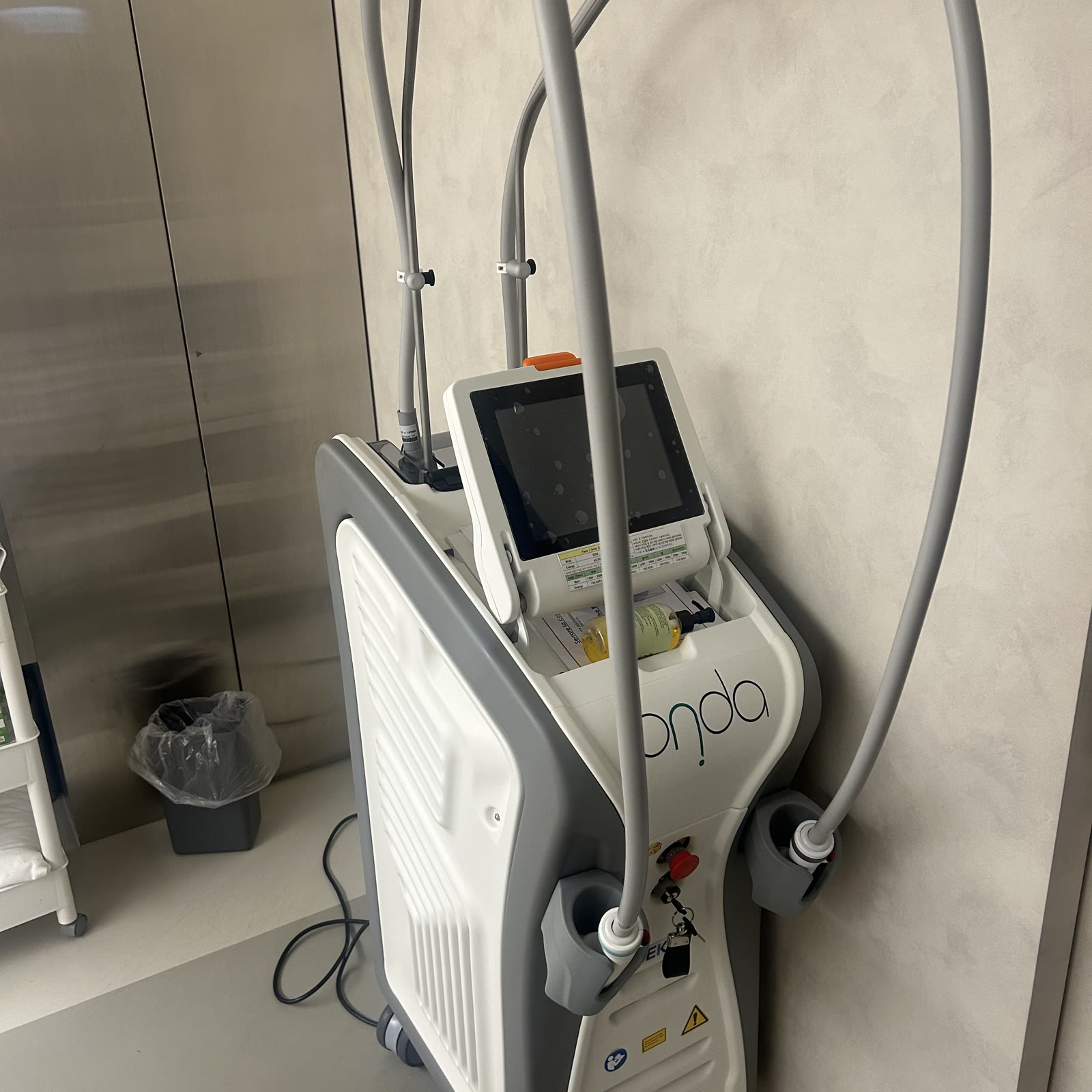
ONDA lifting design means deciding which areas of the face, at what depth, and how many kJ of energy to distribute.
ONDA is not a device that fires point by point; it emits microwaves as the handpiece moves across the skin. So the standard is how much energy went into an area, not how many times it was fired. Even with the same total, the effect on the face differs depending on whether it is concentrated under the chin or divided between the jawline and cheeks.
Why the amount is measured in kJ
- Energy unit: ONDA's amount is measured in kilojoules (kJ). Rather than converting to shots for comparison, we look at the amount of energy delivered to each area.
- Too little vs. too much: If energy is insufficient, the desired thermal response is hard to build up. Conversely, delivering a lot to areas with little fat may reduce volume and make them look hollow.
- Total and distribution: A larger total kJ does not mean a proportionally larger change. The core of the design is how the same total is divided among areas.
Facial conditions assessed before planning
- The amount of double chin and under-chin fat
- How heavy the cheeks and lower face look
- Skin thickness and the degree of lost elasticity
- Whether any area, such as the cheeks, is already hollow
- Previous lifting or fat-related treatments
Design approach by face type
| Face type | Main handpiece | Energy distribution | Points of caution |
|---|---|---|---|
| A thin face with hollow cheeks | 3mm, targeting the dermis | Avoid hollow areas or keep energy low there; fat-layer energy only where fat is confirmed, such as under the chin | Avoid making volume look further reduced |
| A face with both cheek fullness and loss of elasticity | 3mm and 7mm by area | Distribute separately between areas with fat and areas with reduced elasticity | Avoid repeating only one depth |
| A face with a clear double chin and a heavy lower face | 7mm, targeting the subcutaneous fat layer | Treating the under-chin, jawline, and lower cheeks as separate areas, each in its own way | Avoiding low energy alone where fat is thick |
If only your double chin concerns you, you can narrow the scope to the 20kJ option covering just the double chin or jawline.
Handpiece allocation and adjustments during treatment
Per our treatment guidelines, the 3mm handpiece targets the dermis and the 7mm handpiece targets the subcutaneous fat layer. Allocation is determined in the following order.
- Decide whether to treat the under-chin and jawline as one area or separately.
- Decide whether to avoid areas prone to hollowing or to lower the energy there.
- Determine which handpiece addresses the fat and which addresses the skin laxity of the double chin.
- Decide whether to vary the depth by area.
During treatment, we adjust the speed and direction of handpiece movement while monitoring warmth and redness. Moving too quickly may not build up enough heat, while lingering in one spot can cause heat to concentrate.
How to read the kJ options
| Extent | Energy amount | Sessions |
|---|---|---|
| Face Double chin, Jawline | 20kJ | 1 session |
| Face Full face | 40kJ | 1 or 3 sessions |
| Face Full face | 60kJ | 1 or 3 sessions |
| Face Full face | 80kJ | 1 session |
| Body Small area | 40kJ | 1 or 3 sessions |
| Body 1 area | 80kJ | 1 or 3 sessions |
The kJ in the table is the total for the entire option. Even if you choose the 60kJ full face, how many kJ go to the under-chin, jawline, and cheeks is decided only after examining your face in person.
What to check after treatment
- Right after treatment: Redness, warmth, mild swelling, or soreness when pressed may occur, and these mostly subside over time.
- For one week: Avoid saunas, hot baths, strenuous exercise, alcohol, and smoking, and apply moisturizing and repair creams generously.
- Contact us right away if: If blisters form, or redness and pain worsen day by day, please contact us right away.
Please let us know before treatment if you are pregnant, have an implanted electronic medical device such as a pacemaker, have inflammation or wounds in the treatment area, or have recently had fillers or another lifting treatment in the same area.
Booking and consultation
Facefilter Clinic Suwon offers ONDA in 20kJ for the double chin and jawline, 40kJ to 80kJ for the full face, and small-area and 1-area options for the body. During a personalized consultation, we assess skin thickness, fat distribution, and the degree of sagging to determine the kJ and handpiece for each area.
This content is provided as general treatment information and is not a substitute for diagnosis or treatment. Always consult a medical professional to decide whether and how to proceed with a treatment.