


MINT Thread Lifting vs. Device Lifting: How Do the Selection Criteria Differ?
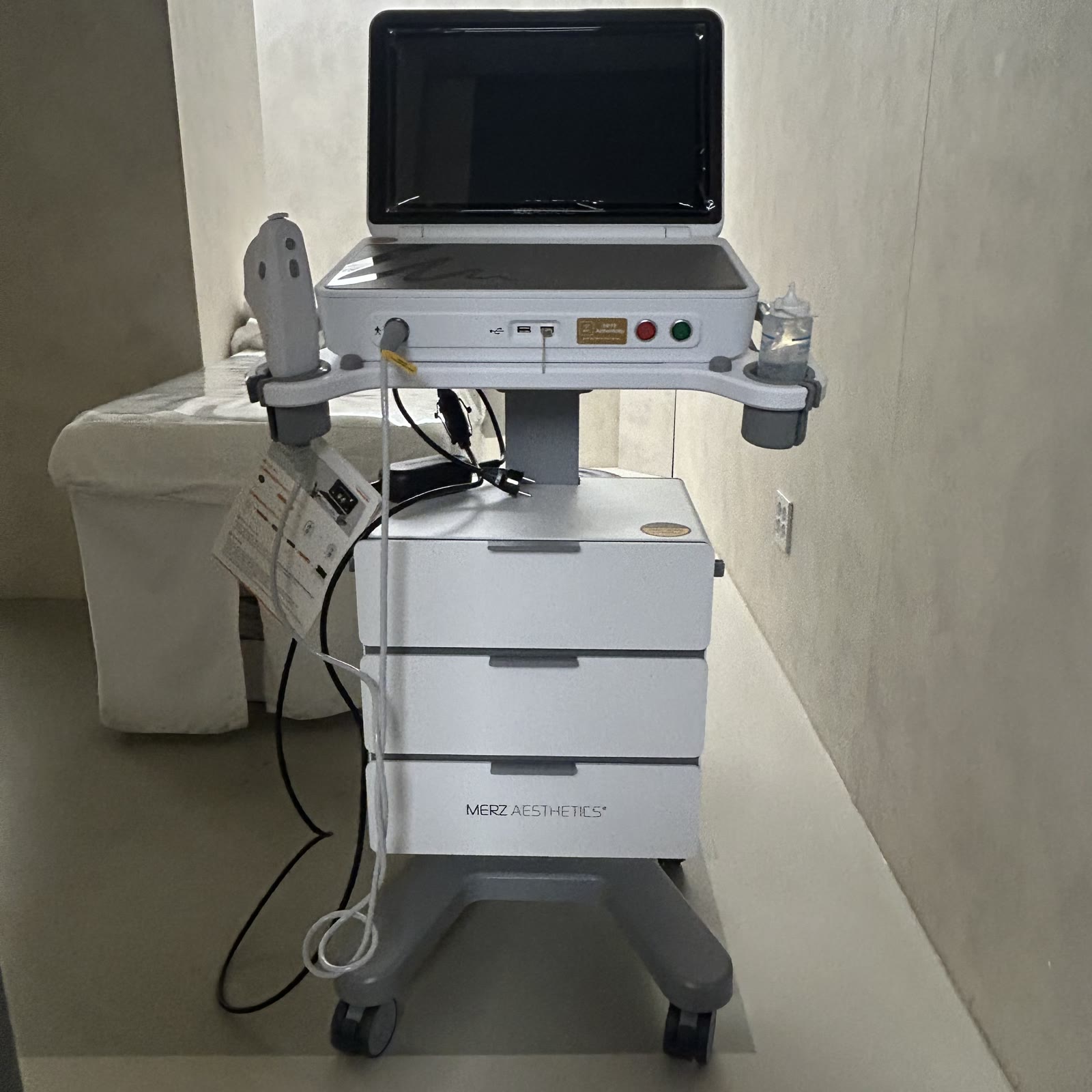
MINT threads hook sagging tissue with their barbs and reposition it, while device lifting tightens the inner layers of the skin with ultrasound or radiofrequency heat.
So rather than going by device names, the choice is based on the location and degree of sagging, skin thickness, and how much time you can set aside for recovery. Neither method is inherently superior, and the two are sometimes planned together.
How MINT thread lifting works
- 3D barbs: The barbs (cogs) are formed by pressing the thread without cutting it or applying heat. Firm 3D barbs are arranged in a spiral around the thread, hooking and lifting sagging tissue from multiple directions.
- Dissolvable thread: Made of PDO, it dissolves and is absorbed by the body over time, and in the process collagen production is stimulated.
- Insertion depth: The manufacturer specifies placement in the subcutaneous layer or the fascial (SMAS) layer, deeper than the dermis. It describes the product as a PDO thread approved by Korea's Ministry of Food and Drug Safety for facial tissue fixation.
How device-based lifting works
- Ultrasound: High-intensity focused ultrasound converges on a single point beneath the skin to generate heat in the fascial (SMAS) layer. The Ulthera manufacturer specifies three depths—1.5mm, 3.0mm and 4.5mm—with 4.5mm corresponding to the fascial layer.
- Radiofrequency: Radiofrequency energy is delivered deep into the dermis to contract collagen and stimulate regeneration.
- Microwaves: ONDA uses 2.45GHz microwaves to deliver heat to the dermis and the subcutaneous fat layer.
Differences between MINT threads and device-based lifting
| Category | MINT threads | Ultrasound lifting | Radiofrequency lifting |
|---|---|---|---|
| Suwon clinic device | MINT threads, per thread | Ulthera, Shurink Universe, LinearZ | Thermage FLX, ALLTITE, Density, TUNE Face, InMode |
| Main layer reached | Subcutaneous or SMAS layer | SMAS layer | Dermis, and the subcutaneous fat layer for some devices |
| Anesthesia | Numbing cream and local anesthesia | Numbing cream; LinearZ may be done without anesthesia | Varies by device; Thermage FLX uses numbing cream |
| Daily life after treatment | Face washing and makeup after 2~3 hours; bruising and swelling mostly subside within 1 to 2 weeks | Ulthera and Shurink Universe: daily activities right away | Density, TUNE Face, and InMode: daily activities right away |
| Longer-term precautions | Avoid opening the mouth wide for 4 weeks | For Ulthera, avoid saunas, alcohol and peels for 1 week | For Thermage FLX, pause peels and scrubs for one week |
Four criteria for choosing
- Degree and location of sagging: We distinguish whether the goal is to reposition tissue that has descended, such as the cheeks or jawline, or to first address skin that has thinned and lost elasticity.
- Skin thickness and fat volume: We assess whether the area is weighed down by fat, or whether the skin is thin and the deeper layers need tightening.
- Time available for recovery: With thread lifting, your schedule needs to allow time for bruising and swelling to subside and for a period of not opening the mouth wide.
- Scheduling with other treatments: If you are planning both approaches, we agree in advance on which comes first and the interval between them.
When to consider MINT threads first
- When descended tissue bothers you, such as cheek sagging, nasolabial folds or a blurred jawline
- When you want to lift sagging tissue but would prefer to avoid incisions or a long recovery
When to consider device-based lifting first
- When sagging or fine lines caused by reduced skin elasticity bother you
- When you need to return to daily life right after treatment
MINT thread treatment process
- Personalized Consultation
- Photos (Before Treatment)
- Numbing cream and local anesthesia
- Design
- Disinfection
- Treatment
- Photos (After Treatment)
We assess facial sagging and design the placement and direction of the threads before proceeding. Threads are counted individually, so the number is determined by the degree of sagging, and retreatment is discussed after bruising and swelling have subsided.
More on types of thread lifting
The day of treatment and the first 3 days
- You may wash your face and apply makeup after 2~3 hours; leave the DuoDERM applied to the treated area in place until it heals.
- Take the prescribed medication consistently for 3 days to help prevent inflammation and ease pain.
- For 3 days, apply gentle cold compresses to the treated area and sleep in an upright, neutral position.
What to avoid for one to 4 weeks
- For 7 days: heavy drinking, smoking, saunas and jjimjilbang, hot baths and strenuous exercise
- For 4 weeks: movements that open the mouth wide, such as yawning or laughing heartily
- If threads were placed in the double-chin area, forceful turning of the head
What to watch for during recovery
- Bruising, swelling, pain, a foreign-body sensation and a pulling feeling mostly subside within 1 to 2 weeks.
- If a thread protrudes from the skin or can be felt, or if the skin appears dimpled, please do not touch it and visit the clinic.
- If pain gradually worsens despite taking the prescribed medication, or if the skin changes colour or itching and warmth persist, please contact us immediately.
If you have a medical history such as an antibiotic allergy, are pregnant or breastfeeding, or are taking blood-thinning medication, please let us know before your treatment.
Booking and consultation
Face Filter Clinic Suwon performs MINT thread treatments in units of 1 thread and also offers consultations on device-based lifting such as Ulthera and Thermage FLX. During a personalized consultation, we look at where the sagging is and how thick your skin is to decide whether to start with threads or a device.
View MINT thread treatment information
This content is provided as general treatment information and is not a substitute for diagnosis or treatment. Always consult a medical professional to decide whether and how to proceed with a treatment.