


Ulthera and Thermage combo in Suwon: why get Ulthera and Thermage on the same day, and in what order?
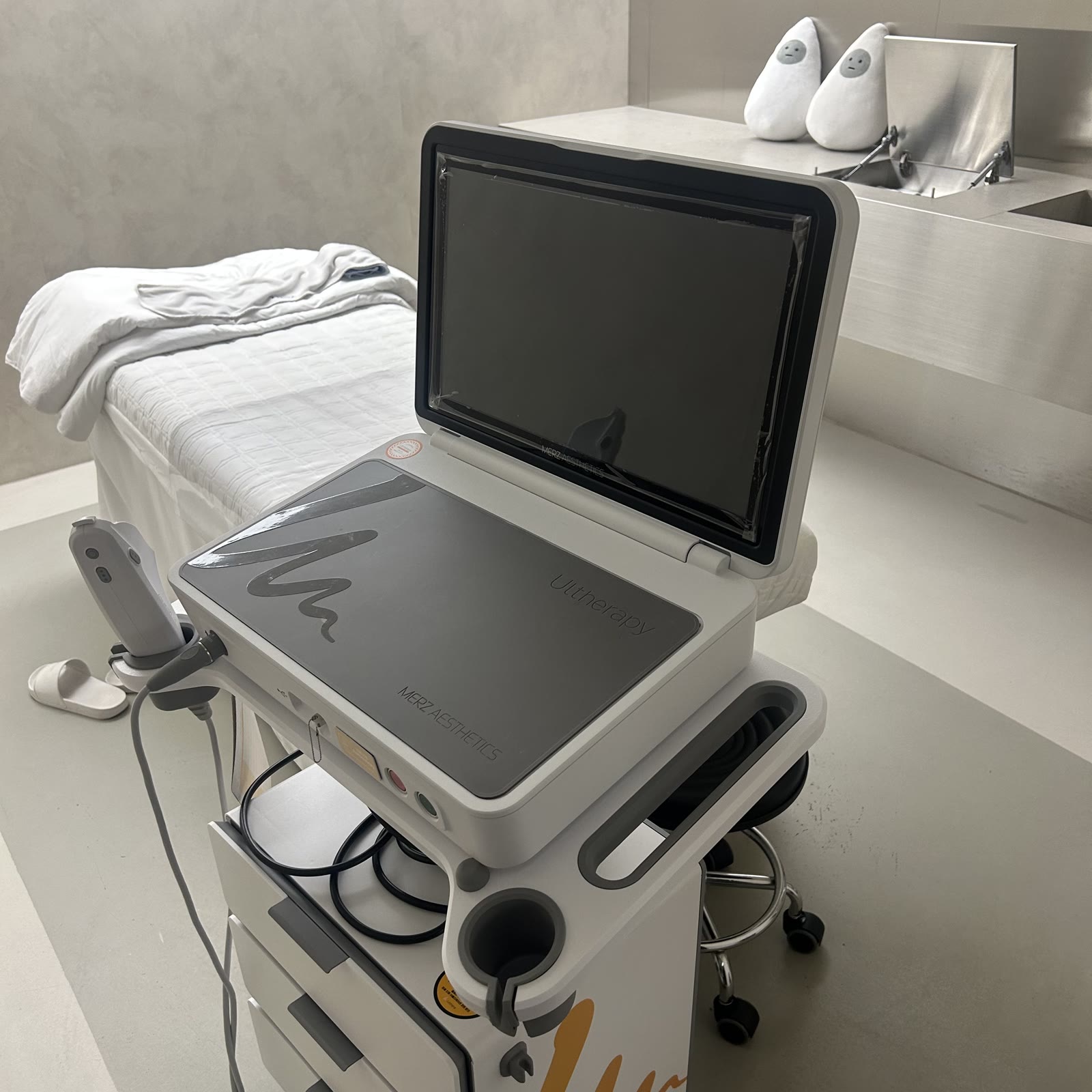
If sagging along your jawline and loss of skin elasticity both bother you and you are wondering whether to get Ulthera and Thermage at once, it is worth first checking which layers the two devices heat. The Ulthera and Thermage combo means receiving, back to back on the same day, Ulthera, which targets the fascia (SMAS) layer with ultrasound, and Thermage, which heats the entire dermis with radiofrequency.
The reason for getting the combo on the same day is to address the deep and shallow layers side by side in a single visit, and the order commonly described is to do Ulthera first, which treats the deep layer while viewing it on imaging. At our Suwon clinic, we first look at where the sagging is, the amount of facial fat, and skin thickness, then decide the order of the two devices and how to distribute shots.
In this article, we outline in turn why the Ulthera and Thermage combo is received together, how to tell faces suited to both from those suited to just one, the treatment steps, swelling and recovery care, side effects, and what to check before treatment.
Ulthera and Thermage combo: key points
- The combo means receiving Ulthera for the fascia layer and Thermage for the dermis back to back on the same day.
- When contour sagging and loss of skin elasticity are both present, the two layers are planned together.
- Both procedures are performed after numbing cream, and the order and the energy where they overlap are decided during examination.
- For the next treatment, Ulthera is considered at 6 months to 1 year and Thermage about once a year as the baseline.
Why are Ulthera and Thermage received together on the same day?
Two layers work together to make the face look saggy. When the fascia and the fat above it descend, the contours of the jawline and cheeks blur, and when collagen in the dermis decreases, the skin surface thins and fine lines and loose texture appear.
Ulthera leaves dot-shaped thermal points in the deep layers to address the structure that supports facial contours, while Thermage broadly heats the dermis to address surface elasticity. Because the layers the two devices reach do not overlap, on faces with both concerns, the two layers are planned on the same day, and with a single visit, the recovery period can also be spent all at once.
How do faces suited to the Ulthera and Thermage combo differ from those suited to just one?
The combo is not always the right answer. If skin texture and fine lines are the main concern, Thermage alone is enough, and if only contour sagging stands out, a plan with Ulthera alone is enough.
| Facial condition | Approach considered first |
|---|---|
| The jawline and cheeks have dropped, along with fine lines and loose texture | Plan Ulthera and Thermage on the same day |
| Main concern is sagging contours, with skin texture in good shape | Focus on Ulthera |
| Main concern is thinning skin and fine lines | Focus on Thermage |
| Cheeks or temples are already hollow | Reduce deep-layer energy and redistribute the shots |
During consultation, we also check whether there is enough fat when we hold the cheek, whether fine lines remain even when you are not smiling, and whether you have a photo shoot, event, or similar schedule within a few weeks after the procedure where swelling would be a concern.
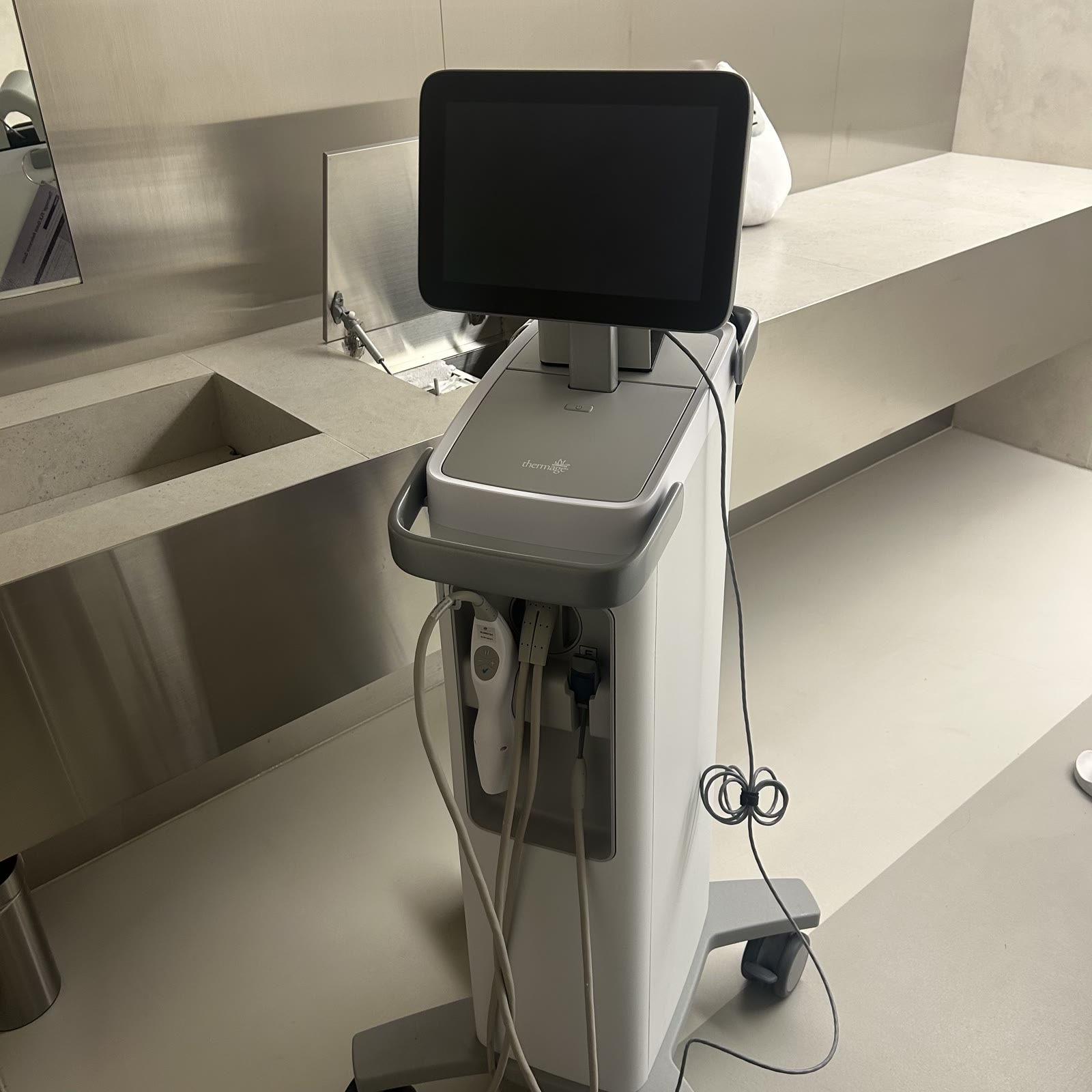
In what order is the Ulthera-Thermage combination performed?
Why Ulthera comes first
Ulthera delivers ultrasound to a targeted depth while viewing images of the inside of the skin on a monitor. If Thermage heat goes in first, the tissue swells and warms, which can reduce the precision of reading the layers and targeting them, so the order that treats the deep layer first and heats the dermis afterward is generally described as the standard. If your skin is thin and sensitive to heat, we lower the energy where the two devices overlap or divide the treatment areas.
Treatment steps at our Suwon clinic
- Personalized Consultation
- Self-Cleansing
- Numbing Cream
- Treatment
- Finishing Care
The order above is based on Ulthera, the whole session takes about an hour, and you can return to daily life right after Ulthera. Thermage FLX proceeds in the order of personalized consultation, photos (before the procedure), numbing cream (about 30 to 60 minutes), the procedure, and soothing care; when both are done on the same day, the order of the two devices and the energy in overlapping areas are decided at the examination. Options include 300 shots each of Thermage FLX and Ultherapy Prime, 600 shots of Thermage with 300 shots of Ultherapy Prime, and 600 shots of both devices, and there are also options that add skin botox.
View Ulthera treatment information
Managing swelling and recovery after the Ulthera-Thermage combination
- You can wash your face and wear makeup right after Ulthera, and for 3 days you should cleanse with a gentle cleanser and lukewarm water.
- For about a week, avoid saunas, alcohol, peeling treatments, and scrub products.
- After Thermage, avoid hot saunas, alcohol, and strenuous exercise on the day of the procedure.
- Apply plenty of moisturizer, always wear sunscreen, and include antioxidants such as vitamin C.
When you receive the two procedures back to back, surface warmth and redness are added to the internal swelling of the deep layer, so for the first few days you may look more swollen than with just one. If you have an important event, please schedule it with plenty of time for the swelling to settle and the changes to take hold.
Side effects and precautions for the Ulthera-Thermage combination
After the procedure, redness, warmth, throbbing, slight swelling, and bruising may occur, and most of these subside during recovery. The degree of reaction and the speed of recovery vary from person to person.
Rarely, white line-shaped marks (white stripes) may appear after Ulthera, which usually subside with prescription and care, and after Thermage, redness or swelling may linger for a long time. If the heat of the two devices overlaps in the same spot, the risk of burns increases, and if you have little facial fat, hollow cheeks may become more noticeable. Please let us know in advance if you are pregnant, have a pacemaker, or have metal implants.
If blisters form, if pain and warmth do not ease but get worse, or if redness and swelling continue, please contact the clinic right away.
What should be checked before the Ulthera-Thermage combination?
In cases like these, first check the sagging in both layers
- My jawline and cheeks have dropped, and fine lines have increased as well.
- When I pinch my cheeks there is little fat, and my temples look hollow.
- I have thin skin that turns red easily with heat.
- I have a photo shoot or event within a few weeks.
If two or more apply, it is best to check which layer the sagging is concentrated in and how much fat you have before deciding on the Ulthera-Thermage combination. Whether to have the procedure, the method, and the shot distribution are decided together in consultation after the medical team examines you.
In short, the key to the Ulthera-Thermage combination is first confirming whether you have concerns in both layers and then tailoring the shot distribution to your face.
FAQ
Q. Is Ulthera plus Thermage done under sedation?
A. The anesthesia method listed in our Suwon clinic's treatment guide is numbing cream, and sedation is not listed in the treatment guide. Both Ulthera and Thermage are performed after numbing cream, and if you are worried about pain, let us know in advance at consultation and we will adjust the numbing time and the energy level during the procedure together.
Q. In the Ulthera-Thermage combination, which comes first, Ulthera or Thermage?
A. The standard order generally described is to do Ulthera first, which targets the deep layer while viewing images, and then heat the entire dermis with Thermage. If your skin is thin and sensitive to heat, the energy and order in overlapping areas are adjusted at the examination.
Q. How long does swelling last after the Ulthera-Thermage combination?
A. Surface warmth and redness are added to the internal swelling of the deep layer, so for the first few days you may look more swollen than with just one procedure. How quickly it subsides depends on your skin condition and the number of shots, so plan important events with some leeway.
Q. Can I receive Ulthera and Thermage on separate days?
A. You can receive the two procedures on separate days. After the swelling and redness from the first procedure have settled, we check your skin again before setting the next date, and we plan the interval and areas together in consultation so that heat does not overlap in the same spot.
Q. When should I get my next Ulthera plus Thermage?
A. Ulthera is generally planned on a cycle of 6 months to 1 year, and for Thermage, maintenance about once a year can be considered. If you receive them together, we look at both cycles together, and the actual timing is decided in consultation based on your skin condition at that time.
Q. How can I check the cost of the Ulthera-Thermage combination?
A. The cost varies depending on the combination of shot counts for the two devices and the package you choose. We explain the shot distribution after checking where the sagging is and the size of your face at consultation, and you can also see the items for each package on the treatment guide page.
This content is provided as general treatment information and is not a substitute for diagnosis or treatment. Always consult a medical professional to decide whether and how to proceed with a treatment.