


Ulthera results in Suwon: when do they start to show, and when are they most noticeable?
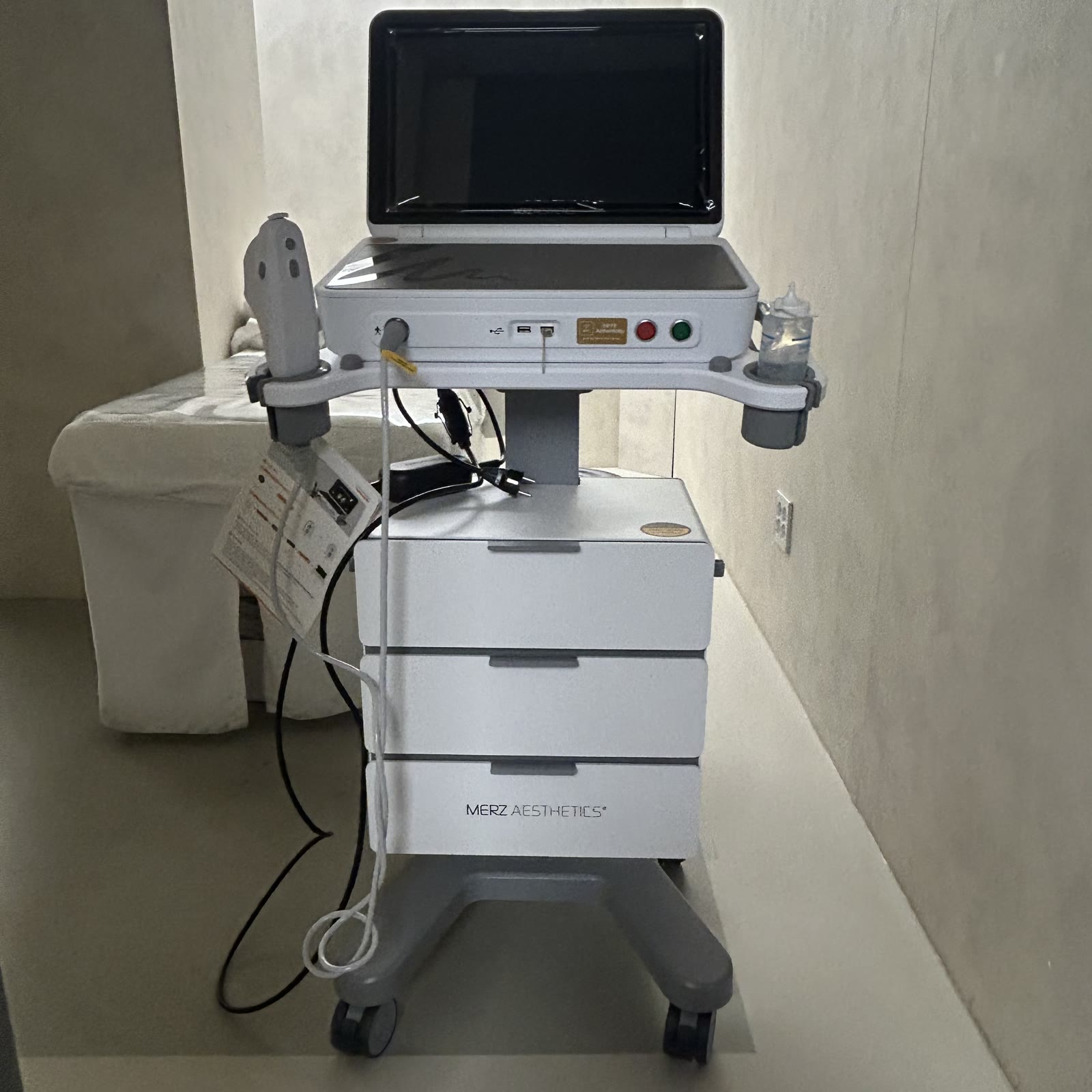
If you are worried because you cannot see much difference in the mirror after Ulthera, it helps to first know when and in what order the changes appear. Ulthera is a lifting treatment that concentrates ultrasound energy in points deep within the fascial layer and dermis to create thermal coagulation points, tightening tissue through the process in which those spots heal and new collagen forms.
That is why with Ulthera results, a small change from tissue contracting right after the treatment comes first, and the full change becomes gradually more noticeable over 1 to 2 months. We describe results as lasting about 6 to 12 months, and there are large individual differences depending on the degree of sagging, skin thickness, and lifestyle. At our Suwon clinic, during consultation we first look at the depth of sagging, the amount of facial fat, and where the cheeks are hollow, then decide the number of shots and any treatments to combine.
In this article, we outline in order how Ulthera works, the changes that appear in each period, why the effect may feel weak and the process, recovery care, and side effects.
Ulthera results: key points
- Ulthera concentrates ultrasound on the fascial layer to create thermal coagulation points, allowing new collagen to form during the healing process.
- Right after the treatment, there is only a feeling of tightness, and changes become gradually more noticeable over 1 to 2 months.
- If sagging is deep, there is a lot of facial fat, or the skin is very thin, the changes may feel weak.
- Results typically last about 6 to 12 months, and the next session is usually planned on a 6-month to 1-year cycle based on how things progress.
How does Ulthera work?
It focuses ultrasound to a single point at the desired depth beneath the skin. When tiny thermal coagulation points form closely together only in the deep layer while the surface is left untouched, the heated tissue first contracts, and as the body repairs that area it produces new collagen and elastic fibers.
The layers beneath the skin appear as a real-time image on the treatment screen, so we check the depth of the fascial layer in each area of the face and choose the depth at which to deliver energy. Treating areas with thicker facial tissue, thinner areas, and areas where the bone is prominent differently affects both the results and the level of pain.
Newly formed collagen starts as thin, weak fibers and changes over several weeks into thick, firm fibers. Because the tissue becomes gradually firmer as this process builds up, the change does not come all at once but appears slowly.
How do the effects of Ulthera change over time?
It is easy to judge that nothing has changed based only on how you look right after treatment, but Ulthera is a treatment that requires time for the body to produce collagen. The table below shows the typical course, and the timing and degree vary from person to person.
| Period | Changes that appear |
|---|---|
| Right after treatment | You may feel slightly tighter as the heated tissue contracts |
| A few days after treatment | Mild swelling and throbbing appear and then subside, and changes may be hard to see because of the swelling |
| 2–4 weeks | The period when swelling goes down and the collagen-producing response continues |
| 1–2 months | The period when changes in the contours of the jawline and cheeks gradually become more noticeable |
| 6–12 months | The period when changes continue and then gradually fade as aging progresses |
Results are judged more accurately after the swelling has fully gone down. If you place a photo taken before treatment under the same lighting and angle side by side with one taken a few months later, you will not miss the changes.
Why Ulthera results may feel weak, and the treatment process
When the changes feel weak
Even with the same number of shots, the change each person notices is different. If sagging is advanced and the skin and fascia have stretched considerably, tightening with energy alone may not deliver the change you expect, and if there is a lot of facial fat adding weight, the volume of fat remains even after the fascia is tightened, so the jawline can still look heavy.
Conversely, a face with thin skin and very little fat has less tissue to lift, and hollow-looking cheeks may be the main concern. Nasolabial folds of the sagging type, where the cheek descends and folds, are treated by tightening the fascia, whereas for the hollow type, where lost volume creates shadows, we also consider filling methods such as fillers. When there is a lot of fat, we sometimes also plan a radiofrequency treatment that addresses the fat layer.
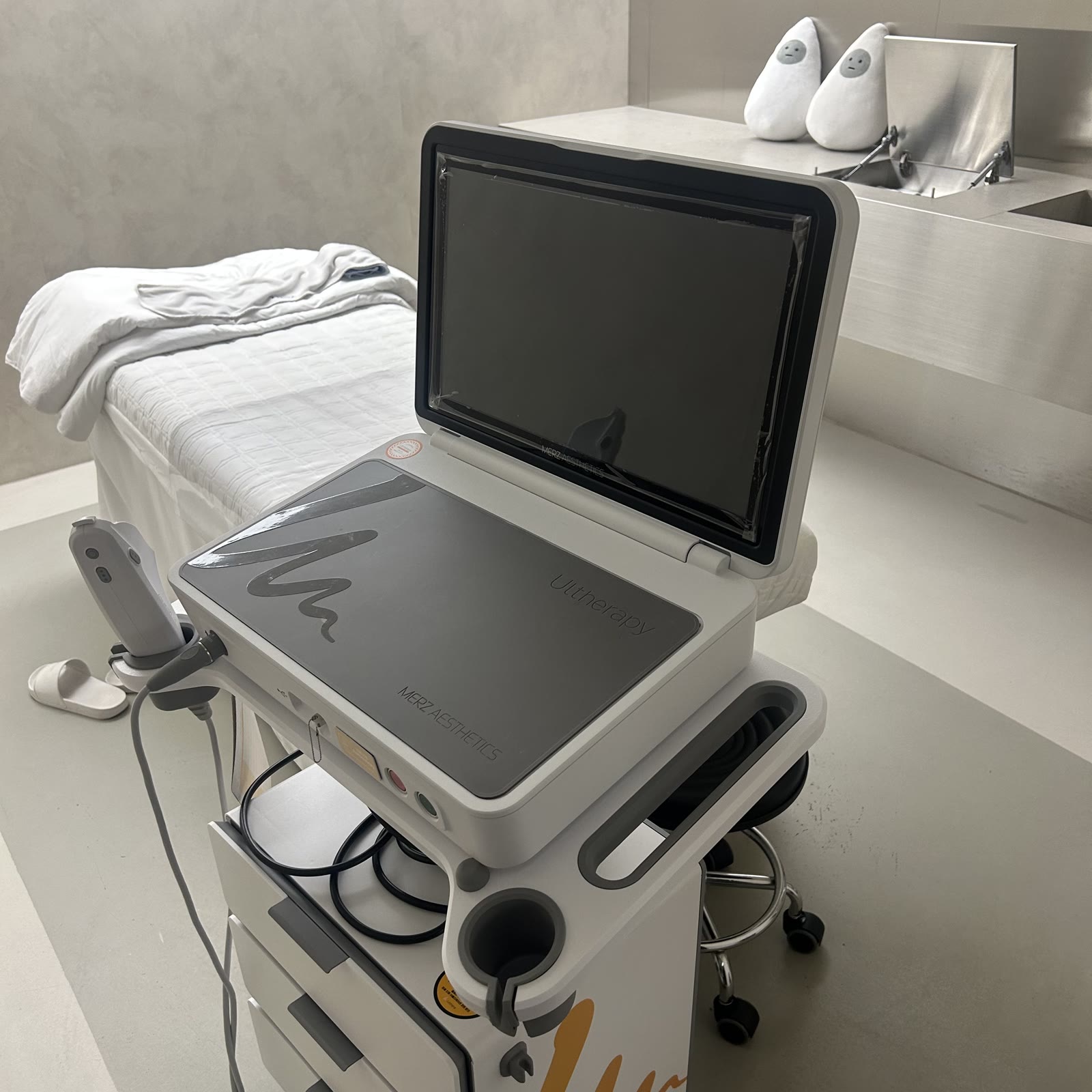
Treatment steps at our Suwon clinic
- Personalized Consultation
- Self-Cleansing
- Numbing Cream
- Treatment
- Finishing Care
Anesthesia is done with a numbing cream, the whole process takes about 1 hour in total, and you can return to daily life right away. Ultherapy Prime is available in 300-shot and 600-shot options, a 1200-shot package can be split across two sessions, and there are also packages combined with InMode FX, Tuneface, Thermage FLX, or skin botox. The next session is usually scheduled on a 6-month to 1-year cycle, based on how the changes fade.
View Ulthera treatment information
Recovery and care after Ulthera
- You can wash your face and wear makeup right after treatment, using a gentle cleanser.
- To reduce irritation to the skin, wash your face with lukewarm water for 3 days after treatment.
- For about 1 week after treatment, avoid saunas, alcohol, peeling treatments, and scrub products.
- Pay attention to sun protection and moisturizing, and include antioxidants such as vitamin C.
The collagen produced by Ulthera also decreases over time, and sagging continues to progress. Keeping up with sun protection and moisturizing can help maintain your skin condition, and the timing of the next session is decided by reviewing previous treatment records and photos together.
Side effects and precautions for Ulthera
During treatment, you may feel a momentary sensation of heat and a sharp tingling pain in areas close to the bone. After treatment, depending on the individual, the skin may throb for a few days or show slight swelling, bruising, or redness that then subsides, and the degree and duration of these reactions vary from person to person.
In rare cases, white line marks may appear on the skin (the white line phenomenon), which are eased with prescriptions and care. If a large amount of energy is delivered to the deep layer in a face with very little fat, the risk of the cheeks looking hollow increases, so for areas with little fat we plan a lower depth and fewer shots. Please let us know before treatment if you are pregnant or breastfeeding, have inflammation or wounds in the treatment area, are prone to keloids, or have a pacemaker or metal implants.
If line marks or blisters appear on your skin, if numbness lasts more than a few days, or if swelling and pain keep getting worse, please contact the clinic right away.
What do we check before Ulthera?
If these apply to you, start by checking the cause of sagging
- My jawline has become less defined and my cheeks feel like they have dropped.
- When I lift my cheekbone area with my hands, the area beside my nasolabial folds smooths out.
- I had Ulthera before, but the change felt weak.
- I see both hollow areas and sagging areas on my cheeks.
If two or more of these apply, it is best to first check whether sagging, fat, or hollowing is the main issue before deciding on the number of shots. Whether to proceed, the method, and the scope of treatment are decided together during consultation after an examination by our medical staff.
In short, since the effects of Ulthera appear after the time it takes for collagen to form, the key is to compare photos after the swelling has gone down and to choose treatments that match the underlying cause.
FAQ
Q. When can I feel the effect of Ulthera?
A. You may feel slightly tighter right after treatment, but the real changes appear gradually over 1 to 2 months. Changes may be hard to see before the swelling goes down, so we monitor progress by comparing with photos taken before treatment.
Q. How long do Ulthera results last?
A. We advise that results last about 6 to 12 months, depending on the individual. There is a lot of individual variation depending on how quickly sagging progresses, skin thickness, and lifestyle habits, and the timing of the next session is decided during consultation based on how the changes fade.
Q. If there is no change right after treatment, does that mean it didn't work?
A. With Ulthera, changes appear after the time it takes for new collagen to form, so it is hard to judge based only on how you look right after treatment. After monitoring progress over a few months, if any concerns remain, we discuss the next plan according to the cause.
Q. Does a higher number of Ulthera shots mean stronger results?
A. The number of shots is set according to the area to be treated and skin thickness, so results do not increase in proportion to the number of shots. Delivering energy evenly at the right depth for each area comes first, and for areas with little fat we actually plan fewer shots.
Q. When should I get my next Ulthera treatment?
A. It is usually decided on a 6-month to 1-year cycle, based on how the changes fade. Rather than repeating at very short intervals, we review previous treatment records and photos together and set the timing according to how much the sagging has progressed again.
Q. How can I find out the cost of Ulthera?
A. The cost depends on the number of shots and any treatments received together. We provide the details after deciding during consultation how many shots to use on which areas and whether to combine it with other lifting treatments, and you can also check items by shot count and package on the treatment information page.
This content is provided as general treatment information and is not a substitute for diagnosis or treatment. Always consult a medical professional to decide whether and how to proceed with a treatment.