


Ulthera vs. Thermage in Suwon: how deep do ultrasound and radiofrequency reach?
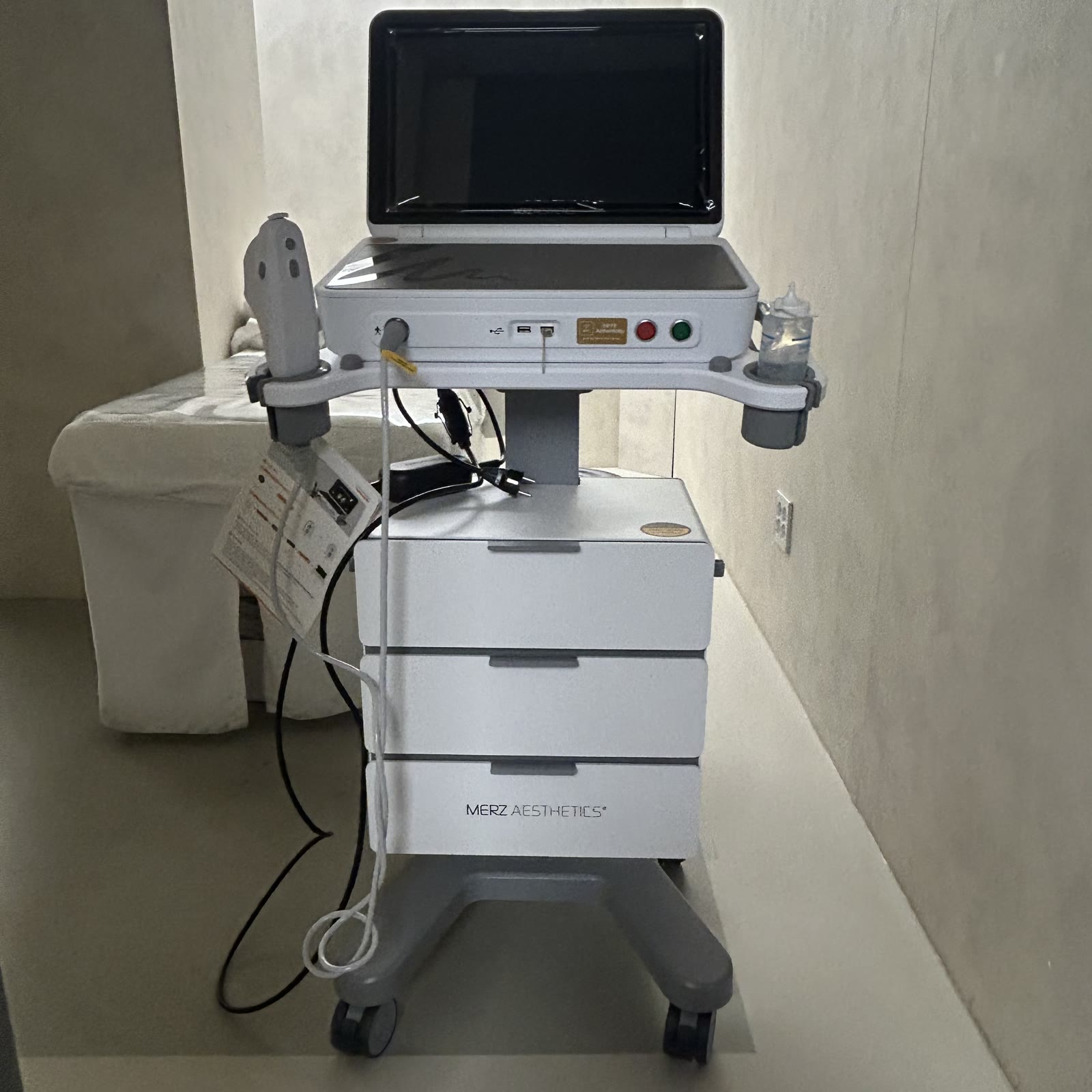
If both sagging that blurs your jawline and loss of elasticity that thins your skin bother you, it is worth first checking which layers Ulthera and Thermage heat. Ulthera focuses ultrasound on a single point in the fascia (SMAS) layer beneath the skin to create thermal points, while Thermage is a lifting treatment that delivers radiofrequency heat broadly and evenly throughout the dermis.
The difference between Ulthera and Thermage ultimately comes down to the depth they reach. If contour sagging, where the jawline and cheeks have dropped, is significant, we look first at Ulthera; if fine lines and loose skin texture bother you, we look first at Thermage. At our Suwon clinic, we first look at where the sagging began and your skin thickness in consultation, then decide the device and number of shots.
In this article, we outline in turn how the two devices generate heat, the differences in the layers they reach and in pain, the treatment steps, recovery and care, side effects, and what to check before treatment.
Ulthera vs. Thermage: key points
- Ulthera uses focused ultrasound to create dot-shaped thermal points in the fascia layer and the deeper dermis.
- Thermage uses radiofrequency to broadly heat the dermis across the entire area the tip touches.
- Changes continue gradually over 1 to 2 months for Ulthera and 2 to 4 months for Thermage.
- Both procedures are performed after numbing cream, and when concerns overlap, they are sometimes planned together on the same day.
How do Ulthera and Thermage generate heat?
Ulthera focuses ultrasound from multiple directions onto a single point at a set depth. The energy passes through the skin surface in a dispersed state, and only where the focus forms does the temperature rise, creating a small thermal coagulation point. When these points are placed in rows in the fascia layer, the tissue there contracts, and collagen production is stimulated during recovery. During the procedure, the layers beneath the skin are shown as real-time images on a monitor, so energy is delivered to the targeted depth while checking skin thickness in each area.
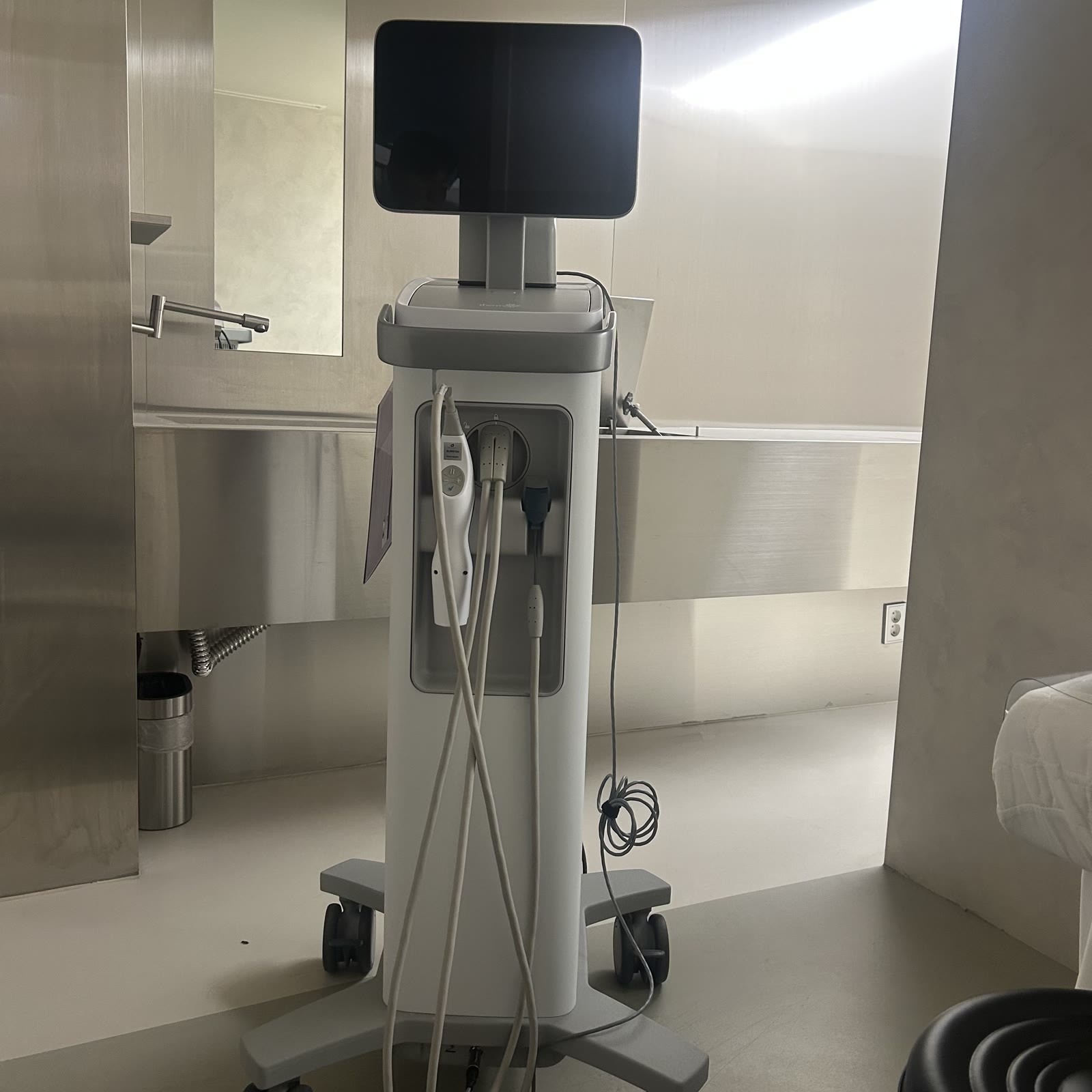
Thermage is a radiofrequency method that passes an electric current through the skin so that heat is generated within the tissue itself. Because the heat spreads not to a single point but throughout the dermis across the entire area the tip touches, collagen across the skin contracts and regeneration is stimulated. Thermage FLX has a large tip area, a function that keeps energy consistent according to the skin, and cooling and vibration functions.
Ulthera vs. Thermage: how do the layers reached and the pain differ?
| Category | Ulthera | Thermage FLX |
|---|---|---|
| Energy | Focused ultrasound | Radiofrequency |
| Main layer reached | The deep dermis and the fascia (SMAS) layer | The entire dermis and the fibrous tissue below it |
| Shape of heat generated | Points at a set depth | The broad surface the tip touches |
| Main concerns addressed | Contour sagging along the jawline, cheeks, and below the cheekbones | Skin firmness, fine lines, loose texture |
| Period over which change continues | Gradually over 1 to 2 months | Gradually over 2 to 4 months |
The pain also feels different. With Ulthera, there is a tingling, hot sensation the moment the focus forms, felt more strongly in areas close to bone such as the cheekbones and jawbone, while with Thermage, there is a momentary hot sensation when the tip touches the skin. Swelling also differs: with Ulthera it tends to feel heavy deep inside rather than on the surface, and with Thermage the surface tends to look slightly puffy.
How are Ulthera and Thermage carried out?
The principle of planning both on the same day
Because the two devices act on different layers, on faces with both contour sagging and loss of skin elasticity they are sometimes planned side by side on the same day. Conversely, if your concerns are concentrated on one side, a plan with just one device is enough. If facial fat is very low or the skin is thin, we lower the energy where the two overlap and redistribute the shots.
Treatment steps at our Suwon clinic
- Personalized Consultation
- Self-Cleansing
- Numbing Cream
- Treatment
- Finishing Care
The order above is for Ulthera; the whole process takes about an hour, and you can return to daily life right after treatment. There are Ultherapy Prime packages of 300 and 600 shots, and 1200 shots can be split over two sessions; results last about 6 to 12 months, with a cycle of 6 months to 1 year as the baseline. Thermage FLX proceeds in the order of personalized consultation, pre-treatment photos, numbing cream (about 30 to 60 minutes), treatment, and soothing care, with 300- and 600-shot packages. Thermage results are generally known to last about 1 to 2 years, but there are individual differences, so the timing of the next treatment is decided in consultation based on your skin condition.
View Ulthera treatment information
View Thermage FLX procedure information
Recovery and care after Ulthera and Thermage
- After Ulthera, you can wash your face and wear makeup right away, and for 3 days wash with a gentle cleanser and lukewarm water.
- For about 1 week after Ulthera, avoid saunas, alcohol, peeling treatments, and scrub products.
- After Thermage, avoid hot saunas, alcohol, and strenuous exercise on the day of treatment, and refrain from peels and scrubs for a week.
- For both procedures, apply plenty of moisturizer and be sure to apply sunscreen.
Skin that has been heated tends to dry out for a few days, and taking antioxidants such as vitamin C may also help recovery. Collagen changes continue over several months, so we do not judge only by how it looks right after the swelling goes down but also look at the progress afterward.
Side effects and precautions of Ulthera and Thermage
After the procedure, redness, heat, throbbing, mild swelling, and bruising may occur, and most subside during recovery. After Ulthera, the skin may throb or slight swelling may continue for a few days, and the speed of recovery varies from person to person.
In rare cases, white line-shaped marks (white stripes) may appear after Ulthera, which usually subside with prescription and treatment. After Thermage, redness or swelling may rarely persist for a long time. If facial fat is very low, cheek hollowness may become more noticeable due to the heat, and if you are pregnant, have a pacemaker, or have metal implants in the treatment area, please let us know in advance.
If blisters form, pain and heat do not ease and gradually worsen, or redness and swelling persist, contact the clinic right away.
What is checked before Ulthera or Thermage?
If these apply to you, start by checking how deep the sagging is
- Your jawline and cheeks have dropped, blurring your side profile.
- Your skin has thinned, and fine lines and loose texture have increased.
- Your face is lean, so your cheeks or temples look hollow.
- You have an important event within a few weeks.
If two or more apply, it is best to first check which layer the sagging started in and how much fat there is before choosing a device. Whether to proceed, the method, and the number of shots are decided together in consultation after the medical team's examination.
In short, the difference between Ulthera and Thermage lies in the depth they reach, so the key is first checking where the sagging is and your skin thickness.
FAQ
Q. How does the pain differ between Ulthera and Thermage?
A. They feel different. With Ulthera, the tingling is stronger in areas close to bone when the focus forms, while with Thermage there is a hot sensation the moment the tip touches. Both procedures are performed after numbing cream, and how much you feel varies from person to person.
Q. How long does swelling last after Ulthera or Thermage?
A. With Ulthera, swelling tends to feel heavy deep inside, while with Thermage the surface tends to look slightly puffy. Swelling usually decreases over a few days, but the duration varies with the area, number of shots, and skin condition, so leave some leeway when scheduling important events.
Q. Can I get Ulthera and Thermage on the same day?
A. Because they act on different layers, there are packages that combine both on the same day. Whether to do them on the same day or separately is decided based on skin thickness, the amount of facial fat, and your upcoming schedule, and the energy where the two devices overlap is adjusted separately during examination.
Q. How should I space the interval until the next Ulthera or Thermage treatment?
A. Ulthera is based on a cycle of 6 months to 1 year, and for Thermage, maintenance treatment about once a year can be considered. The actual timing is decided together in consultation based on your skin condition after the period in which changes continue has passed.
Q. When will I start to feel changes from Ulthera or Thermage?
A. Changes continue gradually as collagen regeneration is stimulated over 1 to 2 months for Ulthera and 2 to 4 months for Thermage. The degree of change and how long it continues vary with skin condition and lifestyle habits, so we do not judge only by how it looks right after the swelling goes down.
Q. How can I find out the cost of Ulthera or Thermage?
A. The cost depends on the device, number of shots, and any combined package. After checking your facial area and degree of sagging in consultation, we suggest a suitable number of shots and package, and you can also check items by package on the treatment information page.
This content is provided as general treatment information and is not a substitute for diagnosis or treatment. Always consult a medical professional to decide whether and how to proceed with a treatment.