


How Ulthera works: at which layer does ultrasound focus its heat?
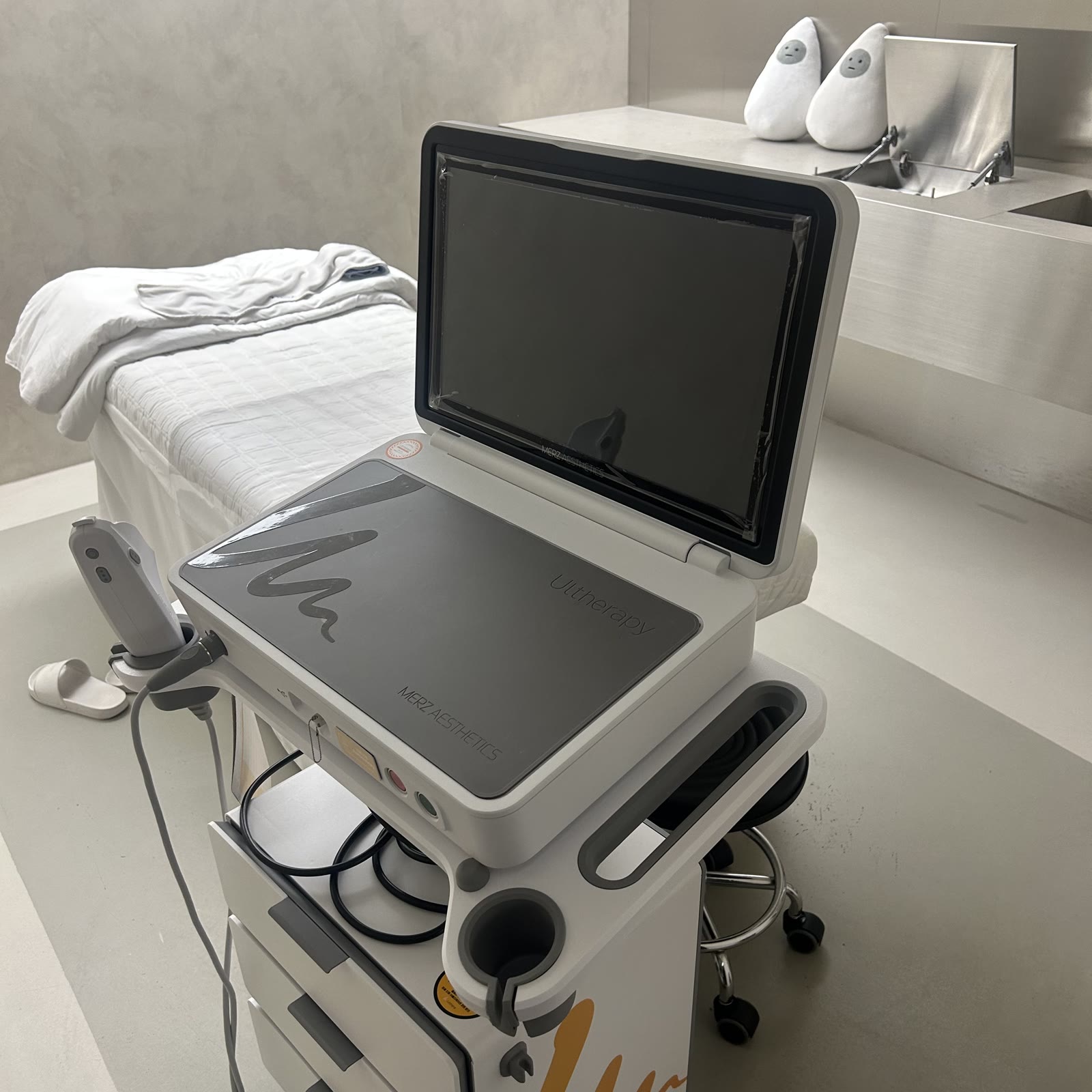
Ulthera works through high-intensity focused ultrasound (HIFU), which concentrates ultrasound energy on a single point inside the skin and raises the temperature only at that spot. It barely affects the skin surface while creating small thermal coagulation points in the SMAS layer and the dermis above it, and as these spots contract and heal, collagen is produced. Ulthera is a device that uses ultrasound rather than radiofrequency, and its distinctive feature is that the depth is adjusted while viewing the layers inside the skin on a screen during treatment.
How Ulthera works: how ultrasound converges on a single point
The transducer at the tip of the Ulthera handpiece focuses ultrasound onto a single point at a set depth. In the skin surface and middle layers that the ultrasound passes through, the energy is dispersed, so the temperature does not rise much; only at the focal point does the temperature rise to around 60°C, creating a small thermal coagulation point.
Each transducer has a fixed focal depth: 4.5mm targets the SMAS layer, 3.0mm the lower dermis, and 1.5mm the shallow dermis. Because skin thickness differs across areas of the face, transducers of different depths are switched to treat the layers separately.
Why depth is checked on screen with Ulthera
Before delivering energy, Ulthera displays the skin, fat, fascia, and bone on screen using ultrasound imaging. In areas with thick layers, such as the cheeks and jawline, and areas with thin fat, such as below the cheekbones, the focal point locations are checked and the shots are distributed so that the energy reaches the SMAS layer.
At FACE FILTER Clinic Suwon, Ulthera is performed after numbing cream and takes about one hour in total, and you can return to your daily routine right after treatment.
How can I verify genuine Ulthera?
Ulthera tips (transducers) are consumables designed for a set number of shots, and the manufacturer issues a certificate of authenticity and a hologram sticker so you can confirm a genuine tip was used. Peeling off the hologram reveals a verification number or QR code underneath, which you can enter in the app designated by the manufacturer to check authenticity. Before treatment, you can check that the tip packaging is unopened, and after treatment, you can ask how many shots were used.
For a few days after treatment, you may experience throbbing, slight swelling, bruising, or redness, and in rare cases white line-shaped marks may appear on the skin; if you have any of these symptoms, please contact the clinic. If you are pregnant or have a wound or inflammation in the treatment area, please let us know before treatment.
Ulthera vs. Thermage in Suwon: how deep do ultrasound and radiofrequency reach?
View Ulthera treatment information
FAQ
Q. Does Ulthera work the same way as radiofrequency?
A. Ulthera is not a radiofrequency device but a high-intensity focused ultrasound device that concentrates ultrasound on a single point. Radiofrequency heats the dermis broadly through the skin's electrical resistance, whereas Ulthera creates point-shaped thermal coagulation points at set depths, so the way they work is different.
Q. How long does an Ulthera treatment take?
A. It depends on the treatment area and number of shots, and it commonly takes around an hour including numbing and finishing. Adding the neck to the full face or using a large number of shots can take longer, so this is checked together when the area is decided during consultation.
Q. When do I receive the genuine Ulthera certification sticker?
A. The certificate of authenticity and sticker are issued based on the tip used in the treatment, so you receive them after the treatment is finished. Entering the number or QR code on the certificate in the app designated by the manufacturer lets you confirm that a genuine tip was used.
This content is provided as general treatment information and is not a substitute for diagnosis or treatment. Always consult a medical professional to decide whether and how to proceed with a treatment.