


How long does Ulthera last, and why does it vary between 6 months and 1 year from person to person?
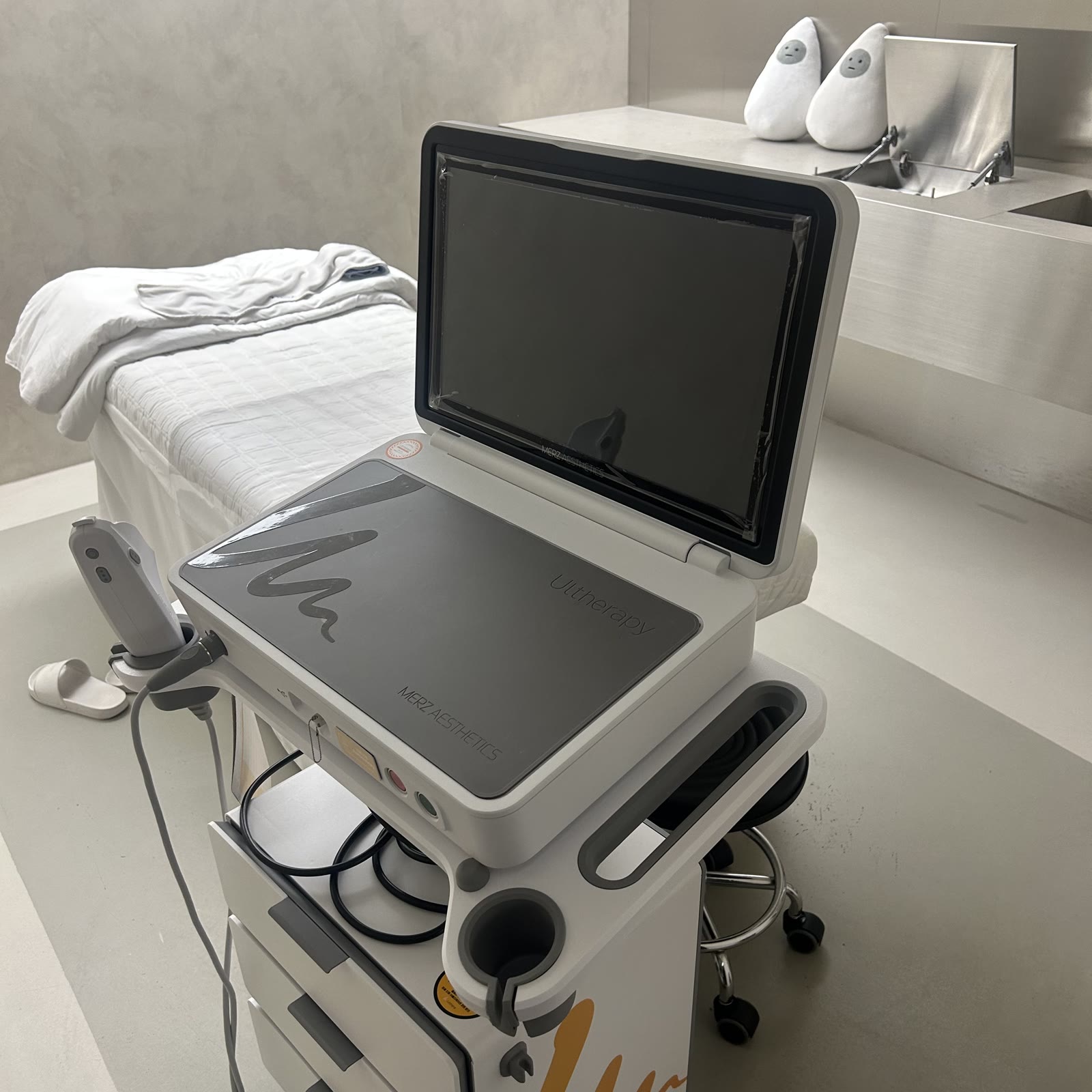
Ulthera is usually expected to last around 6 months to 1 year, and within that range it varies from person to person depending on the degree of sagging, skin thickness, age, and lifestyle. The duration does not mean the day the effect suddenly disappears; it is better understood as the period over which the tightened tissue loosens again following the pace of aging.
How does the Ulthera duration progress?
Ulthera creates thermal coagulation points in the fascia layer and deep dermis to contract tissue and prompt new collagen production. After the swelling subsides following treatment, changes appear gradually over 1 to 2 months, continue for several months after that, and then slowly fade.
So when talking about how long Ulthera lasts, we don't look only at the treatment date, but also at the period from when the change was most noticeable to when it begins to loosen. Your face keeps aging during that time, so the period you notice in the mirror and the changes happening in the tissue are not necessarily the same.
Factors that shorten or lengthen the Ulthera duration
- In faces with advanced sagging, the weight of the tissue is large relative to how much it was lifted, so loosening may come sooner.
- With age, collagen is produced more slowly, so the way changes appear and fade differs.
- Rapid weight change affects facial fat and skin laxity, so results may look different.
- Sun exposure, smoking, and lack of sleep work to reduce collagen.
- If the number of shots is low relative to the area, thermal coagulation points form sparsely and the change may feel weaker.
Because how these factors overlap differs from person to person, the Ulthera duration can feel different even with the same number of shots.
Care during the Ulthera duration and the next treatment
At our Suwon clinic, we explain that Ulthera lasts about 6 to 12 months, and we discuss the timing of the next treatment based on how changes appear over 1 to 2 months after treatment.
During this period, keep up sun protection and moisturizing, and whether to add other lifting or skin boosters in between is decided based on your skin condition. For a few days after treatment there may be swelling, bruising, and soreness, and in rare cases, if white line marks appear on the skin or an area feels numb, please contact the clinic.
Ultherapy Prime in Suwon: What Has Changed from the Original Ulthera?
View Ulthera treatment information
FAQ
Q. Can Ulthera last more than a year?
A. When sagging is mild and lifestyle habits place less burden on the skin, some people feel the change lasts close to a year. However, the duration varies widely by individual, so the next treatment is decided by the condition of your face rather than by date.
Q. Does increasing the number of shots make Ulthera last longer?
A. The number of shots is set to match the size of the area being treated and the extent of sagging. If there are too few shots for the area, the change may feel weaker, but it is hard to say that adding more makes Ulthera last proportionally longer.
Q. After the Ulthera period ends, will my face sag more?
A. When the change fades, your face returns to its original course of aging; the treatment does not make it sag more than before. When sagging along the jawline and cheeks starts to bother you again, we assess your condition and discuss the next treatment.
This content is provided as general treatment information and is not a substitute for diagnosis or treatment. Always consult a medical professional to decide whether and how to proceed with a treatment.