


Hollow cheeks after Ulthera: which faces are prone to it, and what should you do if it happens?
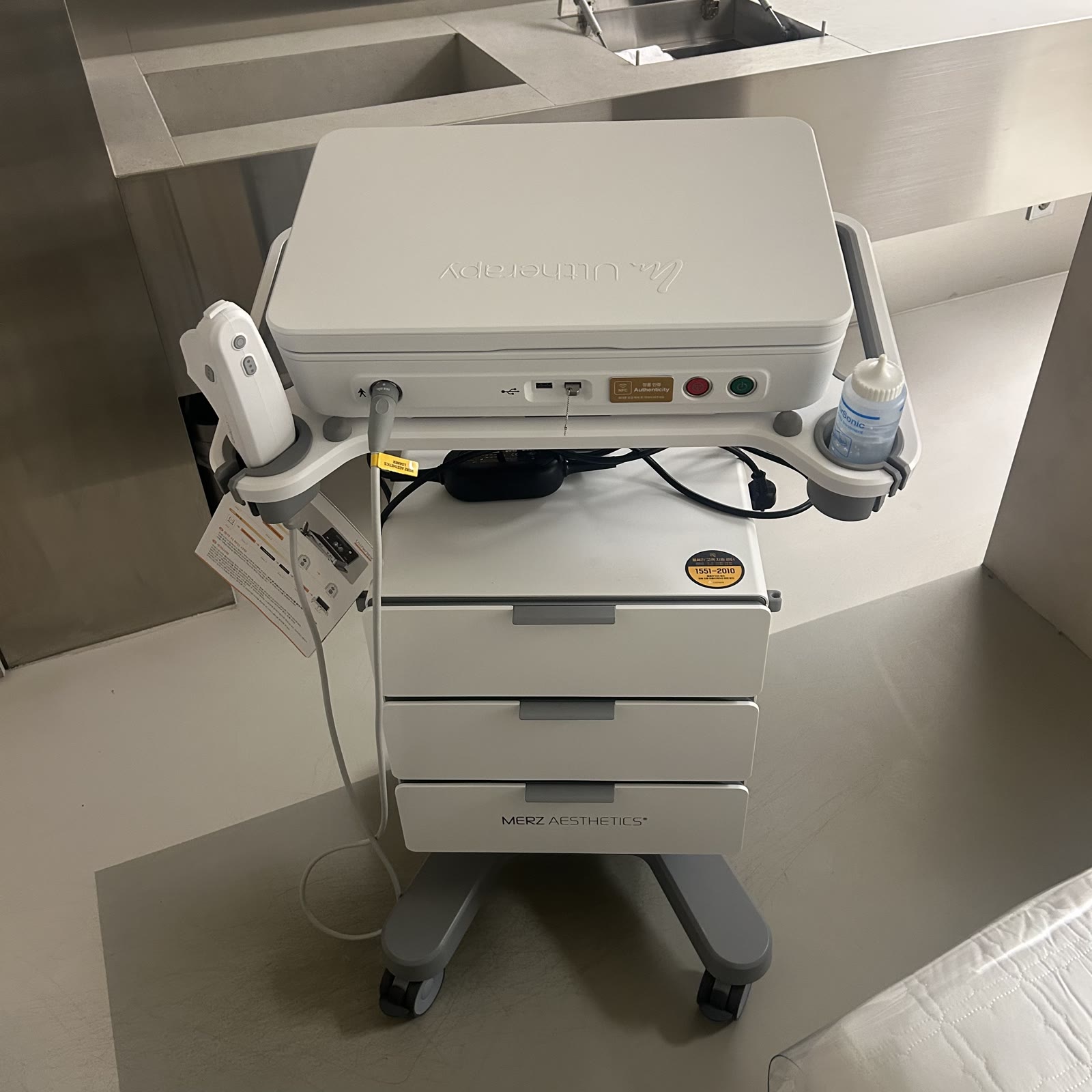
Hollow cheeks after Ulthera is a phenomenon in which the cheeks look sunken when ultrasound heat gathers heavily in the fat layer shallower than the fascia, or when energy concentrates on the side cheeks and under the cheekbones, which naturally have little fat. It tends to occur in people with little facial fat and thin skin, so before treatment we check fat thickness and hollow areas, and set depth and number of shots differently for each area.
Which faces are prone to hollow cheeks after Ulthera?
The side cheeks and the area under the cheekbones naturally have thin fat and are close to bone. If many thermal coagulation points are created there, hollowness stands out as much as the fat decreases, and the cheekbones and jawline protrude relatively, which can make the face look long and gaunt.
Hollow cheeks are easily noticeable in faces with low body weight or recent significant weight loss, faces whose cheek fat has already decreased with age, and faces that received many shots around the mouth.
Why depth is checked on the ultrasound screen
With Ulthera, during treatment we can view the thickness of the skin, fat, and fascia layer on ultrasound imaging and choose the depth at which to deliver energy. Layer thickness differs from person to person and even from spot to spot on the same face, so proceeding while checking on the screen helps reduce the chance of straying from the intended layer.
At our Suwon clinic, Ulthera is performed while checking skin depth on ultrasound imaging after you wash your face yourself and numbing cream is applied, and the total treatment time is about 1 hour.
What should I do if I get hollow cheeks after Ulthera?
The 1 to 2 weeks after treatment is when swelling goes down, and lifting changes appear over 1 to 2 months. Areas that looked sunken as swelling went down may settle during this period, so rather than rushing to add another treatment, we reassess your condition after this period.
If hollowness remains after that, we discuss filling the sunken areas with hyaluronic acid filler or restoring volume over several months with injections that help collagen production. If pain and swelling get progressively worse after treatment, the corners of your mouth feel awkward when moving, or white line marks appear on the skin, please contact the clinic.
Ulthera vs. Thermage in Suwon: how deep do ultrasound and radiofrequency reach?
View Ulthera treatment information
FAQ
Q. Do hollow cheeks after Ulthera recover over time?
A. If the cheeks looked temporarily sunken as swelling went down, they may settle within 1 to 2 months. Hollowness caused by reduced fat can take a long time to fill back in, so after an examination, we also consider ways to restore volume such as filler or collagen boosters.
Q. If I don't have much facial fat, can't I get Ulthera?
A. Having little facial fat doesn't mean you can't get it; we reduce or skip shots on the side cheeks and under the cheekbones where hollowness is a concern, and plan mainly around the jawline where there is sagging. If there are already sunken areas, we also discuss ways to restore volume.
Q. Do hollow cheeks after Ulthera and after Shurink happen by the same mechanism?
A. Both devices use high-intensity focused ultrasound to concentrate heat at a set depth, so the mechanism by which hollowness can occur when heat concentrates in areas with thin fat is the same. With either device, we distribute shots after checking fat thickness in each area.
This content is provided as general treatment information and is not a substitute for diagnosis or treatment. Always consult a medical professional to decide whether and how to proceed with a treatment.