


Thread lift pain: how much does it hurt during and after the procedure?
Thread lift pain is often felt more strongly as tightness and soreness in the days after the procedure than during it. During the procedure, numbing cream and local anesthesia are used, so what remains is the sting of the needle going in and a feeling of pressure as the thread passes. A pulling sensation when opening your mouth wide or yawning may continue while the threads settle.
Why does thread lift pain occur?
A thread lift is a procedure in which dissolvable barbed threads are placed in a set layer under the skin to hook and lift sagging tissue. A sting occurs at the entry point where the needle carrying the thread goes in, and a heavy pressure is felt along the path the thread travels. In well-anesthetized areas, it is felt mainly as pressure.
After the procedure, the thread's barbs hold the tissue, so a pulling sensation occurs when making big facial expressions. If swelling and bruising also develop, tenderness when pressed is added.
How does thread lift pain change over time?
Swelling and soreness are most noticeable on the day of the procedure and the next day, and they generally begin to decrease gradually from around the third day. Bruising, swelling, pain, and foreign-body sensation mostly ease within 1 to 2 weeks. A bumpy feeling when touching where the threads were placed and tightness when opening the mouth fade over several weeks.
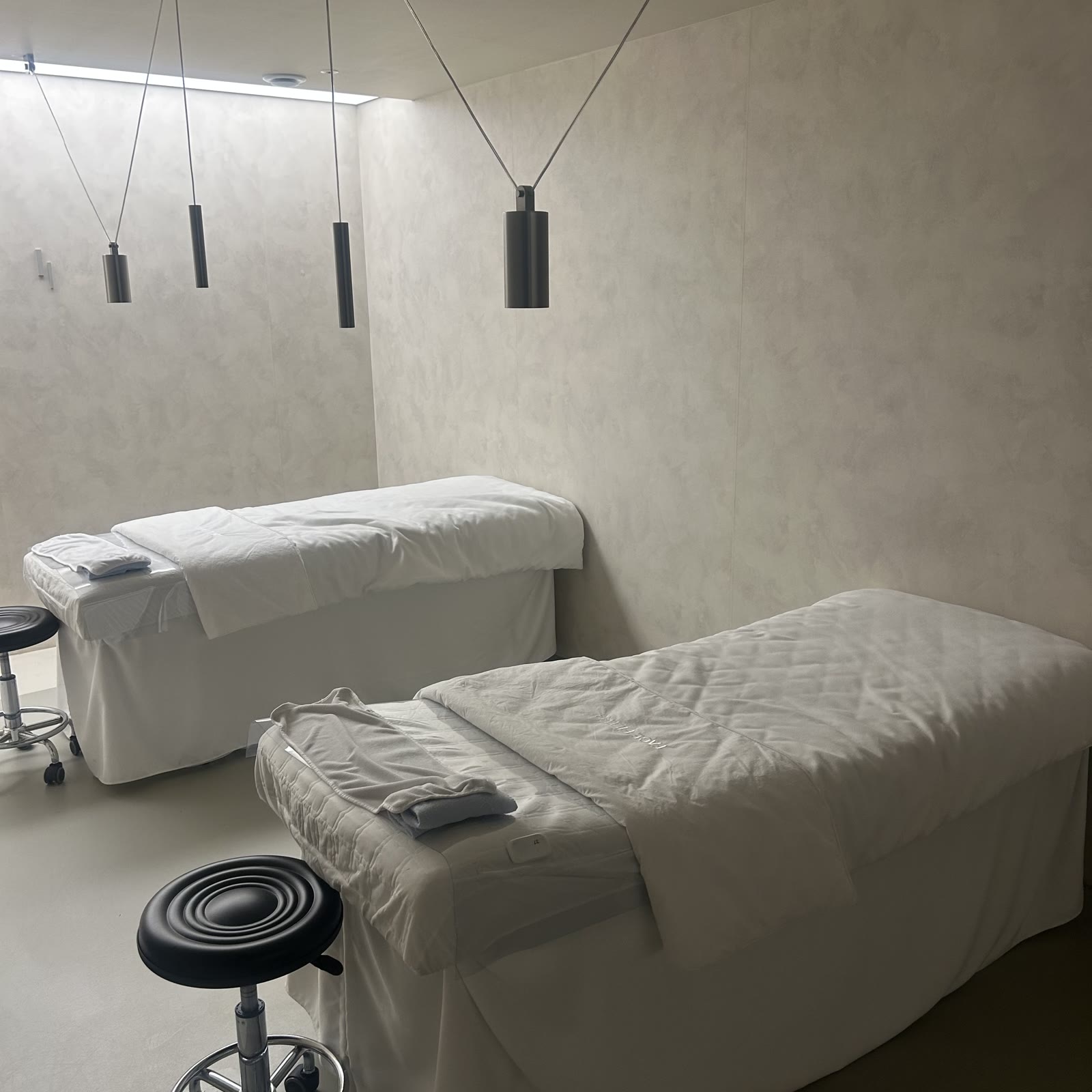
At our Suwon clinic, the procedure is performed after numbing cream and local anesthesia, and we advise taking prescribed medication for 3 days to prevent inflammation and relieve pain. If you are allergic to antibiotics, be sure to tell us before the procedure.
Care to reduce thread lift pain
Applying a gentle cold compress to the treated area for 3 days and sleeping on your back for 3 days reduces swelling and tightness. To keep the threads from shifting or breaking, be careful not to open your mouth wide or yawn widely for 4 weeks. For 7 days, avoid heavy drinking, smoking, saunas, jjimjilbang, and strenuous exercise.
If pain keeps getting worse day by day, the skin changes color, warmth and itching persist, or a thread shows through the skin, do not touch it and contact the clinic. If you are taking blood-thinning medication, bruising may become larger, so please let us know in advance.
View MINT thread treatment information
FAQ
Q. Can I take pain relievers for thread lift pain?
A. After the procedure, the basic rule is to take the prescribed medication consistently for 3 days. If you want to take additional pain relievers, ingredients that thin the blood, such as aspirin, can make bruising worse, so please ask the clinic before taking them.
Q. When does the pulling sensation after a thread lift go away?
A. The tightness when making facial expressions occurs because the thread's barbs are holding the tissue, and it fades over several weeks. Not opening your mouth wide and not rubbing your face hard for 4 weeks may help the threads settle.
Q. Is it okay if thread lift pain is worse on only one side?
A. The number and position of the threads placed may differ slightly between the left and right sides, so one side may feel more sore. However, if only one side keeps swelling and getting hot, or the pain increases even without pressing, inflammation needs to be checked, so don't wait; please contact us.
This content is provided as general treatment information and is not a substitute for diagnosis or treatment. Always consult a medical professional to decide whether and how to proceed with a treatment.