


Cheek hollowing after Thermage: why does it happen, and what should you do if it occurs?
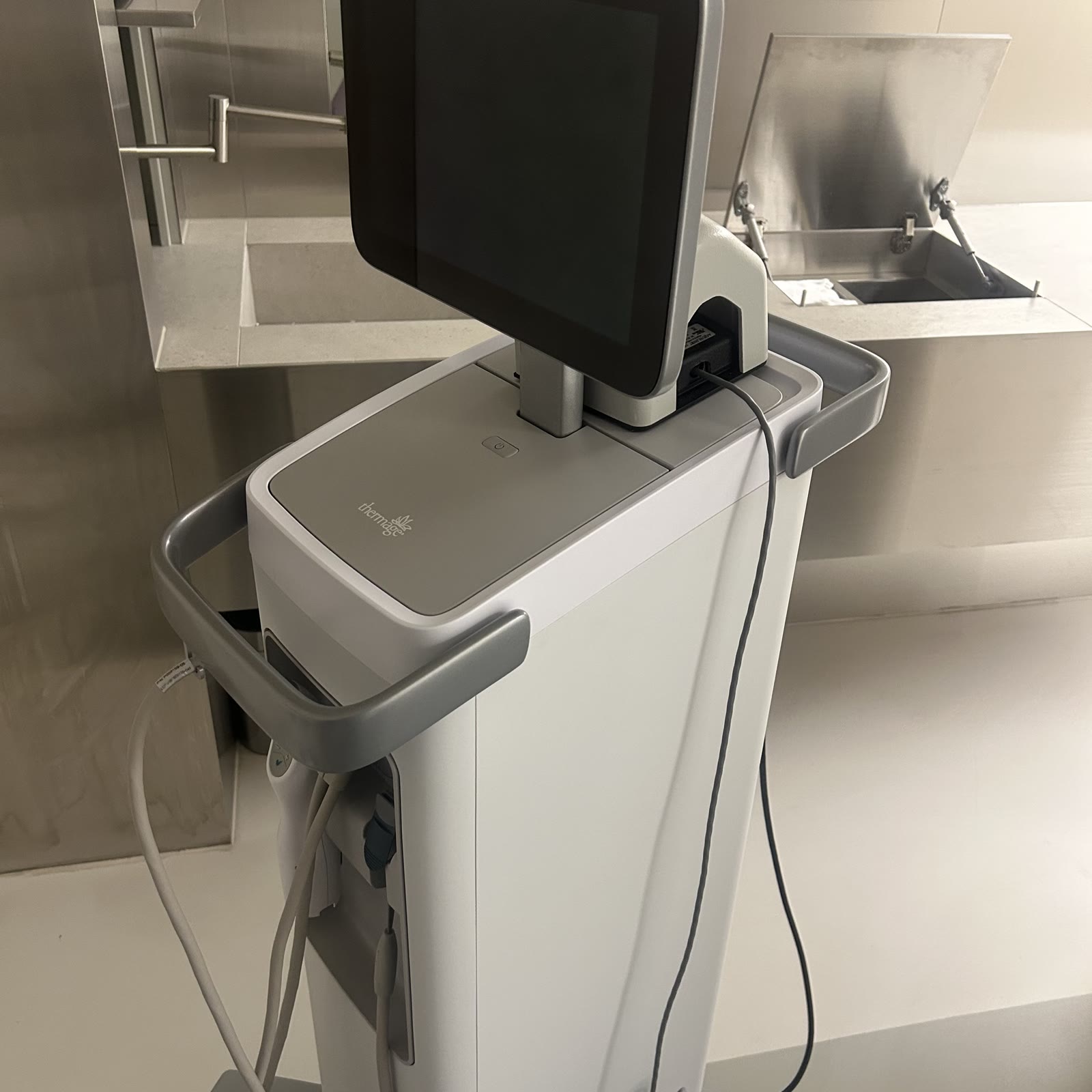
Cheek hollowing after Thermage is rare and falls into two cases: radiofrequency heat affects the fat layer and reduces cheek fat, or pre-existing hollowness becomes more visible after lifting. Looking hollow as swelling goes down right after treatment is usually temporary, and if one spot remains sunken even after several weeks, we check the cause by examination.
Why does cheek hollowing after Thermage happen?
Thermage FLX is a device that heats the dermis and the fibrous layer beneath it with monopolar radiofrequency. Radiofrequency current flows along the fibrous tissue that runs between fat, and if energy is delivered repeatedly to an area with a thin fat layer, the surrounding fat may decrease and cause localized hollowing. The reported frequency is low.
More common is when pre-existing hollowness becomes visible. On a face where the area below the cheekbones and the front of the cheeks are already hollow, once the sagging cheek tissue is tightened, the shadow below the cheekbones becomes sharper and can look sunken. The age-related loss of cheek fat may also coincide with the timing of treatment and feel as though the treatment caused it.
How can cheek hollowing after Thermage be distinguished from temporary hollowness?
For a few days after treatment, the face may look fuller due to swelling, and once the swelling goes down it may look relatively hollow. In this case, the whole face evenly returns to its original appearance. On the other hand, if only one spot on one cheek is sunken and stays that way even after several weeks, a change in fat is suspected and you should be examined.
At our Suwon clinic, Thermage FLX is performed after about 30 to 60 minutes of numbing cream and finished with soothing care, and photos are taken before treatment. Having pre-treatment photos makes it easier to compare whether the hollowness is new or was there before.
How to reduce and manage cheek hollowing after Thermage
If your cheeks and temples tend to be hollow or you have lost a lot of weight, be sure to tell us before treatment. For areas with a thin fat layer, we plan by dividing shots so they overlap less or by avoiding those areas. For faces where hollowness is a concern, we sometimes first consider treatments that replace lost volume.
If hollowing has occurred, it sometimes partially recovers over several months, so we first monitor its progress, and if it remains, we decide in consultation on replenishing volume with filler or collagen-type injections. If redness or swelling lasts a long time or blisters form on the skin, please contact the clinic.
Ulthera vs. Thermage in Suwon: how deep do ultrasound and radiofrequency reach?
View Thermage FLX procedure information
FAQ
Q. Does cheek hollowing after Thermage happen often?
A. Cheek hollowing caused by changes in the fat layer is rare. It is more common for the face to look hollow as swelling goes down or for pre-existing hollowness to become visible, so we first compare with photos taken before treatment to check whether the change is new or was already there.
Q. My cheeks are naturally hollow. Can I still get Thermage?
A. You can, but energy and shot distribution must be adjusted for areas with a thin fat layer. If you tell us during consultation which areas you are concerned about hollowing, we will overlap fewer shots there or avoid them, and decide together whether to do a volume-replacing treatment first.
Q. Does cheek hollowing after Thermage recover over time?
A. It sometimes partially recovers over several months, so we first monitor its progress while comparing with pre-treatment photos. If the hollowness remains over time, we decide in consultation after examination on replenishing volume with filler or collagen-type injections.
This content is provided as general treatment information and is not a substitute for diagnosis or treatment. Always consult a medical professional to decide whether and how to proceed with a treatment.