


Skin tag removal in Suwon: why do skin tags form on the neck and underarms, and how are they removed?
If soft bumps that catch on your necklace or shirt collar are gradually increasing and bothering you, it is worth first checking whether they are skin tags. Skin tags are benign growths in which the skin's fibrous tissue grows and protrudes softly outward, and they are medically called soft fibromas (acrochordons).
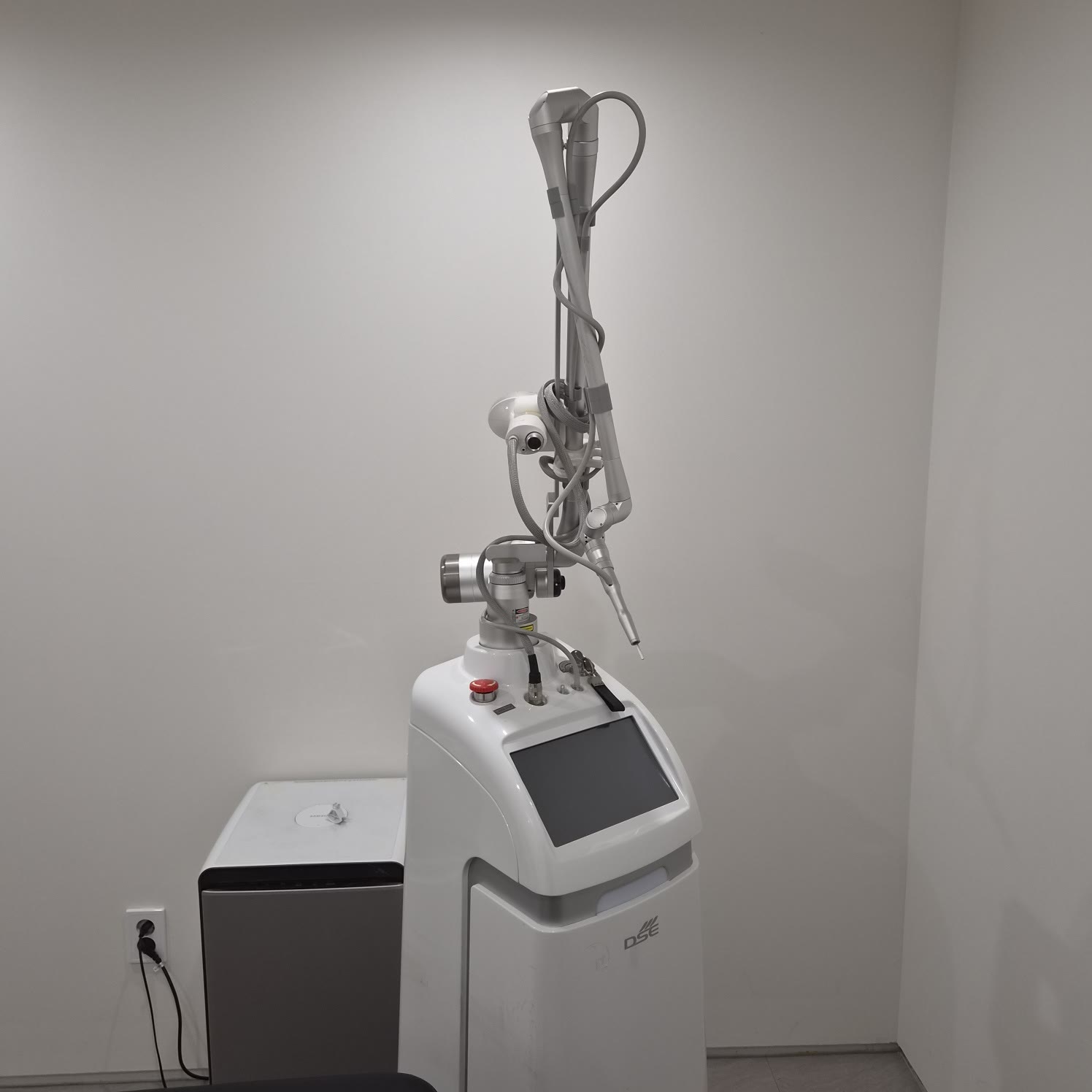
Skin tag removal involves vaporizing the growth with a CO2 laser, smoothing it down thinly to the base where the stalk is attached, and managing recovery until the scabs fall off. At our Suwon clinic, we first check the location and number of skin tags and whether other lesions are mixed in during the consultation, then decide on the treatment area, such as the whole neck or the front of the body.
In this article, we go over why skin tags form, how to tell them apart from moles and warts, the skin tag removal process, recovery and care, and side effects, in that order.
Skin tags: key points
- Skin tags tend to form on the neck and underarms, where friction, sagging skin, and weight gain overlap, and they do not spread to other people.
- Skin tags differ in that moles do not hang and sway, while warts have rough surfaces and spread along scratched areas.
- Skin tag removal works by vaporizing the growth with a CO2 laser and smoothing it down thinly to the base where the stalk is attached.
- Redness where the scabs have fallen off occurs during healing and fades over 1–2 months.
Why do skin tags form on the neck and underarms?
There is no single established cause of skin tags, but the conditions under which they increase are fairly clear. Typical factors include repeated friction of skin against skin or clothing against skin, sagging skin with age, obesity and sudden weight gain, hormonal changes during pregnancy, and conditions that make blood sugar hard to control, such as diabetes.
That is why skin tags on the neck cluster along the lines where shirt collars and necklaces touch, and skin tags in the underarms cluster along the creases where the skin folds when you move your arms. They also form under the breasts, in the groin, and along the edges of the eyelids. At first they may look like small brown dots the size of a grain, but over time they can develop a stalk and grow larger.
Since they are not growths caused by viruses or pigment cells, they do not spread to other people and rarely harm your health directly. However, if the number has increased a lot over a short period, it may be helpful to also look at changes in weight or blood sugar. If these conditions remain unchanged, new skin tags can easily form in other spots even after removal.
How do you tell skin tags apart from moles and warts?
Even if small bumps look similar, their causes and how they feel to the touch are different. The table below shows the criteria we look at together when telling them apart.
| Category | skin tag | mole | Warts |
|---|---|---|---|
| Cause | Growth of fibrous tissue | A cluster of melanocytes | Viral infection |
| Shape and color | Soft, skin-colored or light brown | Evenly brown or black | Rough or flat surface |
| When touched | Hangs from a thin stalk and sways | Attached to the skin and does not sway | Firmly attached |
| How it spreads | Increases in areas with a lot of friction | Stays in one place | Can spread along scratched areas |
Flat bumps with a surface that looks like greasy scale may be seborrheic keratoses (age spots). If a bump grows quickly over a short period, has a mix of colors, or bleeds often, even if it looks like a skin tag, we first confirm what kind of lesion it is before removal and determine whether a biopsy is needed.

How is skin tag removal performed?
How CO2 laser removal works
For areas like the neck and underarms where several small skin tags are clustered, a CO2 laser is mainly used. A CO2 laser uses the property of 10,600 nm light being absorbed by water in the tissue to vaporize the growth and smooth it down thinly to the base where the stalk is attached. The heat also coagulates the ends of small blood vessels to reduce bleeding, and the area can be adjusted to match the size of the growth.
Large skin tags with thick stalks may be cut off and then have the base smoothed with a laser, and if they are very large, we separately determine whether excision is needed. On the edges of the eyelids, the skin is thin and close to the eye, so the treatment area is kept even smaller. Tying them off with thread or cutting them with nail clippers at home can cause bleeding that won't stop or inflammation, and if the root remains, they grow back in the same spot.
Treatment steps at our Suwon clinic
- Personalized Consultation
- Photos (Before Treatment)
- Numbing Cream
- Treatment
- Photos (After Treatment)
- Finishing Care
Anesthesia is done with a numbing cream, and the procedure takes about an hour or less, depending on the number of skin tags and the extent. The treatment area is divided into the whole face and the whole neck, each in tiers of up to 50, up to 100, and over 100, and skin tags on the body, such as in the underarms and under the breasts, are set separately for the front and back of the body. When treating remaining large or clustered skin tags again, we wait 1–3 months until the previous areas have fully healed.
View CO2 laser skin tag removal details
Recovery and care after skin tag removal
- Do not pick off the scabs on the treated areas; let them fall off on their own.
- Red marks where the scabs have fallen off are a reaction that occurs during healing and fade over 1–2 months.
- For 3–7 days after treatment, avoid heavy drinking, smoking, saunas and jjimjilbang, hot baths, and strenuous exercise to prevent inflammation.
- Depending on the treated area, medication is prescribed to prevent inflammation and relieve pain; take it for 3 days without missing a dose.
- During recovery, apply sunscreen and temporarily avoid necklaces and tight collars.
The underarms have a lot of sweat and friction, so wounds can easily get irritated; pay extra attention to ventilation and cleanliness during recovery. Since sweat and UV exposure can slow healing, scheduling treatment in a cooler season rather than midsummer tends to make care easier. It is rare for skin tags to grow back where they were removed, but if conditions such as friction and weight remain unchanged, new skin tags can form in other spots.
Side effects and precautions for skin tag removal
Right after treatment, redness, stinging, slight oozing, and scabs appear, and most of these are reactions that occur during healing. Itching may continue for a few days, and recovery speed and how quickly marks fade vary from person to person.
In rare cases, pigmentation, small scars, or inflammation can occur. Picking off scabs early or prolonged exposure to sunlight and sweat during recovery increases these risks, and people prone to keloids, where wounds heal thick, are also at higher risk. If you have a medical history such as an antibiotic allergy or are taking blood-thinning medication, be sure to tell us before treatment.
If the treated area becomes increasingly swollen and painful, pus comes out, or warmth does not subside for several days, these may be signs of inflammation, so please contact the clinic right away.
What should be checked before skin tag removal?
If any of these apply, get a diagnosis first
- Soft bumps on my neck or underarms often catch on clothing or necklaces.
- The number of bumps has noticeably increased over the past few months.
- A bump has grown or changed color over a short period.
- They repeatedly catch and bleed or sting.
If two or more apply, it is a good idea to confirm what kind of bump it is before tying or cutting it at home. Whether to treat, which method to use, and the treatment area are decided together during the consultation after the doctor's examination.
In short, the key with skin tags is to first tell them apart from other lesions, clear them down to the root, and manage conditions such as friction and weight at the same time.
FAQ
Q. Do skin tags have to be removed?
A. They are not lesions that directly harm your health, so they do not necessarily need to be removed. If they catch on clothing or necklaces and bleed, keep getting bigger, or are in a noticeable spot and bother you, you can get an examination and consider skin tag removal.
Q. Can skin tags spread to other people?
A. Skin tags are growths of fibrous tissue, so they do not spread to other people. However, they can be confused in appearance with warts, which are caused by a virus, so if they are increasing in number, it is better to first determine what kind of bump they are before removal.
Q. Can skin tags in the underarms also be removed with a laser?
A. Skin tags in the underarms are also treated with a CO2 laser in the same way as those on the neck. Since this area has a lot of sweat and friction, you need to pay more attention to ventilation and cleanliness during recovery, and it is best to avoid tight clothing or aggressive hair removal until the wounds heal.
Q. Can skin tags all be removed in one session?
A. Small skin tags are often cleared in one session, while for large or clustered skin tags, remaining bumps may be treated additionally after seeing how recovery goes. When treating again, we wait 1–3 months until the previously treated areas have fully healed.
Q. Do skin tags come back where they were removed?
A. It is rare for them to grow back in spots cleared down to the base where the stalk was attached. However, if conditions such as friction, weight, and blood sugar remain unchanged, new skin tags can form in other spots, so care to reduce friction from necklaces and collars is also needed.
Q. How can I find out the cost of skin tag removal?
A. The cost depends on the number of skin tags and the treatment area. We confirm during the consultation how many skin tags on the face, neck, or body will be treated before giving you the details, and you can also check the items for each treatment area on our treatment information page.
This content is provided as general treatment information and is not a substitute for diagnosis or treatment. Always consult a medical professional to decide whether and how to proceed with a treatment.