


Skin botox results in Suwon: how does it work on pores, sebum, and fine lines?
If your face gets shiny by the afternoon and pores and fine lines both bother you, it is worth first understanding how skin botox works. Skin botox, also called dermotoxin, is a treatment in which the same botulinum toxin used for wrinkle botox is diluted and injected shallowly and densely into the upper dermis rather than the muscle layer.
The effects of skin botox appear by reducing signals to the sebaceous glands to lower oil production, relaxing tension in the tiny muscles surrounding pores, and reducing the movement of shallow muscles that fold the skin into fine creases. At our Suwon clinic, we first identify where sebum and pores are concentrated, where fine lines form, and which areas to avoid during the consultation before designing the treatment.
In this article, we go over the difference between skin botox and wrinkle botox, how it works on pores, sebum, and fine lines, the treatment steps at our Suwon clinic, when to look for changes and maintenance care, and side effects, in that order.
Skin botox results: key points
- Skin botox involves injecting diluted toxin shallowly into the dermis so that it acts on the sebaceous glands and small muscles rather than the expression muscles.
- It works by lowering sebum production, relaxing tension around the pores, and reducing the movements that fold the skin into fine creases.
- Since the toxin takes a few days to take effect, changes are compared at around 2 weeks under the same lighting as before treatment.
- Results last 1–2 months on average, and to maintain them, treatments are repeated at intervals of 2–3 months.
How is skin botox different from wrinkle botox?
Both treatments use the same ingredient, but they differ in injection depth, dilution, and the amount injected in one spot. Wrinkle botox involves injecting a relatively concentrated solution directly into the expression muscles of the forehead, between the eyebrows, and around the eyes to reduce the very movement of the muscles that fold the skin.
Skin botox involves injecting a diluted solution into the dermis in small portions at many spots across the face. The toxin blocks acetylcholine released from nerve endings, and when placed in the dermis, this action affects the sebaceous glands, the tiny muscles around pores, and small muscles rather than the expression muscles. Because it is injected shallowly so it barely reaches the expression muscles, there is little change in facial expression. For the same reason, it has a weaker effect on expression lines on the forehead or between the eyebrows that are formed by deep muscle folding, so those lines are treated separately with wrinkle botox.
How does skin botox work on pores, sebum, and fine lines?
The concerns skin botox addresses fall into three categories, and the structure it acts on differs for each. The table below summarizes, by concern, the structure the toxin reaches and how it works.
| Concern | Structure the toxin reaches | How it works | Points to consider together |
|---|---|---|---|
| Sebum and shine | Nerve endings leading to the sebaceous glands | Works to lower sebum production by reducing signals | Areas with heavy shine, such as the forehead, nose, and front of the cheeks |
| Pores that look enlarged | Tiny muscles surrounding the pores | Helps pore openings look less open by relaxing tension | Depressed scars or sagging pores are considered alongside treatments for other layers |
| Fine lines and skin texture | Shallow muscles that fold the skin into fine creases | Helps reduce folding so fine lines form less easily | Works on a different layer from lifting, which raises sagging tissue |
If sebum and pores are both concerns, the treatment area covers the forehead, nose, and front of the cheeks; if fine lines are the concern, it covers areas where shallow muscles fold the skin, such as the outer corners of the eyes, the upper forehead, and the cheeks. In areas with complex muscle structure, such as where under-eye fat protrudes or around the corners of the mouth, the area may be reduced or excluded so that facial expressions do not look unnatural.
How is skin botox performed?
How skin botox is injected
Skin botox is injected with a fine needle into the upper dermis in very small amounts at regular intervals so the toxin spreads evenly across a wide area. If injected too deep, it can reach the expression muscles, so keeping to a shallow layer is important, and rather than injecting a lot in one spot, it is divided among many spots.
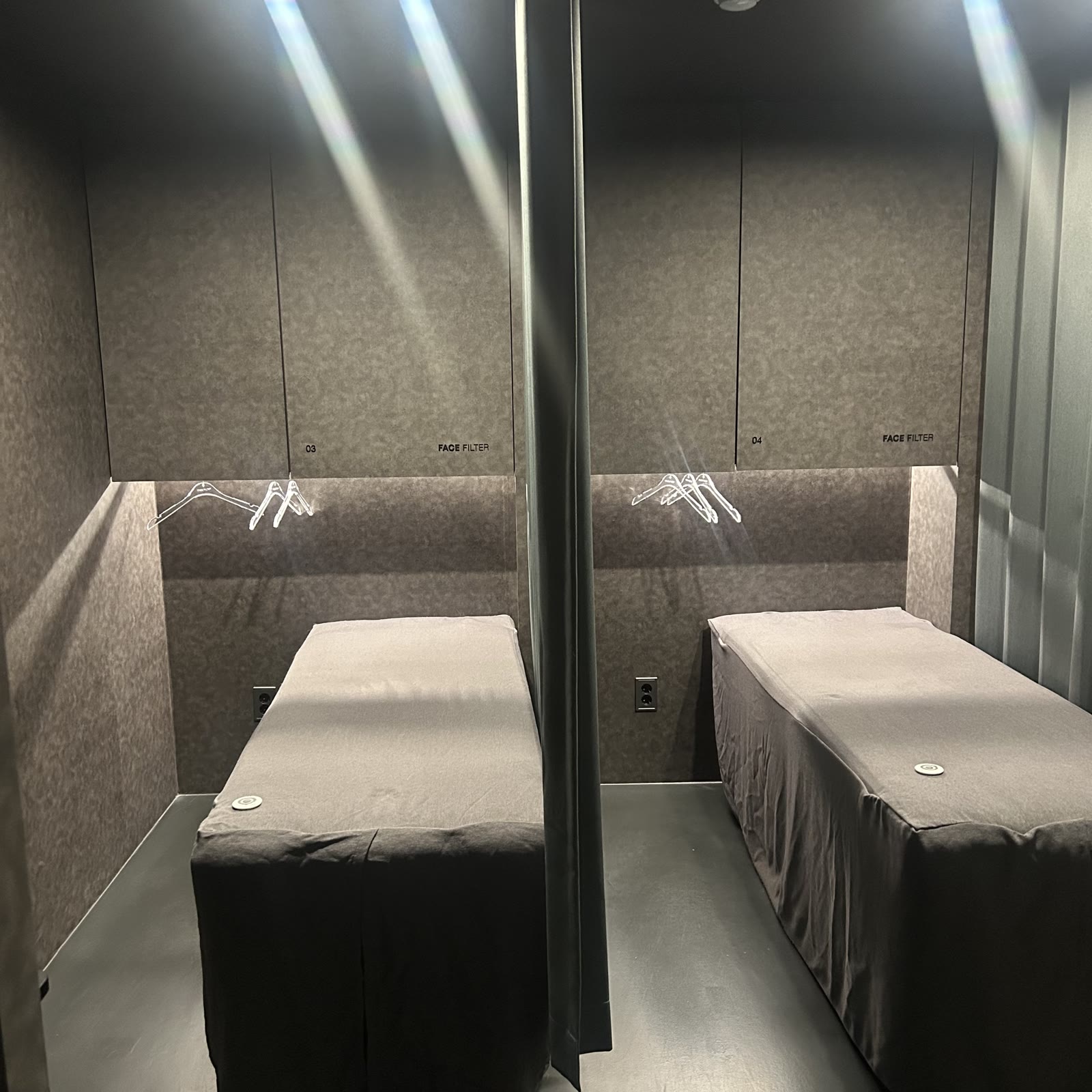
Treatment steps at our Suwon clinic
- Personalized Consultation
- Numbing Cream
- Design
- Disinfection
- Treatment
Numbing cream is applied for 20–40 minutes, and the procedure takes about 10 minutes, after which you can return to daily activities right away. Results vary by individual but last 1–2 months on average, so to maintain them, treatments are repeated at intervals of 2–3 months. Products are divided into Korean-made, Korean-made low-resistance, and German-made low-resistance options, and are chosen during the consultation based on your previous treatment history and intervals.
See the Skin Botox Treatment Guide
When can you expect to see results from skin botox, and how should you care for your skin?
- You can wash your face and wear makeup 2–3 hours after treatment.
- For 3–7 days after treatment, avoid heavy drinking, smoking, saunas and jjimjilbang, hot baths, and strenuous exercise to prevent inflammation.
- Do not rub or irritate the treated area excessively, and avoid intense massage or meridian massage for one month.
- Changes are compared at around 2 weeks under the same lighting as before treatment.
It takes a few days for the toxin to start working at the nerve endings, so even if nothing looks different the day after treatment, that does not mean it isn't working. Feeling that there was no effect can happen when judging before 2 weeks have passed, when the concern is in a layer that skin botox does not address, such as deep expression lines or depressed scars, or when the response has weakened from receiving toxin repeatedly at short intervals. For oily or dry skin, the noticeable duration may be shorter, so goals and intervals are adjusted again during the consultation.
Side effects and precautions for skin botox
Right after treatment, small bumpy marks (embossing) form at the injection sites and settle within 2–3 hours, though depending on your skin condition they may remain for 1–2 days. Bruising and swelling may occur at the needle sites, but they are usually mild and fade soon, and reactions and results vary from person to person.
In rare cases, if the toxin spreads deeper than the intended layer, the corners of the mouth or the under-eye area may look unnatural when you smile, or the two sides may look different, and these changes return to normal over several weeks as the toxin's effect wears off. Receiving it frequently at short intervals can lead to resistance and a weaker response, so it is best to keep to the recommended intervals. If you are pregnant or breastfeeding, or have a neuromuscular disease such as myasthenia gravis, please let us know before treatment.
If your eyelids droop and block your vision, or you have difficulty swallowing or feel uncomfortable breathing, please contact the clinic right away, even though these symptoms are rare.
What should be checked before skin botox?
If any of these apply, start with a skin botox consultation
- By the afternoon, my forehead and nose get shiny and my makeup starts to lift.
- Pores in oily areas look enlarged.
- Fine lines form at the outer corners of my eyes or on my cheeks.
- I have received toxin treatments at short intervals in the past.
If two or more apply, it is a good idea to check whether your concern is sebum and pores, fine lines, or deep expression lines before deciding on skin botox. Whether to treat, which method to use, and the treatment area are decided together during the consultation after the doctor's examination.
In short, the key with skin botox is to first determine whether your concern lies in the sebum and small muscles of the upper dermis, check the changes after 2 weeks, and then continue while keeping to the intervals.
FAQ
Q. When do the effects of skin Botox appear?
A. It takes a few days for the toxin to act at the nerve endings, so it is more accurate to look for changes at around 2 weeks. Rather than being disappointed that nothing looks different the next day, we recommend comparing after 2 weeks under the same lighting as before treatment.
Q. How long do skin botox results last?
A. It varies by individual depending on how much you use your facial expressions and your lifestyle, but results last 1–2 months on average. To maintain them, treatments are repeated at intervals of 2–3 months, and for oily skin, the noticeable duration may be shorter.
Q. Will skin botox make my expressions look unnatural?
A. Because it is injected shallowly into the dermis so that it barely reaches the expression muscles, there tends to be little change in facial expression. However, in areas with complex muscle structure, such as the corners of the mouth and under the eyes, the area may be reduced or excluded so that expressions do not look unnatural.
Q. Are dermotoxin and skin botox the same treatment?
A. Dermotoxin is a term combining "dermo," meaning skin, and toxin, and it refers to the same treatment as skin botox. It is a method of injecting diluted toxin shallowly in portions into the upper dermis so that it acts on sebum, pores, and fine lines.
Q. What is low-resistance toxin?
A. Low-resistance toxin refers to toxin products purified by removing accessory proteins other than the neurotoxin in order to reduce the chance of developing resistance. If you feel that your response has weakened, we review the product based on your previous treatment history and intervals.
Q. How can I find out the cost of skin botox?
A. The cost depends on the product, dose, and treatment area. We decide during the consultation which to address, sebum, pores, or fine lines, and which product to use before giving you the details, and you can also check the items for each product on our treatment information page.
This content is provided as general treatment information and is not a substitute for diagnosis or treatment. Always consult a medical professional to decide whether and how to proceed with a treatment.