


Shurink Pain: Which Areas Hurt, and How Can It Be Reduced?
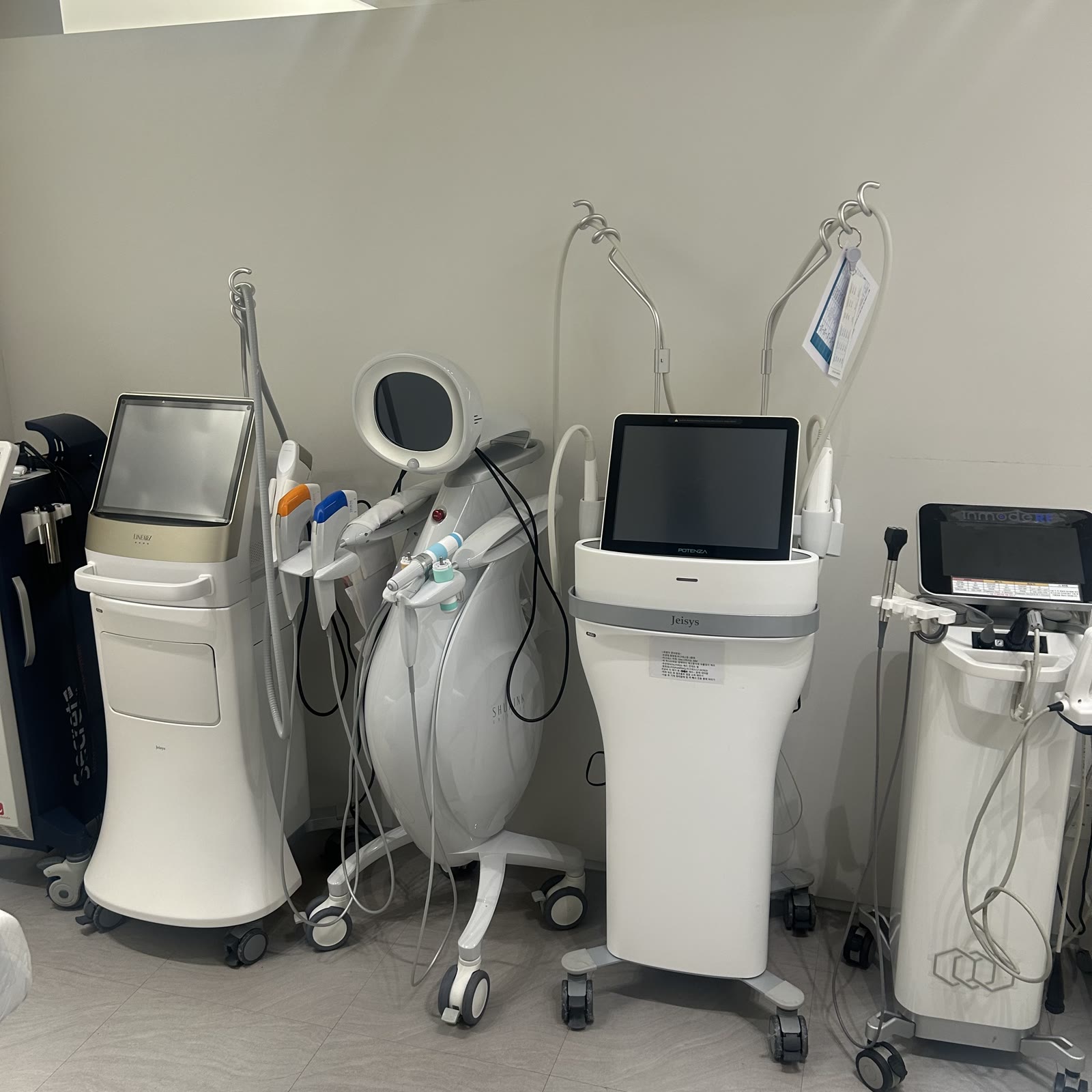
Shurink pain appears as a momentary tingling or hot, reverberating sensation when ultrasound energy converges on a single point, and it is felt more strongly near the bone, such as on the cheekbones and jawline. Shurink Universe is performed after topical anesthetic cream, and the handpiece and mode suited to each area are chosen to keep heat from concentrating in one spot.
Why does Shurink cause pain, and where does it hurt more?
Shurink Universe uses high-intensity focused ultrasound to pass through the skin surface and create small thermal coagulation points in the fascia (SMAS) layer and deep dermis. When ultrasound reaches bone, it causes a reverberating pain, so areas where bone lies directly beneath the skin, such as over the cheekbones, along the edge of the jawbone, and the forehead, hurt more, while areas with thick tissue, such as the middle of the cheeks, tend to hurt less. The less fat and the thinner the skin, the sharper it may feel even at the same energy.
Shurink Universe Handpieces and Pain Control
- Ultra F is a handpiece that fires in lines and passes quickly over large areas.
- Ultra Booster is a round handpiece that fits closely to narrow, curved areas such as the nasolabial folds, around the eyes, and the cheekbones.
- MP mode fires ultrasound at a faster rate, so less time is spent in any one spot.
- For painful areas, the energy level and depth are lowered, and directly over the bone, the firing position is adjusted.
At our Suwon clinic, Shurink Universe is performed after topical anesthetic cream, and the total time is about an hour.
View Shurink Universe treatment information
After treatment, there may be a feeling of heat, stinging, swelling, redness, and dryness, which usually subside within a few days. If numbness or a tingling feeling in the jaw or cheeks lasts more than a few days, contact the clinic, and if you are pregnant or have implanted materials such as fillers or threads in the treatment area, you must let us know in advance.
FAQ
Q. Can I get Shurink without anesthesia?
A. Since sensitivity to pain varies from person to person, when the area is small and the energy is low, treatment is sometimes done briefly without it. However, if areas near the bone such as the jawline and cheekbones are included, applying topical anesthetic cream first helps reduce movement during treatment, which helps with accurate firing.
Q. Does a higher number of Shurink shots hurt more?
A. As the number of shots increases, the number of firings and the time increase, so you have to endure it for longer. The pain of each individual shot depends more on the area, depth, and energy level than on the number of shots, and even with the same number of shots, it may feel more painful if many are near the bone.
Q. Is it okay to feel sore for a few days after Shurink?
A. After treatment, soreness when pressing around the jawline or cheekbones, or a heavy feeling when chewing, may last from a few days to as long as 1 to 2 weeks. If it is gradually decreasing, keep an eye on it, and if the pain gets worse day by day or comes with abnormal sensations, contact the clinic.
This content is provided as general treatment information and is not a substitute for diagnosis or treatment. Always consult a medical professional to decide whether and how to proceed with a treatment.