


Rejuran vs. Juvelook in Suwon: if the ingredients differ, do they suit different skin?
The criteria for choosing a skin booster differ depending on whether your skin has become thin and sensitive or whether pores and firmness are your concern. Rejuran and Juvelook are both skin boosters injected into the dermis, but Rejuran uses PN (polynucleotide) to support a regenerative environment for damaged skin, while Juvelook works as PDLLA and hyaluronic acid break down and stimulate the production of new tissue such as collagen.
The difference between Rejuran and Juvelook lies in their ingredients and how they work. If your skin is thin, often turns red, or feels very tight inside, Rejuran is considered first, and if your pores look large, firmness has decreased, or shallow indented marks are a concern, Juvelook is considered first. At our Suwon clinic, we first look at your skin thickness and sensitivity at consultation before deciding on the product and order.
In this article, we go through how the two ingredients work, the difference between Rejuran and Juvelook and how to distinguish them from similar skin boosters, the treatment process, recovery and care, side effects, and what to check before the procedure.
Key points on Rejuran and Juvelook
- Rejuran works with PN to support a regenerative environment for damaged skin.
- Juvelook works as PDLLA slowly breaks down and stimulates collagen production.
- Per the treatment guide, the intervals are 3 sessions of Rejuran Healer 3 to 4 weeks apart and at least 3 sessions of Juvelook 4 weeks apart.
- Injection marks and bumps from Rejuran Healer mostly settle within 1 to 3 days.
How do Rejuran and Juvelook work?
PN is a substance made of long chains of the units that make up DNA; once in the dermis, it works to create the environment skin cells need to recover and to calm inflammatory responses. It helps reduce water loss from skin with a weakened barrier, and it is also used to help skin weakened after laser treatments or peels recover.
The PDLLA in Juvelook is injected as fine particles that dissolve over weeks to months while stimulating fibroblasts. Rather than the ingredient filling the spot like a filler, it signals the skin to make its own collagen, so changes build up over time.
Even with the same ingredient, the use differs depending on particle size and concentration. Juvelook Skin is used for skin texture and pores, Juvelook Volume, with slightly larger particles, for areas that need volume such as hollow cheeks, and Juvelook Eye for the thin skin around the eyes.
Rejuran vs. Juvelook: how can they be distinguished from similar skin boosters?
| Category | Rejuran Healer | Juvelook |
|---|---|---|
| Main ingredient | PN (polynucleotide) | PDLLA and hyaluronic acid |
| How it works | Supports the skin's regenerative environment and barrier recovery | Breaks down and stimulates collagen production |
| Skin considered first | Thin, sensitive skin; dryness beneath the surface; skin weakened after treatments | Large pores, loss of elasticity, shallow indentations |
| Interval per the treatment guide | 3 sessions at 3 to 4 week intervals | 3 or more sessions at 4-week intervals |
Rejuran HB+ is known as a formulation containing both PN and hyaluronic acid with added lidocaine, and Rejuran Eye is a formulation designed for thin skin such as around the eyes. Lizne is also a PN skin booster, a product with the same family of ingredients made by a different manufacturer. Skin botox spreads botulinum toxin widely in the shallow layers of the skin, so it differs from the ingredient up.
How are Rejuran and Juvelook procedures performed?
How the treatment order is decided
Which of the two to do first is decided by how often you feel tightness and redness after washing your face, which areas of the face have pores and indentations, and whether there is enough time for bumps to settle before an important event. For sensitive skin, the recovery environment is built up first, and if pores and firmness are the main concern, Juvelook sessions may be scheduled first.
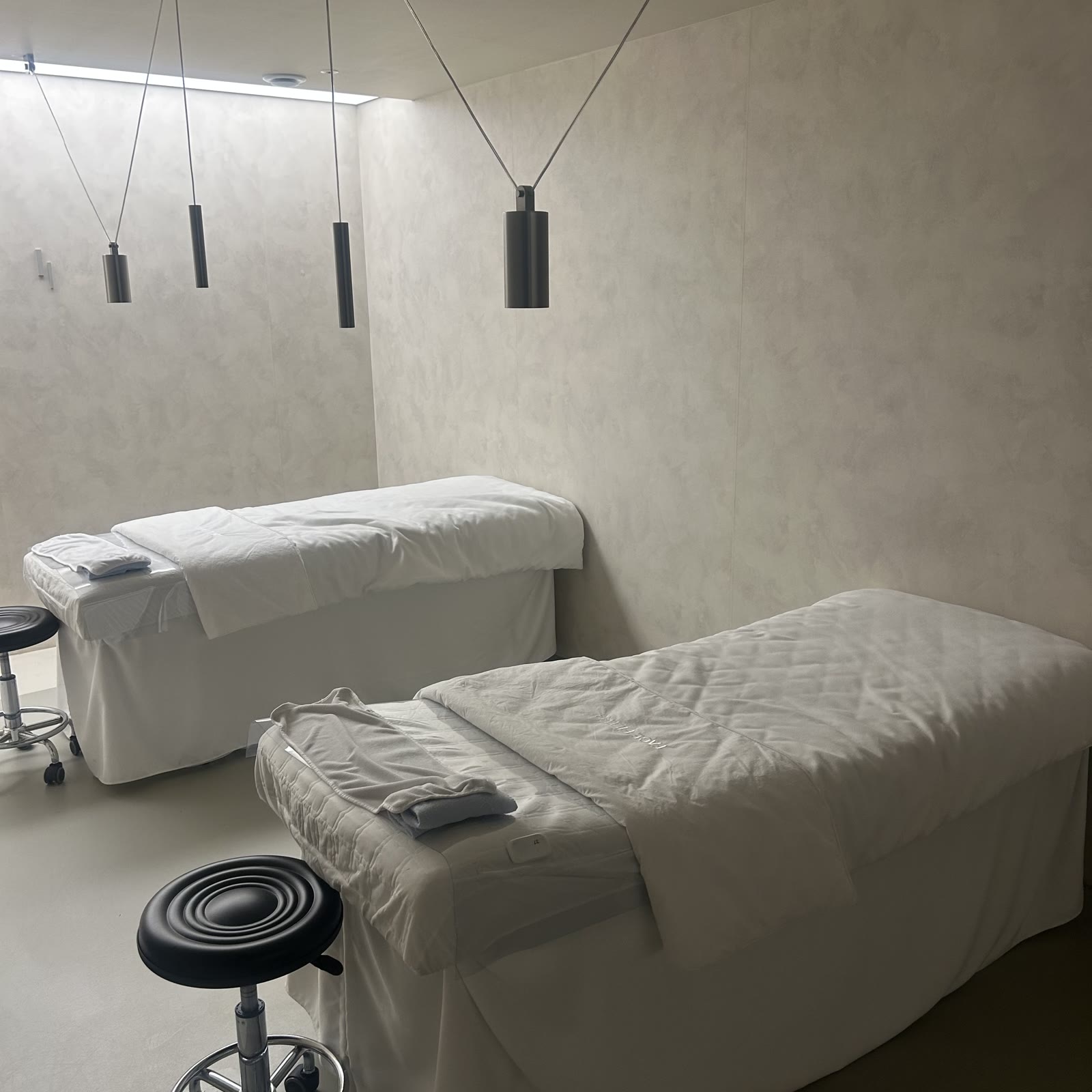
Treatment steps at our Suwon clinic
- Personalized Consultation
- Numbing Cream
- Disinfection
- Treatment
- Finishing Care
Both procedures follow the order above and take about 15 to 30 minutes, and you can return to daily life right after. For Rejuran Healer, 3 sessions 3 to 4 weeks apart is the recommended schedule, after which maintenance treatment is decided based on skin condition, and options include 2cc, Rejuran Eye 1cc, and HB+ 1cc and 2cc. For Juvelook, a minimum of 3 sessions 4 weeks apart is the standard, it is offered by the vial, and there are also options with the eye formulation, the volume formulation, and delivery together with the Potenza drug delivery tip.
View Rejuran Healer Treatment Information
View the Juvelook treatment guide
Recovery and care after Rejuran and Juvelook
- After Rejuran Healer you can wash your face and wear makeup from 2 to 3 hours later, and after Rejuran HB+ and Lizne from the next day.
- For 3 to 7 days after Rejuran Healer, avoid heavy drinking, smoking, saunas and jjimjilbang (Korean bathhouses), hot baths, and strenuous exercise.
- For about a week after Juvelook, avoid saunas, jjimjilbang, and strenuous exercise, and cut back on excessive drinking and smoking.
- Do not rub or massage the treated area hard, and moisturize and protect from the sun thoroughly.
For Rejuran Healer, injection marks and bumps mostly settle within 1 to 3 days, and bruising or swelling mostly eases within 1 to 2 weeks. Continuing to moisturize and protect from the sun between sessions may help maintain your skin condition.
Side effects and precautions for Rejuran and Juvelook
After the procedure, bumps, redness, bruising, and swelling may occur at the injection sites, and they gradually ease over time. The speed of recovery and the results vary from person to person.
Rarely, inflammation may occur in which the injection site becomes red, swollen, and hot, or Juvelook particles may gather in one spot and be felt as a small lump. Injecting a large-particle formulation into the thin skin around the eyes makes lumps more likely, so a dedicated eye-area formulation is used separately. Please let us know before the procedure if you have a salmon or fish allergy, are pregnant or breastfeeding, or have acne inflammation or infection in the treatment area.
If the injection site becomes increasingly red and hot, if pus forms or pain worsens, or if a new firm lump can be felt a few weeks later, please contact the clinic right away.
What should be checked before Rejuran or Juvelook?
In cases like these, first check your skin thickness and sensitivity
- My skin feels very tight after washing and often turns red.
- My pores look large and I have shallow indented marks.
- My skin easily becomes sensitive after lasers or peels.
- I have an event within a few weeks where bumps would be a concern.
If two or more apply, it is best to check your skin thickness, sensitivity, and the extent of your concerns before choosing a product. Whether to have the procedure, the product, and the number of sessions are decided together in consultation after the medical team examines you.
In short, the difference between Rejuran and Juvelook lies in their ingredients and how they work, so the key is first distinguishing whether your skin is sensitive or whether firmness is your concern.
FAQ
Q. Can I get Rejuran and Juvelook on the same day?
A. They may be done on the same day by dividing the facial areas, and for the same area, alternating sessions is another option. We decide the order and interval of the two products at consultation based on your skin thickness, sensitivity, and the time needed for bumps to settle.
Q. What is the difference between Rejuran Healer and Rejuran HB+?
A. Rejuran Healer is the basic formulation containing PN, and HB+ is known as a formulation that adds hyaluronic acid and lidocaine to PN. With HB+, you can wash your face and wear makeup from the next day, and a minimum of 3 sessions 2 to 3 weeks apart is the standard.
Q. How do Lizne and Rejuran differ?
A. Both are PN skin boosters in the same family in terms of how they work, but they differ in manufacturer and formulation. With Lizne, you can wash your face and wear makeup from the next day, and considering individual differences, a minimum of 3 sessions 2 to 3 weeks apart is the standard.
Q. When do Juvelook results start to show?
A. It takes time for PDLLA to break down and stimulate collagen production, so changes are also confirmed gradually over several weeks. Because there are individual differences, a minimum of 3 sessions 4 weeks apart is the standard, and we review the progress together after the sessions are complete.
Q. How is Juvelook Volume different from fillers?
A. With filler, hyaluronic acid fills the area and creates shape immediately, while Juvelook Volume uses PDLLA with slightly larger particles to induce collagen regeneration, aiming for a change in volume over time. The choice depends on whether you need shape right away or prefer a gradual change.
Q. How can I check the cost of Rejuran and Juvelook?
A. The cost depends on the product, volume, and number of sessions. We explain after confirming at consultation which product among Rejuran Healer, HB+, and Juvelook you will receive, how many cc, and how many sessions, and you can also see the options for each product on the treatment guide page.
This content is provided as general treatment information and is not a substitute for diagnosis or treatment. Always consult a medical professional to decide whether and how to proceed with a treatment.