


Removing raised moles in Suwon: why is the method different from flat moles?
If a mole raised above the skin bothers you and you want it removed but worry about scarring, it is worth first checking how deep its root goes. A raised mole is formed when pigment cells cluster down into the deep dermis and push upward, and its structure differs from a flat mole, where pigment cells gather in the shallow layers.
That is why removing a raised mole has to address both the height of the raised part and the root beneath it; digging deep all at once can leave an indentation, and leaving it too shallow can let the color come back. At our Suwon clinic, we first look at the mole's height, diameter, location, and whether you tend to form raised scars before deciding whether to remove it in one session or in stages by depth.
In this article, we go through how raised moles form, how to tell them apart from flat and large moles, the principle of removing them in stages by depth and the treatment process, recovery and care, side effects, and what to check before the procedure.
Key points on removing raised moles
- A raised mole forms when pigment cells cluster down into the deep dermis and push upward.
- Large, deep moles are removed in stages by depth over several sessions to reduce indentation and scarring.
- Retreatment is done at intervals of 1 to 3 months after the treated area has fully recovered.
- Moles whose shape or color has recently changed are not removed with a laser right away; an examination comes first.
Why do raised moles form?
A mole forms when pigment cells that make melanin gather in one spot, and its shape varies depending on which layer the cells are in. If they stay at the border between the epidermis and dermis, the mole is flat and dark; if they move down into the dermis and form a mass, it rises in a dome above the skin.
The older a raised mole is, the more its color may fade toward skin tone, and it may have hair growing from the center. Moles present from birth can be large and extend into deep layers, so the range a laser can treat is narrower, while small moles that appear in adulthood are mostly in shallow layers and tend to be easier to treat with a laser.
How can raised, flat, and large moles be told apart?
| Category | Location of pigment cells | Shape | How a laser treats it |
|---|---|---|---|
| Flat mole | Border between the epidermis and dermis | Flat and dark in color | Removes the shallow, pigmented layer |
| Raised mole | Clusters down into the deep dermis | Rises in a dome and may be light in color | Shaves down the raised part and removes the root in stages by depth |
| Large, deep mole | Extends into wide and deep layers | Large diameter with some height | Check whether several sessions or surgical excision is needed |
Some lesions look similar to moles but are different in nature, such as skin tags, small bumps from enlarged sebaceous glands, and age spots (seborrheic keratosis), so we first identify what it is before removal. Moles that have grown in the past few months, have irregular borders, mix several colors within one mole, or bleed and do not heal are not removed with a laser right away; we first check whether a biopsy is needed.
How is raised mole removal performed?
The principle of removing in stages by depth
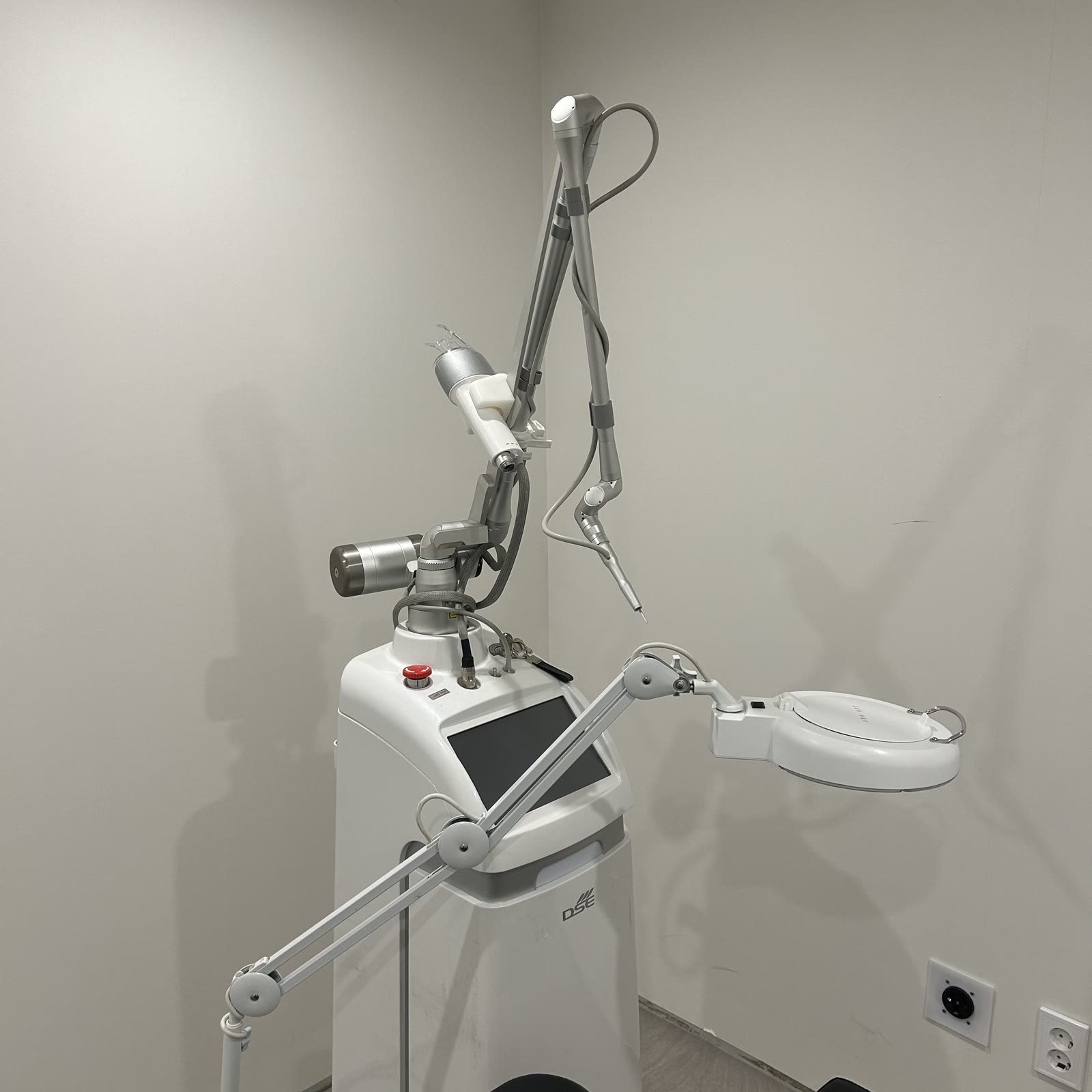
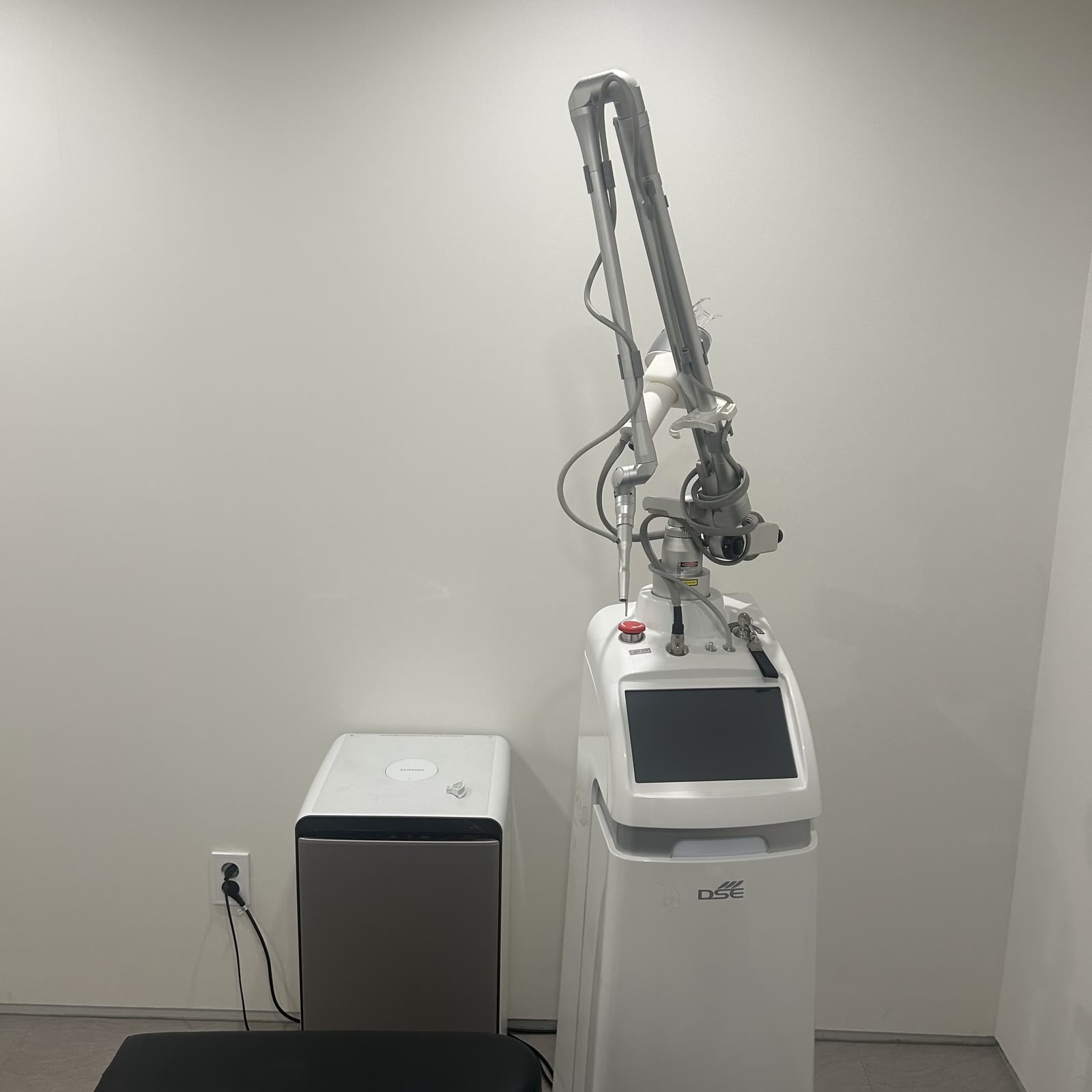
A CO2 laser instantly vaporizes tissue as its 10,600nm wavelength is absorbed by water in the skin. For a raised mole, the raised part is first shaved down to the level of the surrounding skin, and then the remaining pigment cells beneath are removed while adjusting the depth. Digging a large, deep mole down to the root all at once tends to leave an indentation or scar, so the remaining depth is treated again after the wound has healed.
For moles that keep coming back even after several laser sessions, we do not just repeat the laser; we first check at the examination whether surgical excision is needed. In areas where indentations are easily seen, such as the nose and around the mouth, the depth is divided further.
Treatment steps at our Suwon clinic
- Personalized Consultation
- Photos (Before Treatment)
- Numbing Cream
- Treatment
- Photos (After Treatment)
- Finishing Care
Numbing cream is used for anesthesia, and the procedure takes about an hour or less depending on the number and size of moles. The treatment scope divides the whole face and whole neck into 50 or fewer, 100 or fewer, and more than 100 each, and the body is set by front and back. Because mole depth and size vary from person to person, retreatment is done at intervals of 1 to 3 months after the treated area has fully recovered.
View CO2 laser mole removal treatment information
Recovery and care after raised mole removal
- Apply healing tape to the area where the mole was removed to keep it moist until new skin covers it, and do not pick off the scab by hand.
- For 3 to 7 days after treatment, avoid heavy drinking, smoking, saunas and Korean bathhouses, hot baths, and strenuous exercise to prevent inflammation.
- Medication prescribed according to the treated area is taken consistently for 3 days to help prevent inflammation and relieve pain.
- New skin is vulnerable to UV rays, so apply sunscreen every time you go out and cover the area with a hat.
The red mark left after removing the tape is not a side effect but a reaction that appears during recovery, and it gradually fades over 1 to 2 months. The site of a raised mole may look slightly indented at first, and we watch as it gets closer to the surrounding level as new skin fills in.
Side effects and precautions for raised mole removal
After the procedure, red marks, fluid, scabs, and temporary warmth may occur, and most are reactions that appear during recovery. The speed of recovery and the results vary from person to person.
If the area is exposed to UV rays or your skin is on the darker side, pigmentation that darkens the site to brown may occur. A site removed deeply may look slightly indented, and conversely, if you tend to form raised scars, the site may rise up firmly, and if pigment cells remain at the root, color may come back in the same spot. Please let us know before the procedure if you tend to form keloids, take blood-thinning medication, or are allergic to antibiotics.
If the area around the wound becomes increasingly red, swollen, and hot or pus forms, or if the wound takes a long time to heal and fluid keeps coming out, please contact the clinic right away. If the site starts to rise up firmly a few weeks later, please also get an early examination and ask about how to manage it.
What should be checked before raised mole removal?
In cases like these, first check the depth and nature of the mole
- The mole is raised above the skin and large.
- Its size, shape, or color has changed recently.
- A mole I had removed with a laser before has come back.
- Wounds tend to heal thick or scars tend to rise.
If two or more apply, it is best to check the depth and nature of the mole and whether you tend to form raised scars before removing it with a laser. Whether to have the procedure, the method, and the number of sessions are decided together in consultation after the medical team examines you.
In short, the key to removing raised moles is first checking the depth of the root and treating it in stages by depth to reduce indentation and scarring.
FAQ
Q. Can a large mole be removed with a laser all at once?
A. Small, shallow moles may be finished in one session, but large, raised moles are removed in stages at intervals of 1 to 3 months to reduce indentation and scarring. For very large or deep moles, or those that keep coming back even after laser, we first check at the examination whether surgical excision is needed.
Q. Will removing a raised mole leave a dent?
A. If the mole's root is deep, the site looks slightly indented at first, and we watch as it gets closer to the surrounding level over several weeks as new skin fills in. Removing it in stages by depth is also meant to reduce indentation and scarring.
Q. What should I do if a mole I had removed comes back in the same spot?
A. If pigment cells remain at the root, color may come back. After the wound has fully healed at intervals of 1 to 3 months, we look at the remaining depth to decide whether to remove it again, and if the shape or color changes from before, an examination comes first.
Q. When can I start wearing makeup after raised mole removal?
A. The basic rule is to apply makeup while avoiding the area with healing tape, and when you can start applying makeup on the wound depends on its depth and how quickly it heals, so we advise you after the procedure. Until the new skin firms up, do not rub; cover it lightly.
Q. I have many moles on my face. Can I remove them all at once?
A. Several small, flat moles can be removed at once, and there are also options that treat the whole face divided into ranges by number. If raised and large moles are mixed in, deep moles are separated out to plan the recovery schedule and number of sessions.
Q. How can I check the cost of raised mole removal?
A. The cost depends on the number, size, and location of the moles. We explain together after confirming at the examination and consultation the number and depth of the moles to be removed and how many sessions it will be divided into, and you can also see the items for each range on the treatment guide page.
This content is provided as general treatment information and is not a substitute for diagnosis or treatment. Always consult a medical professional to decide whether and how to proceed with a treatment.