


Hyperpigmentation: What Should I Do If It Appears After a Laser Treatment or Acne?
Hyperpigmentation is a condition in which, after the skin is exposed to inflammation, friction, or heat, excess melanin remains in that spot and appears as brown or dark patches. Hyperpigmentation that forms after a laser treatment, acne, or a wound may fade over several months once the irritation stops and UV rays are blocked, and if it lingers or covers a wide area, pigment treatment such as toning is considered after an examination.
Why does hyperpigmentation form?
When inflammation occurs in the skin, the cells that make melanin are stimulated and produce more pigment than usual. Typical examples are spots where acne was squeezed or scratched, areas that were red after a laser treatment or peel, and burns or insect bites, and it forms more easily in darker skin. In areas that constantly rub against clothing or other skin, such as the armpits, groin, buttocks, and knees, repeated friction can cause hyperpigmentation to settle over a wide area.
Steps to Take When Hyperpigmentation Appears After Treatment
If an area darkens within a few weeks after a laser treatment or peel, the first step is to reduce irritation. Stop exfoliating scrubs and peels, let scabs fall off on their own, and reapply sunscreen every time you go out. Pigment in the outer layer may fade within a few months, but color that has reached the dermis lingers longer. If the color remains unchanged after several months, we check its depth through examination and then consider low-energy toning performed at intervals.
How is laser treatment for body hyperpigmentation approached for each area?
For body hyperpigmentation caused by friction, such as on the buttocks, groin, and armpits, tight clothing and frequent hair removal irritation must be reduced along with lightening the color with a laser to keep it from darkening again. In areas with thin skin, such as the lips and around the eyes, the color may be caused by another condition, so the cause is identified first.
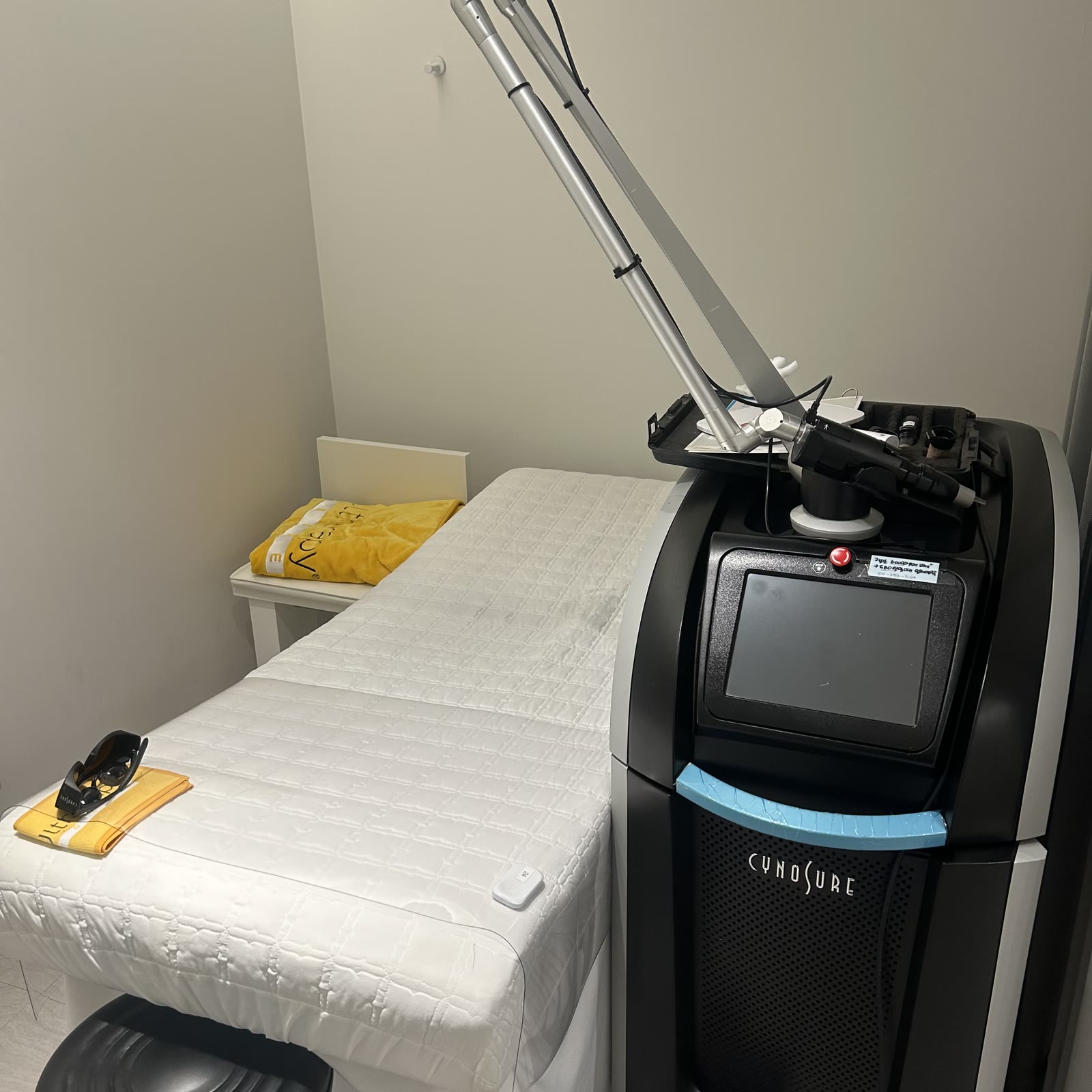
At our Suwon clinic, PicoSure toning for hyperpigmentation is carried out separately by area: the armpits, backs of the knees, elbows, groin, back, and chest.
Underarm Hyperpigmentation in Suwon: How Can Laser Toning Help It Fade?
See PicoSure toning treatment details
Slight redness and a burning sensation can also occur after toning, and they soon subside. In rare cases, the color may temporarily darken or turn white, so if color changes spread after treatment, please contact the clinic. If you are pregnant or taking medication that makes you sensitive to light, please let us know before treatment.
FAQ
Q. Will hyperpigmentation go away if I just leave it alone?
A. Post-inflammatory hyperpigmentation in the outer layer may fade over several months if the irritation is stopped and UV rays are blocked. Color that has reached the dermis or color in areas with ongoing friction may linger for a long time, so if it remains unchanged for close to six months, we check its depth through examination.
Q. If hyperpigmentation appears after a laser treatment, is it okay to have more laser treatment?
A. Right after it appears, the first step is to pause laser treatment and reduce irritation. If color remains even after the redness and inflammation have settled, whether to proceed with lower-energy toning at intervals is decided after an examination, and treatment is not repeated right away at the same intensity.
Q. Can hyperpigmentation on the buttocks also be lightened with a laser?
A. Hyperpigmentation on the buttocks is often caused by pressure from sitting and friction from clothing, so friction must be reduced while the color is lightened with toning. The number of sessions and intervals are decided based on the depth and extent of the color, and it's best to take a break from irritation that strips away dead skin, such as scrubbing with an exfoliating towel.
This content is provided as general treatment information and is not a substitute for diagnosis or treatment. Always consult a medical professional to decide whether and how to proceed with a treatment.