


Pico Fractional in Suwon: how does the same device used for toning treat scars and pores?
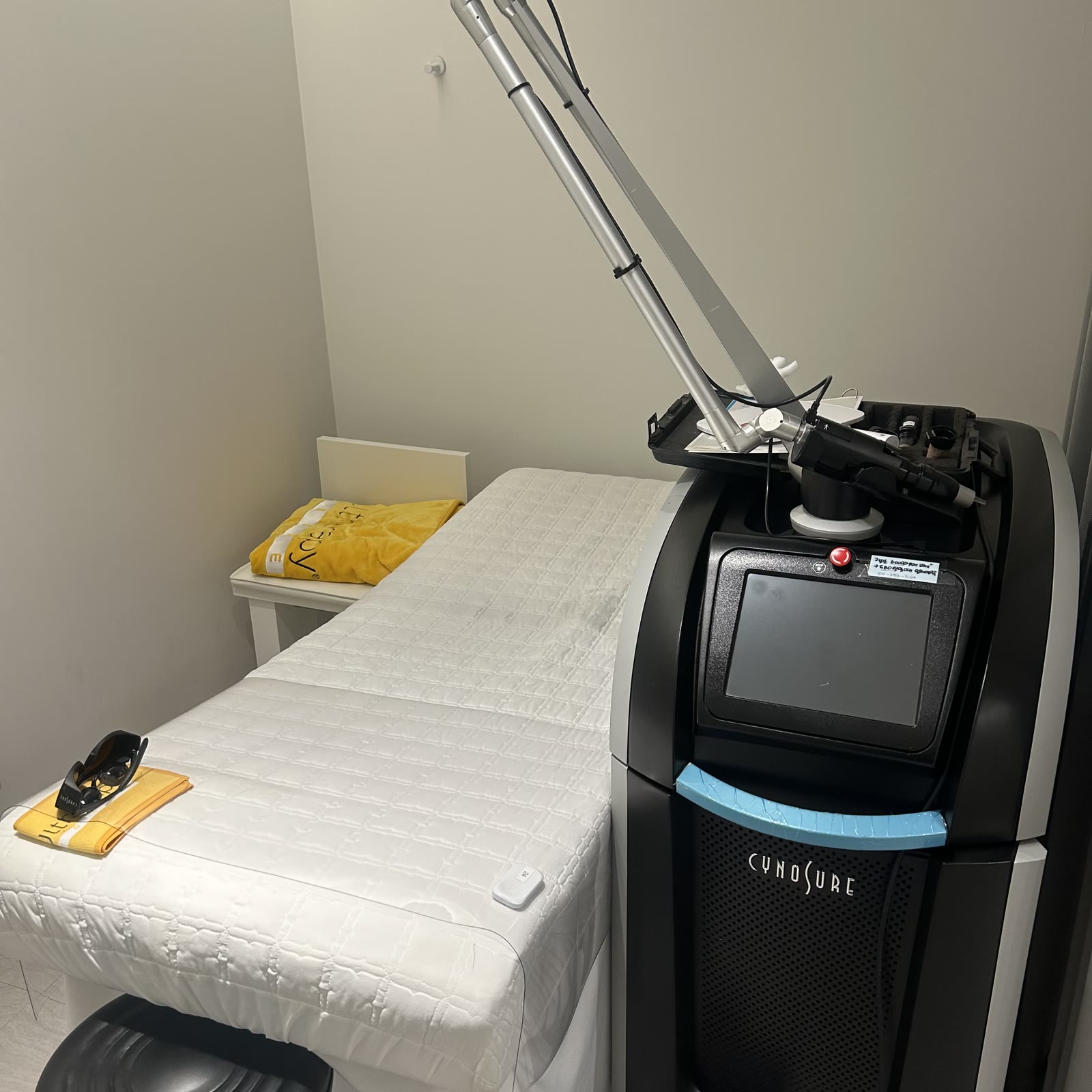
If shallow acne scars and enlarged pores are mixed with brown marks and they bother you, it helps to look at pigment and skin texture as separate issues. Pico Fractional is a treatment method in which a lens that focuses light into countless tiny points is fitted onto the picosecond laser used for toning, creating microscopic stimulation points in the dermis.
Whereas toning breaks up melanin into fine particles with broad, gentle light, Pico Fractional focuses the same light into points to create very small spaces within the skin, and collagen and elastic fibers are rebuilt as those spots recover. At our Suwon clinic, we first look at pigment, redness, and the depth of pores and scars during the consultation, then decide whether to focus on toning or to treat scars and pores together.
In this article, we go through how Pico Fractional works on scars and pores, the difference between the terms Pico toning and PicoSure, which skin it suits and the treatment process, recovery care, and side effects.
Pico Fractional at a glance
- Pico Fractional uses a lens to focus picosecond laser light into points, creating microscopic stimulation points in the dermis.
- PicoSure is the name of the device, while Pico toning and Pico Fractional are names of treatment methods performed with it.
- It is mainly considered for skin with a mix of shallow scars, sagging pores, and brown marks, while deep scars are planned with other treatments as well.
- Because collagen takes time to rebuild, treatment is done over several sessions, and changes appear gradually as sessions add up.
How does Pico Fractional work on scars and pores?
A picosecond laser delivers energy in an extremely short burst before heat can spread to surrounding tissue, breaking up its target with an impact closer to pressure than heat. With a lens fitted, the light gathers into points that each carry higher energy, and where it passes through the epidermis and reaches the dermis, spaces so small they can only be seen under a microscope are formed. The skin treats these spots as wounds and begins to heal, and over several weeks collagen and elastic fibers gradually fill in.
Pores tend to enlarge where sebaceous glands are concentrated, such as the area running from beside the nose to the inner cheeks, and as collagen supporting the pores decreases with age, they take on a downward-sagging shape. Pico Fractional works toward replenishing this support, and because the 755nm wavelength is readily absorbed by melanin, skin with brown marks left alongside scars can have both pigment and texture addressed with a single device.
How do Pico Fractional, Pico toning, and PicoSure differ?
The names are similar and easy to confuse, but they become clear once you separate device names from treatment method names.
| Name | What it refers to | How the light is used | Main concerns addressed |
|---|---|---|---|
| Picosecond laser | Any laser that fires light in units of one trillionth of a second | Very short pulses | Pigment, tattoos, skin texture |
| PicoSure | A picosecond laser device using a 755nm wavelength | Handpieces and lenses are switched as needed | Pigment, scars, fine wrinkles |
| Pico toning | Treatment method | Broad, gentle light applied evenly over the whole face | Pigment and skin tone |
| Pico Fractional | Treatment method | A lens focuses the light into points | Shallow scars, pores, skin texture |
So a single PicoSure device can perform both toning and fractional treatment, and which one it is used for depends on the handpiece, lens, and energy settings. You need to first sort out whether your current concern is pigment, texture and pores, or depressed scars before deciding what to focus on.
Skin types suited to Pico Fractional and the treatment process
Skin types that respond well and skin types for which other methods are also considered
Pico Fractional is mainly considered for skin with gently sloping, shallow acne scars and rough texture, sagging pores beside the nose and on the inner cheeks, and brown marks or dullness left alongside scars. Deep scars are planned together with treatments that work at greater depth, such as CO2 fractional laser or Potenza; if fine hair in the pores is the concern, laser hair removal comes first, and if new acne keeps appearing, acne treatment comes first. If your skin is sensitive and redness tends to linger, we lower the energy and allow more time between sessions.
Treatment steps at our Suwon clinic
- Personalized Consultation
- Self-Cleansing
- Treatment
- Finishing Care
The PicoSure at our Suwon clinic is equipped with multiple handpieces and focus lenses. Toning takes about 10 minutes or less, you can return to daily life right away, and it continues for 5 to 10 or more sessions at 1- to 2-week intervals. On days when scars and pores are treated together, it may take longer depending on the area and settings, which we explain at the consultation. If scars are deep, we plan it with other treatments, such as the 5-week scar package.
Recovery and care after Pico Fractional
- After treatment, avoid heavy drinking, saunas and jjimjilbang, hot baths, and intense exercise.
- You can wash your face and wear makeup on the day of treatment, but avoid scrubs and peeling treatments for about a week.
- Do not use retinol-based anti-wrinkle cosmetics or brightening functional cosmetics.
- Since dryness may occur, apply moisturizer often, and be sure to apply sunscreen when going out.
Any scabs that form will fall off on their own, so do not pick them off. Areas treated with the lens may stay red and dry for a few more days than with toning, and the changes from collagen filling back in appear gradually as sessions add up, so we decide the next settings based on how your skin looks between sessions.
Side effects and precautions for Pico Fractional
After treatment, you may have slight redness and a burning sensation that soon subside, and areas treated with the lens may show small dot-like marks or fine scabs. The speed of recovery and how much scars and pores are refined vary from person to person depending on skin condition.
Rarely, pigmentation, blisters, or temporary breakouts may occur. These reactions can increase in tanned skin, sensitive skin with a damaged barrier, or skin regularly using retinol, so we adjust the energy and intervals. If you have recently tanned, are taking a medication that makes skin sensitive such as isotretinoin, are prone to keloids, or are pregnant, please let us know before treatment.
If blisters or oozing develop, or if redness gets darker instead of fading after several days, please contact the clinic right away.
What should be checked before Pico Fractional?
If any of these apply, start with a scar and pore assessment
- I have shallow, gently sloping acne scars on my cheeks.
- The pores beside my nose and on my inner cheeks look stretched vertically.
- Brown acne marks remain around my scars.
- My skin texture is rough, so my makeup doesn't sit smoothly.
If two or more of these apply, it is best to first check whether your concern is pigment, texture and pores, or depressed scars. Whether to proceed, and the method and scope of treatment, are decided together at your consultation after a physician examines you.
In short, the key to Pico Fractional is first separating pigment, texture, and scar depth, then treating them over several sessions by changing the settings on the same device.
FAQ
Q. What is the difference between Pico toning and PicoSure?
A. PicoSure is the name of a picosecond laser device that uses a 755nm wavelength, and Pico toning is the name of a treatment method that addresses pigment with a picosecond laser. PicoSure is used for toning, and with a lens fitted it is also used for Pico Fractional.
Q. How many Pico Fractional sessions do I need?
A. Because collagen takes time to fill back in, treatment is done over several sessions. We set the interval and number of sessions based on scar depth, pore condition, and how well you recovered after the previous session, and the degree of change that appears as sessions add up varies from person to person.
Q. How much downtime does Pico Fractional involve?
A. After treatment, redness, a burning sensation, and dryness appear and then settle over a few days. Small dot-like marks or fine scabs may form where the lens was used, and the speed of recovery varies by person depending on the lens settings and skin condition.
Q. Are deep scars also treated with Pico Fractional?
A. Pico Fractional is mainly used for shallow scars and skin texture. Deep scars are planned together with treatments that work at greater depth, such as CO2 fractional laser or Potenza, and the combination is decided after examining the shape and depth of the scars.
Q. Can I get Pico Fractional and toning on the same day?
A. Since they use the same device, toning and fractional treatment are sometimes done in sequence during a single visit. Whether to do them on the same day or on separate days is decided together at the consultation, based on your skin sensitivity and redness, the area to be treated, and how your skin reacted after previous treatments.
Q. How can I find out the cost of Pico Fractional?
A. The cost depends on the treatment method, area, and number of sessions. We explain it after confirming at your consultation whether to focus on toning or treat scars and pores together, and how wide an area to cover, and you can also check the items for each option on the treatment information page.
This content is provided as general treatment information and is not a substitute for diagnosis or treatment. Always consult a medical professional to decide whether and how to proceed with a treatment.