


ONDA lifting pain: how hot does it get, and is anesthesia needed?
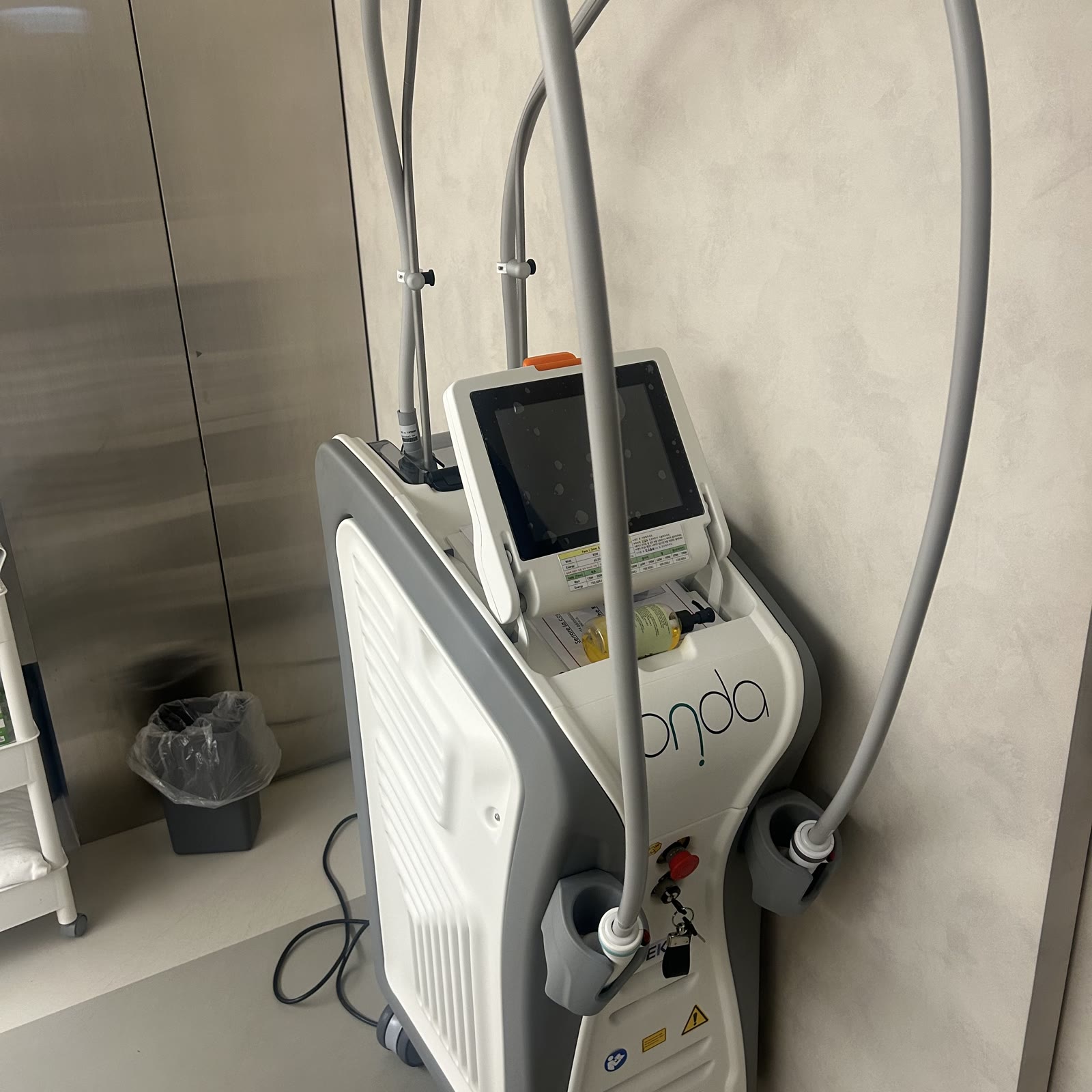
ONDA lifting pain is closer to a heat that warms up deep inside the skin than to the sting of a needle. Because the handpiece's cooling system lowers the surface temperature during treatment, it is often done without anesthesia, but areas close to bone or with thin fat, such as the jawline, may feel momentarily hot. How much you feel it varies with the energy intensity, area, and type of handpiece.
Why is ONDA lifting pain felt as heat?
ONDA sends 2.45GHz microwaves into the skin to heat the subcutaneous fat layer and dermis, which contain little water. Because no needles are used, the pain is more of a burning heat from within than a pricking sensation, and that heat grows as energy accumulates.
The handpiece maintains steady cooling and keeps moving over the skin, so heat does not stay in one spot for long. The heat is felt most strongly when energy is built up by passing over the same spot multiple times.
ONDA lifting pain that varies by area and handpiece
- The 7mm handpiece, which targets the subcutaneous fat layer, creates a feeling of deep heat and is used on areas with fat, such as the double chin and cheeks.
- The 3mm handpiece, which targets the dermis, may create a burning feeling closer to the surface.
- Areas close to bone with thin fat, such as the jawline and below the cheekbones, feel hotter even at the same energy.
At our Suwon clinic, ONDA is described as a treatment that can be done without anesthesia, and you can return to daily life right after treatment. If the heat becomes hard to bear, tell us right away during treatment and we will adjust the energy intensity and the speed at which the handpiece moves.
Post-treatment warmth and precautions
Right after treatment, your skin may feel red and warm, which usually subsides within a few hours. Heated skin tends to dry out, so apply plenty of hydrating cream and repair cream, and avoid saunas, hot baths, and strenuous exercise for about a week. For several days, do not rub your skin hard, and wash your face gently with lukewarm water.
Rarely, burns, blisters, or unevenness of the skin surface may occur, so if you see blisters after treatment or a burning sensation lasts more than a day, please contact the clinic. If you are pregnant or have a pacemaker or metal implants in your body, please let us know before treatment.
ONDA lifting in Suwon: when do results show, and which layers does it work on?
View ONDA Lifting Treatment Information
FAQ
Q. Does applying numbing cream reduce ONDA lifting pain?
A. ONDA pain is a heat rising from within rather than a sting on the surface, so numbing cream tends not to play a big role. The heat is controlled by the energy intensity and handpiece speed, so if it gets too hot during treatment, it is best to tell us right away.
Q. Does ONDA lifting pain increase with higher KJ?
A. KJ is the total amount of energy delivered in one treatment, so a higher number means passing over the same area longer and more times. The heat may therefore last longer, but how hot a single spot gets depends on intensity and speed adjustments.
Q. Does my face hurt after ONDA lifting?
A. After treatment, a burning feeling and redness remain for a few hours, and you may feel slight achiness when pressing for a day or two. If the pain gets progressively worse or blisters form, there is a possibility of a burn, so please contact the clinic right away.
This content is provided as general treatment information and is not a substitute for diagnosis or treatment. Always consult a medical professional to decide whether and how to proceed with a treatment.