


ONDA lifting in Suwon: when do results show, and which layers does it work on?
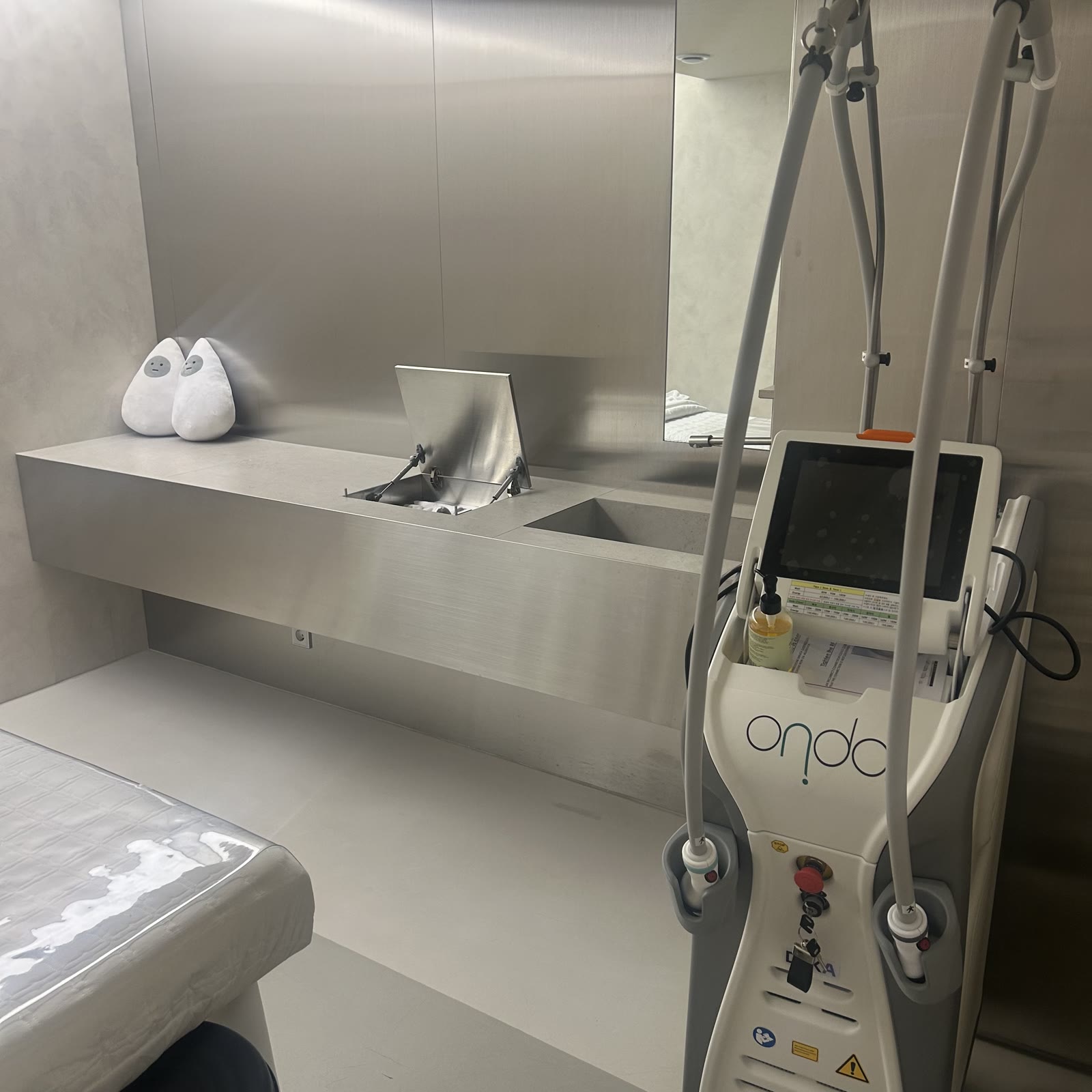
If your jawline looks blurred because of cheek fat or a double chin, it helps to first check whether the cause is fat or loss of firmness rather than sagging. ONDA lifting is a treatment that sends 2.45GHz microwave energy into the skin to generate heat in the dermis and subcutaneous fat layer, and that heat triggers both the process of rebuilding collagen and the process of reducing fat cells.
ONDA lifting results appear gradually over several weeks rather than right after treatment. This is because it takes time for heated fat cells to leave the body and for new collagen to form. At the Suwon clinic, during consultation we first look at skin thickness, fat distribution, and the degree of sagging, then decide the energy intensity and number of shots.
In this article, we go through how microwaves work on the fat layer, how it differs from ultrasound and radiofrequency lifting, handpiece selection and the process, the timing of results and aftercare, and side effects in order.
ONDA lifting key points
- ONDA lifting uses microwaves to vibrate water molecules in tissue, generating heat in the dermis and subcutaneous fat layer.
- Ultrasound lifting mainly addresses the fascia layer and radiofrequency lifting the dermis, while ONDA addresses the dermis and fat layer together.
- The 3mm handpiece targets the dermis and the 7mm handpiece targets the subcutaneous fat layer, and they are used separately by area.
- Changes appear gradually over several weeks, and for about a week after treatment, activities that raise body heat are avoided.
How does ONDA lifting work on the fat layer?
The 2.45GHz microwaves used in ONDA lifting rapidly vibrate water molecules in tissue, generating heat inside the skin. This energy travels down to the subcutaneous fat layer with little scattering at the skin surface, and a cooling device in the handpiece lowers the temperature of the epidermis, so the surface feels only warm.
Heat that reaches the dermis stimulates collagen fibers, starting the process in which the skin produces new collagen. Heat that reaches the fat layer damages fat cell membranes, and the damaged fat cells are gradually eliminated through the body's metabolic processes over several weeks. That is why ONDA addresses firmness and fat within one device by dividing them by depth.
How do ONDA, ultrasound, and radiofrequency lifting differ?
The three methods differ in the type of energy and the layer where heat is generated. Even for the same sagging, the approach differs depending on whether the cause is fat, skin firmness, or the deeper fascia layer.
| Category | ONDA Lifting | Ultrasound lifting | Radiofrequency lifting |
|---|---|---|---|
| Energy | 2.45GHz microwave | Ultrasound focused at a single point | Radiofrequency current |
| How heat is generated | Vibration of water molecules in tissue | Thermal coagulation points formed at the focal point | Electrical resistance of tissue |
| Main layer affected | Dermis and subcutaneous fat layer | SMAS layer | Dermis |
| Main concerns addressed | Cheek fat, double chin, firmness | Fascia sagging | Skin firmness and texture |
Which method is right is decided by the layer where the concern arose, not by device name. If cheek fat and fascia sagging are both present, the two methods are sometimes planned separately, and in that case the order is decided after hearing which layer each treatment addresses.
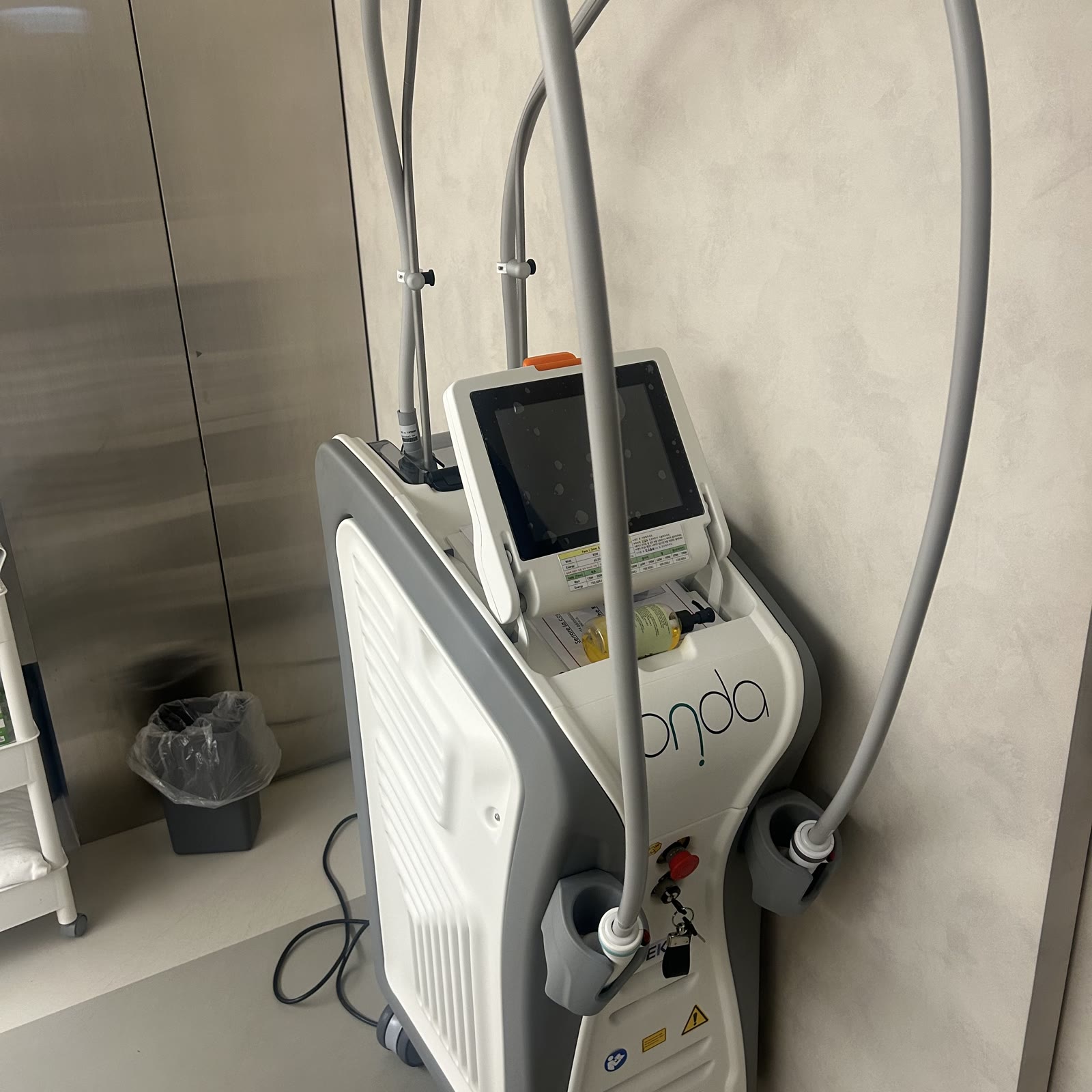
How ONDA lifting is performed and how handpieces are chosen
How the 3mm and 7mm handpieces are chosen
With ONDA lifting, the depth the heat reaches is selected by handpiece. The 3mm handpiece concentrates heat in the dermis to address collagen regeneration and firmness, while the 7mm handpiece sends heat down to the subcutaneous fat layer to address fat cell breakdown and contour. Using deep settings heavily in areas with thin fat can cause hollowing, so even within the same face, the handpiece and amount of energy are divided by area.
The amount of energy is set in kilojoules (KJ). The larger the number, the greater the total energy delivered, and it is chosen according to the area treated and the amount of fat.
Treatment steps at our Suwon clinic
- Consultation and Assessment: Before the treatment, we precisely evaluate your skin thickness, fat distribution, and degree of sagging to establish the energy intensity and a customized number of shots.
- Cleansing and Preparation: After thoroughly removing impurities, oil, and makeup from the skin's surface, a dedicated gliding oil is applied so the energy transfers smoothly.
- Handpiece Selection and Treatment: Depending on the area of concern, the 3mm handpiece (targeting the dermis for collagen regeneration and firmness) and the 7mm handpiece (targeting the subcutaneous fat layer for fat cell breakdown and contour refinement) are used selectively during the treatment.
- Aftercare and Soothing: After the treatment, residual oil is removed, followed by moisturizing and soothing care, finished with sunscreen. You can return to daily life immediately.
It can be done without anesthesia, and you can return to daily life right after treatment. For the face, options are 20KJ for the double chin or jawline only, and 40KJ, 60KJ, and 80KJ for the full face. For the body, 40KJ is used for one area among the inner arms, outer arms, or accessory breast tissue, and 80KJ for one area among the abdomen, flanks, inner thighs, saddlebags, or banana rolls, and depending on the option, it is split into 1 or 3 sessions.
View ONDA Lifting Treatment Information
Timing of ONDA lifting results and aftercare
- For about a week after treatment, avoid activities that raise body heat, such as saunas, jjimjilbang, hot baths, and intense exercise.
- To avoid interfering with skin recovery and collagen regeneration, stay away from alcohol and cigarettes for about a week.
- Heated skin may become temporarily dry, so apply plenty of moisturizing cream and repair cream, and apply sunscreen thoroughly when you go out.
- On the day of treatment and for a few days after, do not rub the skin hard, and wash your face gently with lukewarm water without scrubs or deep-cleansing products.
ONDA lifting results are judged by changes over several weeks rather than the tight feeling right after treatment. The process of fat cells leaving and collagen being rebuilt usually begins to show gradually from 2 to 4 weeks, and is followed until around 3 months. Remaining fat cells can grow larger again if you gain weight, so how long results last depends on weight changes and firmness, and when treatment is split into sessions, the interval is decided in consultation.
Side effects and precautions of ONDA lifting
Right after treatment, redness, a sensation of heat, and mild swelling may occur, and these usually settle within a few hours to a few days. Heated skin may feel dry or tight for a few days, and the degree of reaction and speed of recovery vary from person to person depending on skin thickness and amount of fat.
Rarely, burns, blisters, unevenness of the skin surface, or hollowing in areas with little fat may occur. These risks increase when deep settings are used on areas with thin skin or heat repeatedly hits the same spot, so areas with thin fat are treated with reduced energy. Please tell us before treatment if you are pregnant or breastfeeding, have a pacemaker or metal implant in your body, or have inflammation in the treatment area.
If blisters form or pain does not subside and keeps getting worse, do not touch the blisters; contact the clinic right away.
What is checked before ONDA lifting?
In these cases, start by having your fat distribution assessed
- Your jawline looks blurred because of cheek fat or fat under the chin.
- You have a double chin you can grab with your hand.
- Sagging is not severe, but you feel your skin has lost firmness.
- You have little fat on your face and worry your cheeks may hollow after treatment.
If two or more apply, it is best to first check whether the cause of sagging is fat, firmness, or fascia. Whether to treat, the method, and the area are decided together in consultation after a physician's examination.
In short, the key with ONDA lifting is to first identify the layer where the concern arose and manage it while watching the changes over several weeks.
FAQ
Q. When can I feel the effects of ONDA lifting?
A. Right after treatment, you feel only a slight tightening of the skin, while changes from fat cells leaving and collagen forming appear gradually over several weeks. Changes are usually followed until around 3 months, and the timing and degree vary from person to person.
Q. Does ONDA lifting hurt?
A. The handpiece's cooling device lowers the epidermal temperature during treatment, so it mostly feels like warm heat, and it can be done without anesthesia. When deep settings are used on areas with thick fat, such as under the chin, the heat may feel stronger.
Q. With ONDA lifting, does a higher KJ number mean a bigger effect?
A. KJ is the total amount of energy delivered, so it is set according to the area treated and the amount of fat. Results do not increase in proportion to the number, and areas with thin fat, such as below the cheekbones, need to be treated carefully with reduced energy to lower the risk of hollowing.
Q. I have little fat on my face; will my cheeks hollow after ONDA lifting?
A. For faces with little fat, use of the 7mm handpiece that targets the subcutaneous fat layer is reduced, and treatment focuses on firmness with the 3mm handpiece that addresses the dermis. The handpiece and amount of energy are decided after checking the fat distribution by area in consultation.
Q. Can I have ONDA lifting on my face and body together?
A. The body uses different energy units from the face, so it is planned separately. It is divided into small areas such as the arms and accessory breast tissue and large areas such as the abdomen, flanks, and inner thighs, and whether to have them on the same day is decided in consultation based on the extent of each area and your recovery schedule.
Q. How can I find out the cost of ONDA lifting?
A. The cost depends on the amount of energy, the number of sessions, and the treatment area. We confirm in consultation whether it is the full face, only the double chin and jawline, or which area of the body before giving you details, and items by option can also be found on the treatment information page.
This content is provided as general treatment information and is not a substitute for diagnosis or treatment. Always consult a medical professional to decide whether and how to proceed with a treatment.