


Improving nasolabial folds in Suwon: filler, lifting, or skin boosters, which should you consider first?
If the line running from the side of your nose to the corners of your mouth looks deep even when you aren't smiling and it bothers you, it is worth first checking what has caused your nasolabial folds to deepen. Nasolabial folds don't form only because the skin folds; they are a change in which hollowing from reduced volume that supported the cheeks, sagging as cheek tissue moves downward, and fine lines from thinning skin overlap to deepen the shadow.
So what to consider first for nasolabial folds depends on which cause plays the biggest role. If hollowing is significant, we look first at supporting volume with filler or collagen injections; if sagging is significant, at lifting; and if the skin is thin with many fine lines, at skin boosters. At our Suwon clinic, we first look at which of the three causes plays a major role during the consultation, and decide whether one approach is enough or whether two should be done in sequence.
In this article, we go over the causes that deepen nasolabial folds, how to identify your type of nasolabial folds, treatment methods for each cause and the filler treatment steps at our Suwon clinic, recovery and care, and side effects, in that order.
Nasolabial folds: key points
- Nasolabial folds often deepen from a mix of three factors: volume loss, sagging, and skin thinning.
- If the area looks hollow with a neutral expression, volume loss tends to be the bigger factor; if the line fades when you lift your cheeks, sagging tends to be the bigger factor.
- Filler and collagen injections are used for hollowing, lifting for sagging, and skin boosters for thin skin, and each works on a different layer.
- For 2–3 weeks after filler, avoid pressing on or irritating the treated area so the shape can settle.
Why do nasolabial folds deepen?
The first cause is volume loss. With age, the fat and bone volume beside the nose and in the front of the cheeks decreases, weakening the support beneath the skin, and as that area hollows, the line looks deeper. If a groove is visible even with a neutral expression, this cause tends to be significant.
The second cause is sagging. When the ligaments and fascia that hold cheek tissue in place loosen, the cheeks move down toward the mouth and rest on top of the nasolabial line, casting a shadow beneath it. This tends to appear along with changes such as a less defined jawline or bulging beside the corners of the mouth.
The third cause is a change in the skin itself. As collagen decreases, the skin thins, and when the same spot folds every time you smile, fine lines increase around the line. This change appears sooner in skin that has lost weight suddenly or has had prolonged UV exposure.
What type are my nasolabial folds?
By changing your expression and posture in front of a mirror, you can get an idea of which cause is greater. The table below breaks down, by type, how it looks, the layer involved, and the methods mainly used.
| Type | How it looks | Layer treated | Methods mainly used |
|---|---|---|---|
| Volume loss | The area beside the nose looks sunken even with a neutral expression | Fat layer under the skin and above the bone | Filler, collagen injections |
| sagging | The line fades considerably when you lift the cheeks toward the ears | Fascial layer and the fat layer above it | Ultrasound and radiofrequency lifting, thread lifting |
| Skin thinning | The line is shallow, but there are many fine lines around it | Dermis | Skin Boosters |
If the lines deepen only when you smile and are barely visible with a neutral expression, expression habits are a big factor. In most cases two or three causes are mixed, so during the consultation we look at the difference in depth between the left and right sides, the volume in the front of the cheeks and under the cheekbones, and sagging along the jawline and around the mouth together. This is because deciding the amount based only on the nasolabial line can concentrate volume in one spot and look unnatural when you smile.
How are filler and lifting for nasolabial folds performed?
Treatment principles by cause
Hyaluronic acid filler is a gel made from a substance also found in the body, and it is placed beneath the hollowed area to support volume. Because the nasolabial area moves a lot with facial expressions, small amounts are injected in portions matched to the right layers, and if you are not happy with the shape, it can be dissolved with an enzyme. Collagen injections such as Juvelook Volume or Sculptra work by having PDLLA or PLLA gradually break down and encourage collagen to form around them, so volume is assessed over several weeks.
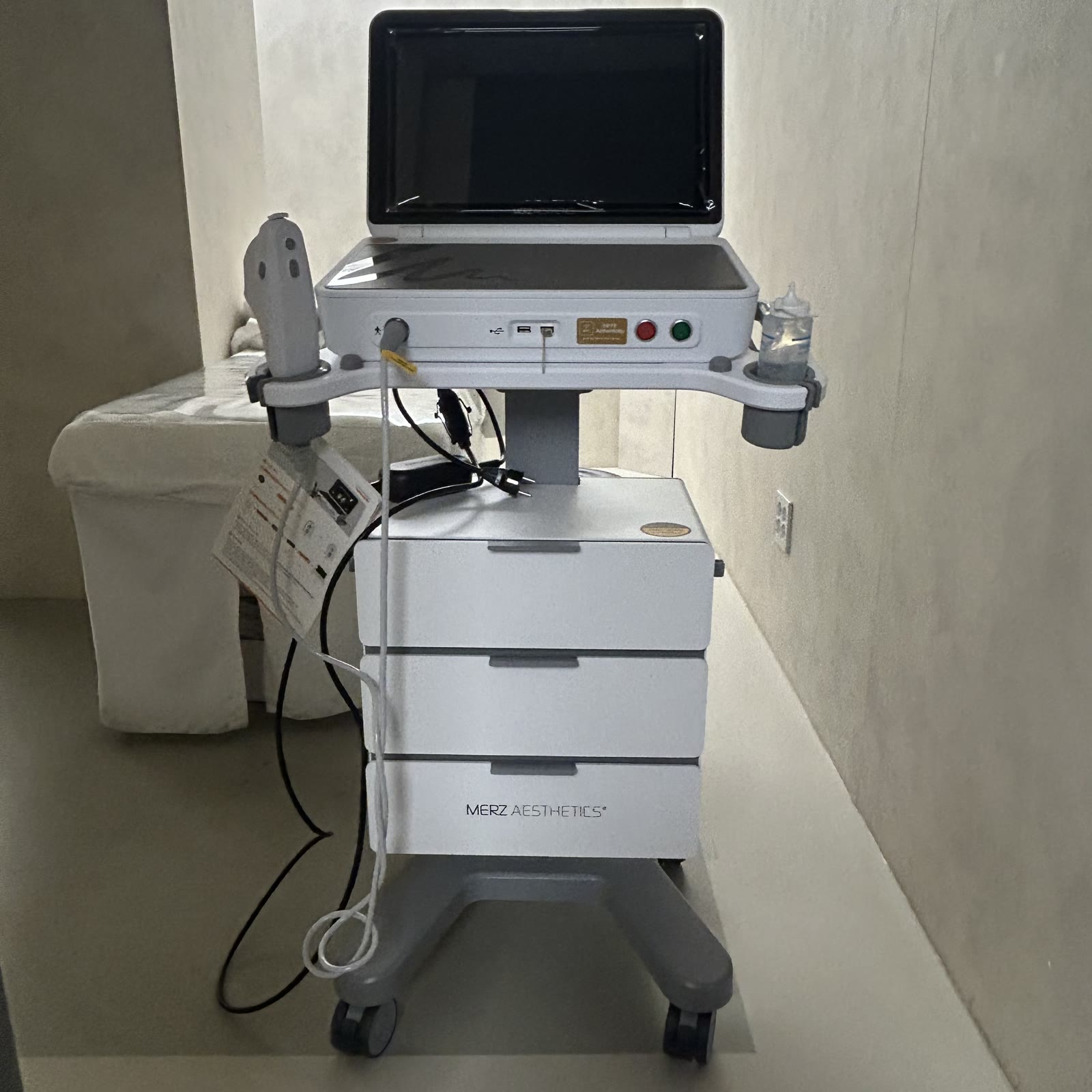
Ultrasound lifting leaves the skin surface intact while creating small thermal points in the fascial layer and the fat layer above it, encouraging collagen to form as the tissue contracts and recovers. Radiofrequency lifting delivers heat broadly within the skin, and thread lifting uses dissolvable medical threads to hook sagging tissue upward for support. Skin boosters are used to evenly inject ingredients into the dermis to build a foundation for skin texture and elasticity.
Treatment steps at our Suwon clinic
- Personalized Consultation
- Photos (Before Treatment)
- Numbing Cream / Local Anesthesia
- Design
- Disinfection
- Treatment
- Photos (After Treatment)
Nasolabial filler is performed after numbing cream or local anesthesia, followed by design and disinfection; the procedure takes about 10 minutes, and you can return to daily activities right afterward. The duration is generally given as 6–12 months, but it varies depending on the treatment area, product, and individual. Retreatment is possible after bruising and swelling have settled, and whether to proceed is decided in consultation with the medical team. Korean-made filler is available in 1cc, 3cc, and 5cc options.
View nasolabial fold filler details
Recovery and care after nasolabial fold treatment
- You can wash your face and wear makeup 2–3 hours after treatment, and the DuoDERM patch applied to the treated area is removed after 1–3 days.
- For 3–7 days after treatment, avoid heavy drinking, smoking, saunas and jjimjilbang, hot baths, and strenuous exercise to prevent inflammation.
- For 2–3 weeks, avoid anything that presses on or irritates the treated area, such as wearing hats, sleeping face down or on your side, wearing glasses, ultrasound and radiofrequency treatments, facial meridian massage, and dental treatment.
- Depending on the treated area, medication is prescribed to prevent inflammation and relieve pain; take it for 3 days without missing a dose.
Filler can change shape when you use your facial muscles or when outside pressure is applied, so care during the first few weeks is important. Volume gradually decreases even after treatment, so lifestyle care such as being mindful of smiling habits, using sun protection, and avoiding sudden weight changes may help slow how quickly the lines deepen again.
Side effects and precautions for nasolabial fold filler
After injection treatments, bruising, swelling, pain, or a foreign-body sensation may occur depending on your skin condition, and most of these settle within 1–2 weeks. How quickly the swelling goes down and when the shape settles vary from person to person.
In rare cases, nerve damage, allergic reactions, or inflammation can occur, and if filler blocks a blood vessel, there is a risk of skin necrosis. When injecting around the eyes, such as between the eyebrows, blockage of a blood vessel leading to the eye carries a risk of vision loss or blindness, so the layer and amount are decided with the location of blood vessels in mind. If you have a medical history such as an antibiotic allergy or any special conditions, be sure to tell us before treatment. If you are taking blood-thinning medication, please let us know before treatment.
If pain keeps getting worse even after taking the prescribed medication, the skin turns pale white or blotchy, or blisters, itching, or warmth persist, please contact the clinic right away.
What should be checked before nasolabial fold treatment?
If any of these apply, start with a nasolabial fold consultation
- Even with a neutral expression, the area beside my nose is sunken and casts a shadow.
- When I lift my cheeks toward my ears, the nasolabial line fades noticeably.
- The area beside my mouth has become puffy, or my jawline is less defined than before.
- Fine wrinkles around the line have increased, and the skin looks thin and translucent.
If two or more apply, it is a good idea to check which is greater, volume loss, sagging, or skin thinning, before deciding on a single treatment. Whether to treat, which method to use, and the treatment area are decided together during the consultation after the doctor's examination.
In short, the key with nasolabial folds is to first determine which is greater, hollowing, sagging, or skin thinning, and to start by treating the layer that matches that cause.
FAQ
Q. Can nasolabial folds be removed with massage or creams?
A. Creams and massage help with moisturizing the skin surface and blood circulation, but they are unlikely to restore lost volume or tissue that has moved downward. Massage that rubs the face hard can actually irritate the skin, so it is best avoided.
Q. Is Botox sometimes used for nasolabial folds?
A. For nasolabial folds that deepen only when smiling, we sometimes consider methods that adjust the movement of certain facial muscles or treat shallow fine lines. If hollowing or sagging is significant, we also look at methods that address volume and sagging.
Q. How long does nasolabial fold filler last?
A. The duration of hyaluronic acid filler is generally given as 6–12 months. In practice, it varies depending on the treatment area, product, and individual metabolic rate, and whether to retreat is decided in consultation with the medical team after bruising and swelling have settled.
Q. When can I start washing my face and wearing makeup after nasolabial fold filler?
A. You can wash your face and wear makeup 2–3 hours after treatment, and the DuoDERM patch applied to the injection sites is removed after 1–3 days. However, for 2–3 weeks, be careful not to sleep face down or press and rub the treated area hard.
Q. Can I get filler and lifting on the same day?
A. For 2–3 weeks after filler, treatments that stimulate the treated area, such as ultrasound and radiofrequency procedures, are avoided, so if you plan both treatments together, the order must be decided first. Whether to do them on the same day or on separate days is decided during the consultation based on swelling and your schedule.
Q. How can I find out the cost of nasolabial fold treatment?
A. The cost depends on the treatment method, filler volume, and number of sessions. After identifying the causes of your nasolabial folds through an examination, we explain during the consultation which method to use and how many sessions to plan, and you can also check the items for each package on our treatment information page.
This content is provided as general treatment information and is not a substitute for diagnosis or treatment. Always consult a medical professional to decide whether and how to proceed with a treatment.