


How to get rid of melasma in Suwon: why it comes back even after laser treatment, and how to manage it
If melasma that faded after toning has come back a few months later and is bothering you, it is worth first understanding what lasers can and cannot do. Melasma is a pigmentation disorder that appears as brown patches with blurry borders on both cheeks, the forehead, and the upper lip, and it is a condition in which melanocytes have become sensitive due to a combination of UV exposure, hormonal changes, and heat.
The key to getting rid of melasma is to treat the pigment that has already formed with a laser while also reducing the causes that keep producing pigment. Lasers cannot remove the underlying causes, so if UV exposure and heat continue, the color comes back. At our Suwon clinic, we first look at the depth and distribution of the pigment and whether redness is also present during the consultation, then decide on the toning device and number of sessions.
In this article, we go over why melasma forms and remains chronic, why it comes back after laser treatment, how melasma lasers work and the treatment steps at our Suwon clinic, care to reduce recurrence, and side effects, in that order.
Getting rid of melasma: key points
- Melasma is a chronic pigmentation disorder caused by UV exposure, hormones, heat, and the blood vessels and inflammation beneath the melasma continually stimulating melanocytes.
- When it comes back after laser treatment, it is often because the causes remain, the energy and intervals were not right, or other types of pigment were mixed in.
- PicoSure toning is continued for 5–10 or more sessions at intervals of 1–2 weeks while monitoring how the pigment responds.
- Continuing sun protection and reducing heat exposure alongside toning helps maintain the faded state for longer.
Why does melasma form, and why does it remain chronic?
Melanin, which gives skin its color, comes from melanocytes in the basal layer of the epidermis. When exposed to UV, these cells increase pigment, and when combined with hormonal changes such as pregnancy or birth control pills, heat from saunas or cooking over a stove, lack of sleep, and stress, it accumulates as faint patches on both cheeks and the forehead.
In skin with melasma, the blood vessels beneath are often dilated and mild inflammation persists, and this environment continually stimulates melanocytes. So unlike a mole that is gone once removed, melasma is closer to a chronic condition that is controlled through ongoing care, and even after treatment, the color returns if the causes build up again.
Why does melasma come back even after laser treatment?
- This is when the causes that produce pigment remain. If you skip sun protection or are frequently exposed to heat, new pigment fills in the areas where pigment was treated.
- The energy was too strong for the skin. Melanocytes that receive strong stimulation produce more pigment, and the treated area temporarily becomes darker.
- The intervals were irregular. If you rest too long before the next session, pigment that was fading settles back in.
- The pigment is in a deep layer. Pigment that has reached the dermis responds slowly and needs more sessions than epidermal pigment.
- This is when other types of pigment are mixed in. Pigment such as freckles, lentigines, and nevus of Ota does not clear well with melasma toning alone.
If the color briefly looks darker for a few days after treatment and then fades, this may be the process of broken-up pigment being cleared out. On the other hand, if the treated area becomes darker or blotchy even after several weeks, it is a sign that the energy and interval need to be readjusted, so be sure to let us know at your next visit.
How is laser toning for melasma performed?
How melasma lasers work
Melasma lasers break pigment into fine pieces in an extremely short instant and let the skin gradually clear the broken-up pigment. Because melasma pigment tends to darken with strong stimulation, toning, which applies low energy broadly and evenly, is continued over multiple sessions.
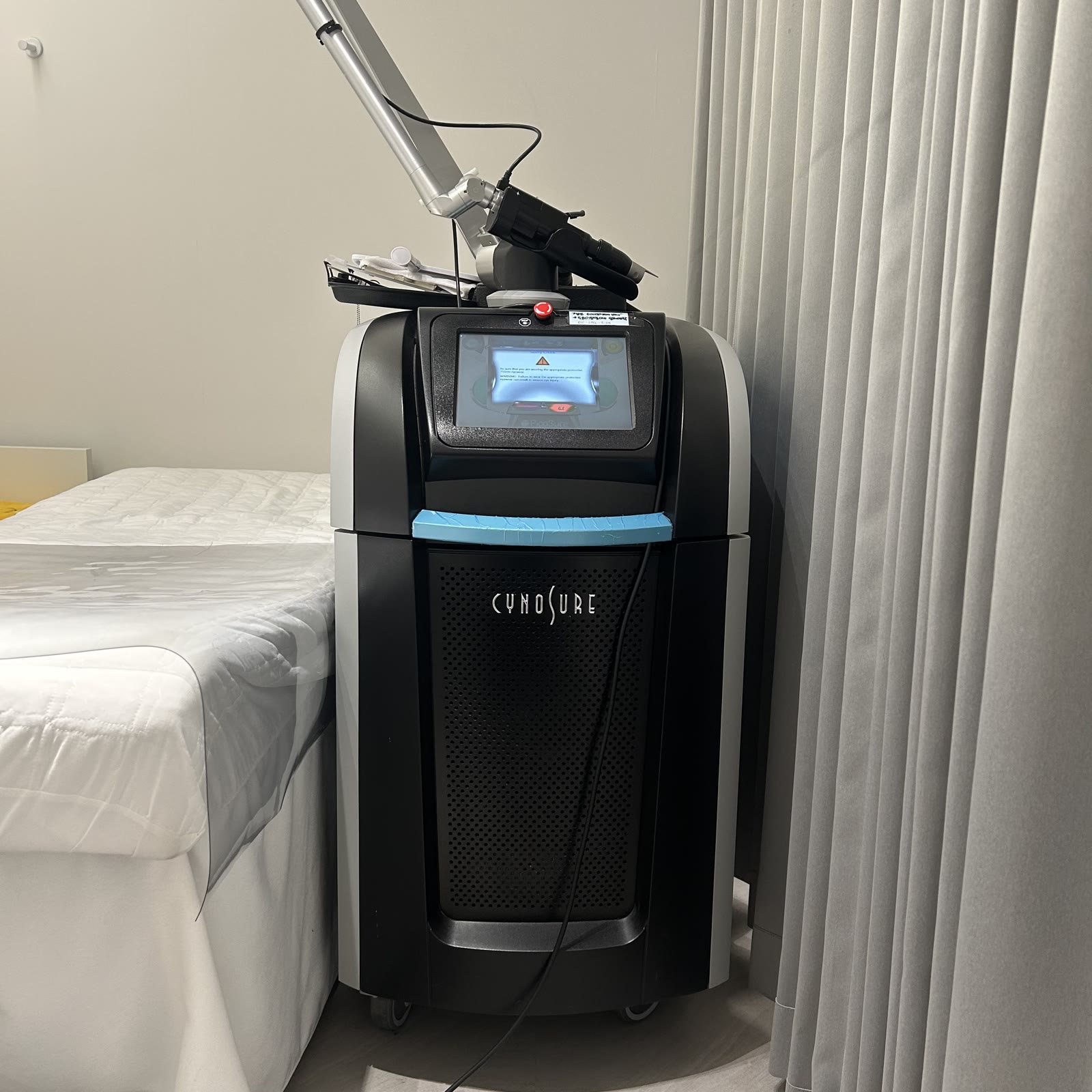
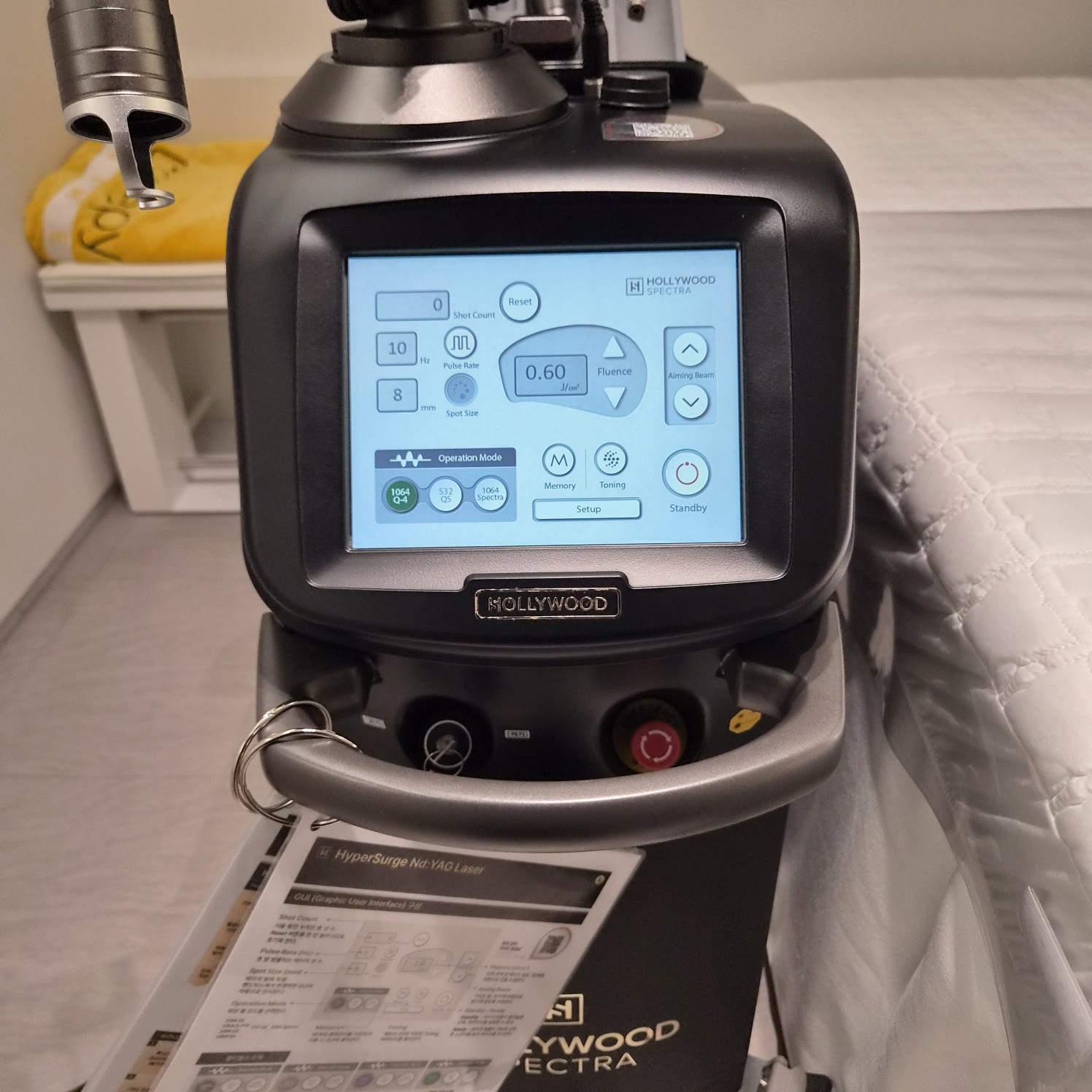
PicoSure is a 755 nm picosecond laser used for toning that breaks up shallow pigment into fine pieces with very short pulses. Hollywood Spectra is a Q-switched Nd:YAG laser used for toning that applies uniform energy over a wide area, and Excel V Plus uses two wavelengths, 532 nm and 1064 nm, for cases with pigment along with redness and dilated blood vessels. Since each device differs in wavelength and delivery, we choose one or use them together based on the depth of the pigment and whether redness is present.
Treatment steps at our Suwon clinic
- Personalized Consultation
- Self-Cleansing
- Treatment
- Finishing Care
PicoSure toning takes about 10 minutes or less, and you can return to daily activities right afterward. Results vary depending on skin condition, so the standard is 5–10 or more sessions at intervals of 1–2 weeks. The 5-session and 10-session packages include vitamin infusion care and a modeling mask after each toning session, and in the 10-session package, Mark-Vu precision skin analysis is done at the 1st, 6th, and 10th sessions to check how the depth and distribution of pigment change. For melasma with redness, 3–5 sessions of Excel V Plus at 3–4 week intervals are sometimes added.
Care to reduce melasma recurrence
- After treatment, avoid heavy drinking, saunas and jjimjilbang, hot baths, and strenuous exercise.
- You can wash your face and wear makeup on the day of treatment, but avoid scrubs and peel treatments for about a week.
- Do not use anti-wrinkle cosmetics containing retinol or functional whitening cosmetics.
- Since dryness may occur, apply moisturizer often, and be sure to apply sunscreen when going out.
It is best to apply sunscreen every day, even on cloudy days, reapply it when you are outside for a long time, and also use a hat and parasol. Reducing situations that heat up your face, such as washing with hot water or cooking over a stove, may help reduce stimulation of pigment cells. Even after completing the target number of sessions, planning maintenance toning around seasons with strong UV may help delay when it darkens again.
Side effects and precautions for melasma toning
Right after toning, there may be slight redness and a burning sensation, but these soon settle. If small scabs occasionally form, do not pick them off; let them fall off on their own, and if dryness continues for a few days, moisturize more. The degree of reaction and how quickly the pigment fades vary from person to person.
In rare cases, post-inflammatory hyperpigmentation, in which the treated area actually becomes darker, or depigmentation, in which the skin turns white from repeated strong exposure, can occur. These risks increase right after a sunburn or with a lot of UV exposure during recovery. If you are taking any medication or have a skin condition, please tell us before treatment. If you are pregnant or breastfeeding, or taking medication that makes you sensitive to light, such as isotretinoin, please let us know before treatment.
If blisters form after treatment, the burning sensation and redness do not subside for several days, or you notice patches that keep getting darker, please contact the clinic right away.
What should be checked before melasma toning?
If any of these apply, start with a pigment diagnosis
- Patches that faded after toning have darkened again over a few months.
- Spots with distinct borders are mixed in among the faint patches on both cheeks.
- The area around the patches easily turns red, and I often feel warmth there.
- I often do outdoor activities or frequently skip sun protection.
If two or more apply, it is a good idea to check the type and depth of the pigment and whether redness is present before increasing the number of toning sessions. Whether to treat, which method to use, and the treatment area are decided together during the consultation after the doctor's examination.
In short, the key with melasma is to first determine the type and depth of pigment, then continue low-energy toning and sun protection together at the right intervals.
FAQ
Q. Can melasma be removed with a laser?
A. Laser toning lightens accumulated pigment by breaking it into fine pieces, but it cannot eliminate the causes of melasma. So the approach is to manage the faded state by continuing toning together with sun protection and reducing heat exposure.
Q. How many melasma toning sessions do I need?
A. PicoSure toning results vary depending on skin condition, so the standard is 5–10 or more sessions at intervals of 1–2 weeks. The number of sessions is adjusted based on the depth of the pigment and the response at each session, and if redness is also present, another device may be added.
Q. Can melasma actually get darker after toning?
A. For a few days right after treatment, the broken-up pigment may temporarily look darker as it clears out. If the treated area becomes darker even after several weeks, the energy and intervals need to be readjusted, so please let the clinic know without waiting for your next visit.
Q. Are melasma and freckles treated together?
A. Pigment with distinct borders, such as freckles and lentigines, responds to lasers differently from melasma, so it is sometimes treated separately. We usually plan to first stabilize the melasma with toning and then selectively clear the pigment with distinct borders.
Q. When can I wear makeup after melasma toning?
A. You can wash your face and wear makeup even on the day of toning. However, for about a week it is best to avoid scrubs and peels, not use retinol or functional whitening cosmetics, and be sure to apply sunscreen when going out.
Q. How can I find out the cost of melasma toning?
A. The cost depends on the device, number of sessions, and the care package included. After checking the depth and extent of the pigment during the consultation, we explain how many sessions to plan, and you can also check the packages by number of sessions on our treatment information page.
This content is provided as general treatment information and is not a substitute for diagnosis or treatment. Always consult a medical professional to decide whether and how to proceed with a treatment.