


Beard shadow in men: why does it look bluish even after shaving, and how can it be reduced?
Beard shadow in men is a condition in which, even after a clean shave, the thick, dark hair roots remaining beneath the skin show through, making the jaw and philtrum look bluish. Shaving only cuts the hair above the skin, so to reduce this shadow, laser hair removal, which makes the hair roots themselves finer and sparser, is considered. Brown marks left after folliculitis from shaving irritation have a different cause and are treated separately.
Why does beard shadow in men remain even after shaving?
Beard hair is thicker, darker, and denser than hair in other areas. Even when a razor cuts the hair at the skin surface, the hair shaft and root inside the skin remain, showing through the thin skin like a bluish shadow. The fairer and thinner the skin, the more distinct the shadow looks.
By the afternoon, the hair grows back and the darkness may deepen. The reason this shadow does not decrease even with frequent shaving is that the thickness and density of the hair roots remain the same.
How can beard shadow be distinguished from folliculitis marks?
If a bluish-gray tint is spread evenly across the entire hair-growing area, it is beard shadow from hair roots showing through. On the other hand, red bumps at each follicle that remain as brown spots are pigmentation after folliculitis caused by shaving irritation.
Folliculitis marks are addressed with pigment treatment after changing shaving habits and calming the inflammation, while beard shadow is addressed by reducing the hair itself. Many faces have both, so we assess them separately during examination.
How is beard shadow in men reduced with laser hair removal?
Hair removal lasers have the melanin pigment in hair absorb heat, weakening the follicles that produce hair. Because they act mainly on hair in the growth phase, not all hair responds at once, and with repeated sessions a reduction in hair thickness and density can be expected. As the hair roots become finer, the shadow showing beneath the skin also fades.
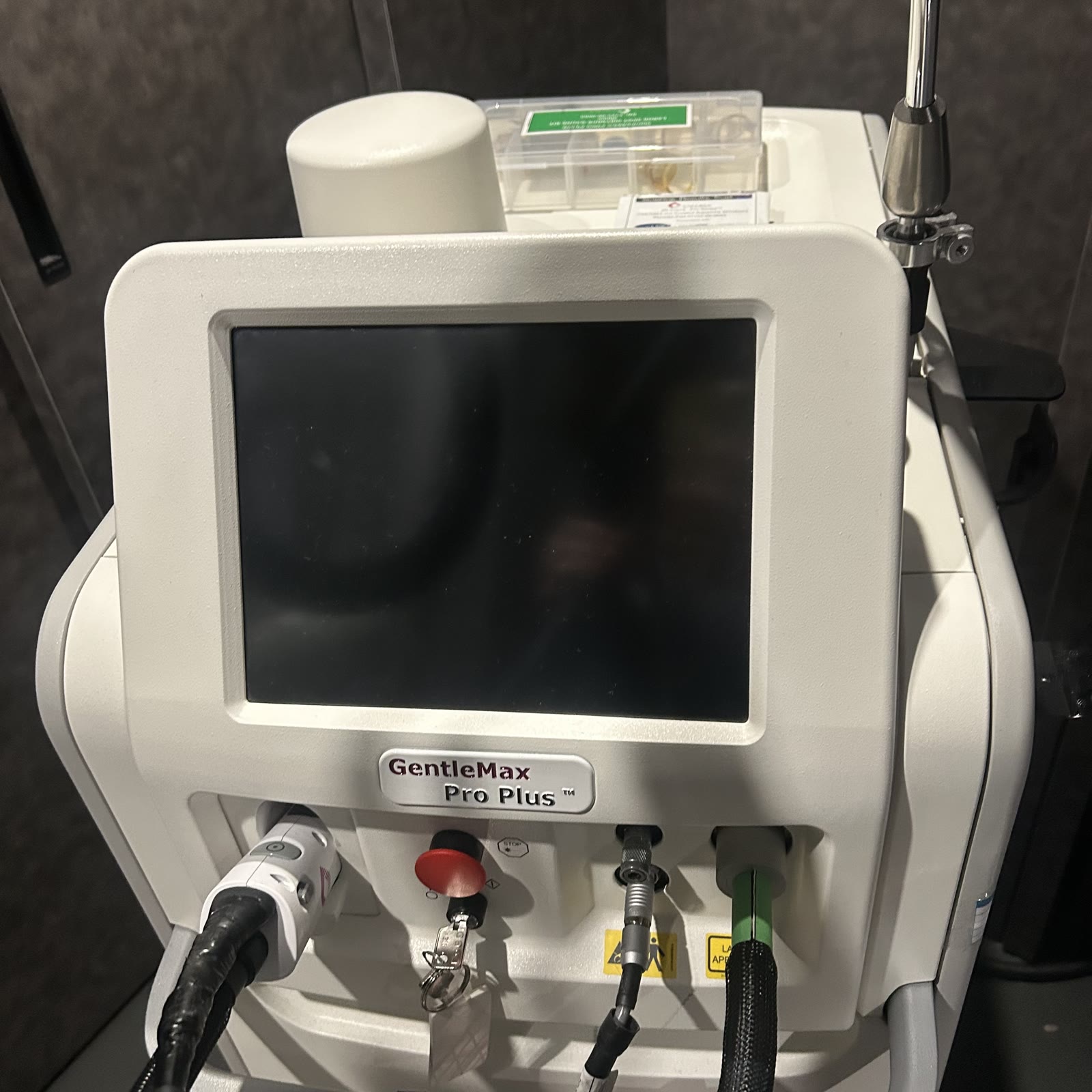
At our Suwon clinic, men's facial hair removal is done with GentleMax Pro Plus and Apogee Elite Plus, repeated at intervals of about 4 weeks, and we advise that thick hair such as a beard may require more sessions.
Starting 4 to 6 weeks before treatment, avoid waxing, tweezing, tanning, and strong UV exposure, and trim hair only by shaving. If redness, swelling, or pain persists or worsens, please contact the clinic. If you are taking any medication that can cause photosensitivity, please let us know before treatment.
Brazilian laser hair removal in Suwon: why does it take more sessions and longer intervals?
View men's facial hair removal treatment information
FAQ
Q. How many laser hair removal sessions does it take for beard shadow in men to fade?
A. It depends on the thickness and density of the hair, so it is hard to give a fixed number. We repeat sessions at intervals of about 4 weeks while checking how much the hair has thinned each time, and thick hair such as a beard may need more sessions than other areas.
Q. Can I shave during the laser hair removal period?
A. Yes, you can shave. The laser reacts to the hair roots inside the skin, so shaving, which leaves the roots in place, does not interfere with treatment; in fact, hair should be trimmed only by shaving before treatment. Avoid waxing and tweezing, which pull out the roots.
Q. Does laser hair removal for men's beards hurt?
A. Beard hair is thick and dense, so the sting, like being snapped with a rubber band, and the warmth may feel stronger than in other areas. The treatment is done while cooling the skin with a cooling device, and it tends to be felt more distinctly in areas with dense hair such as the philtrum and chin.
This content is provided as general treatment information and is not a substitute for diagnosis or treatment. Always consult a medical professional to decide whether and how to proceed with a treatment.