


Lentigo removal in Suwon: how is it different from seborrheic keratosis and melasma, and how is it treated?
If brown spots with distinct borders are gradually increasing on your cheekbones or the backs of your hands and bothering you, it is worth first checking whether they are melasma or lentigines. Lentigines are flat brown spots with distinct borders that form when melanocytes and pigment increase in one spot in the lower layer of the epidermis.
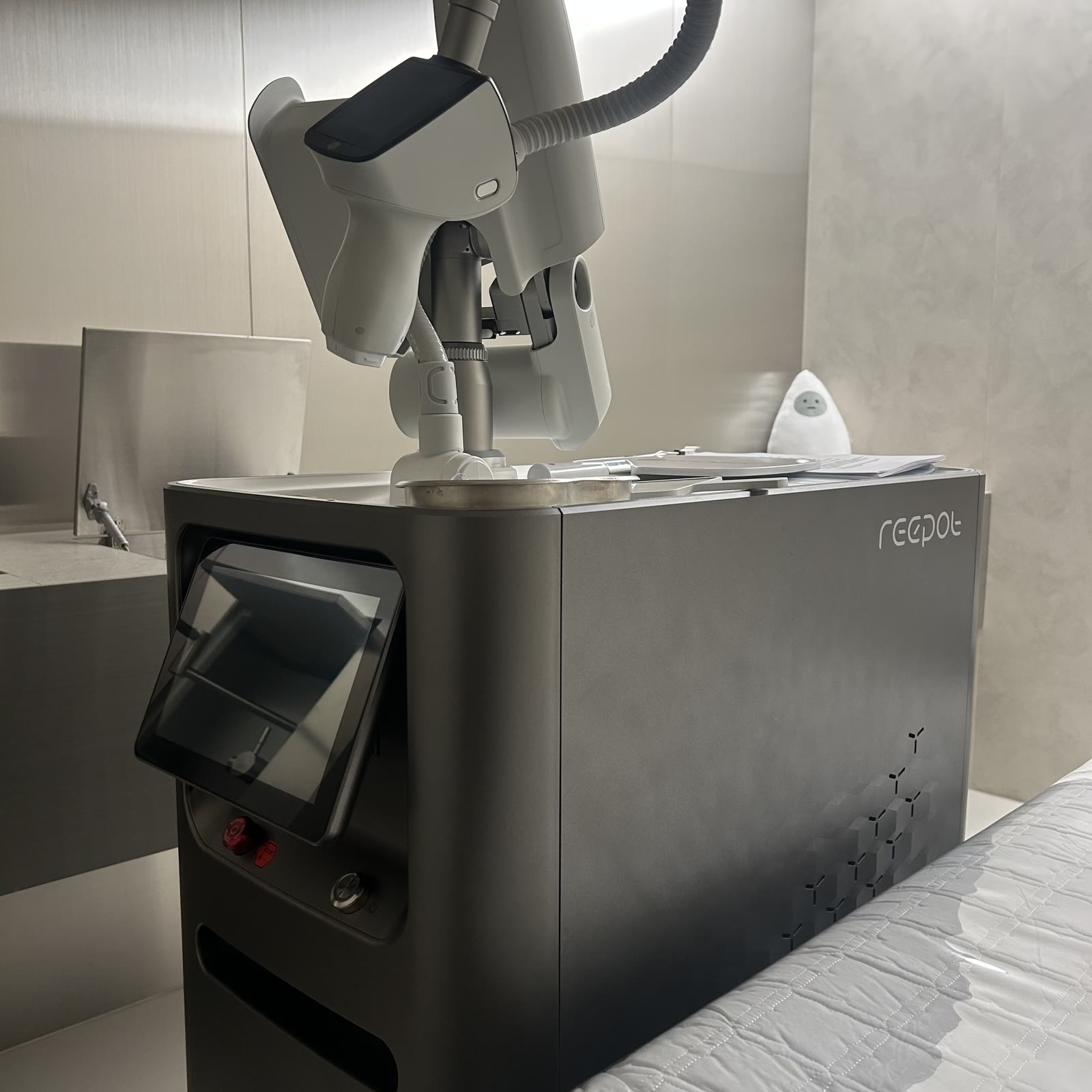
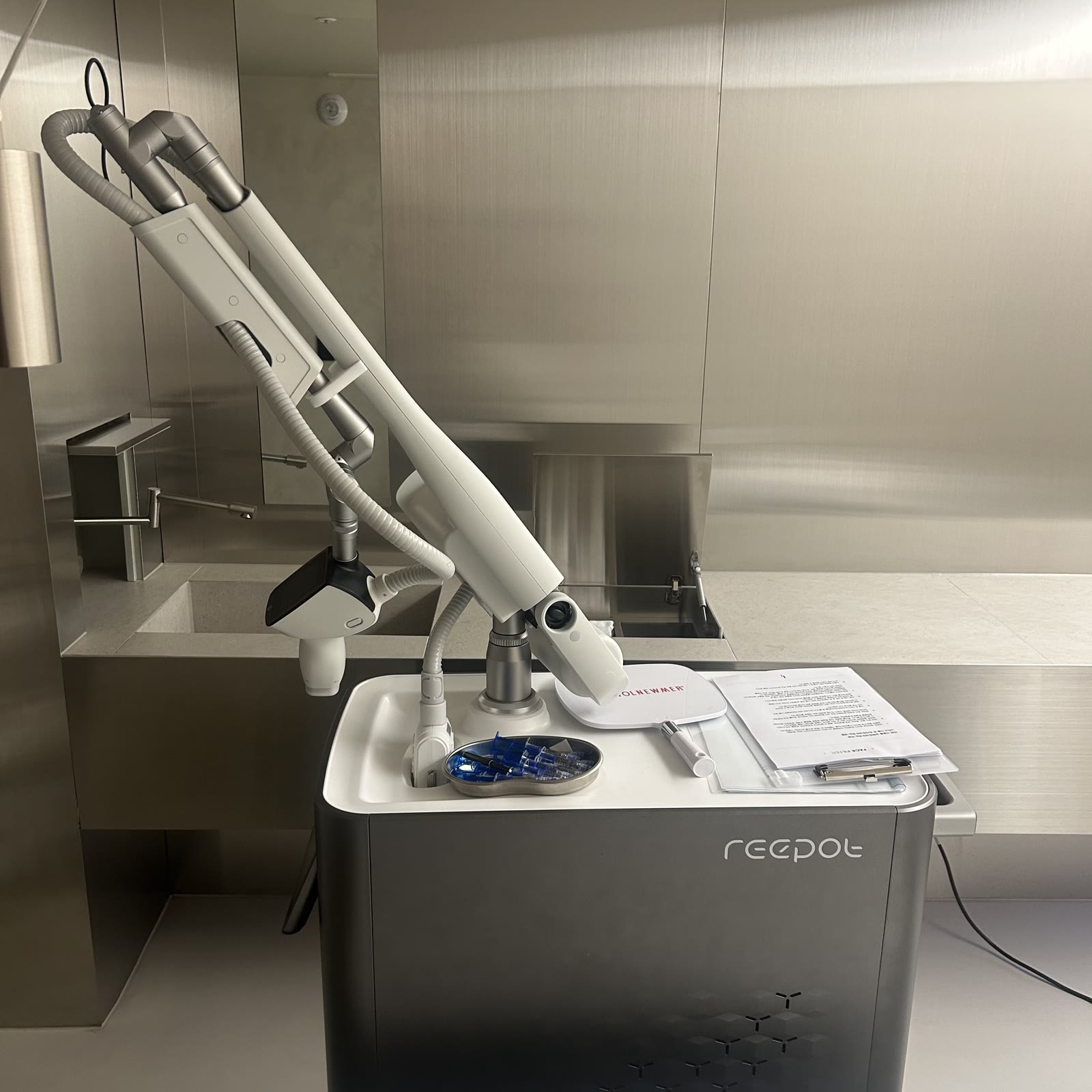
Lentigo removal is planned so that lentigines are treated in a focused way with a pigment laser that targets only the lesion, raised seborrheic keratoses are shaved down thinly with a CO2 laser, and if melasma is mixed in, it is first stabilized with toning. At our Suwon clinic, we first look at the size, number, and spread of the lentigines before deciding the area to treat with the Reepot laser.
In this article, we go over why lentigines and seborrheic keratoses form, how to tell lentigines, seborrheic keratoses, and melasma apart, laser treatment methods and the treatment steps at our Suwon clinic, recovery and recurrence care, and side effects, in that order.
Lentigo removal: key points
- Lentigines are pigment that has accumulated in one spot from long-term UV exposure, and they tend to form on sun-exposed areas such as the cheekbones and the backs of the hands.
- Lentigines are flat with distinct borders, seborrheic keratoses are raised, and melasma appears as patches with blurry borders.
- Pigment lasers that target the lesion are used for lentigines, CO2 lasers for raised seborrheic keratoses, and toning for melasma.
- After Reepot treatment, DuoDERM healing tape is applied for 2 weeks and removed after 2 weeks.
Why do lentigines and seborrheic keratoses form?
The biggest cause of lentigines is UV exposure accumulated over a long period. Each time you are exposed to sunlight, melanocytes are stimulated, and as you age and the rate at which your skin sheds dead cells slows, the pigment produced cannot escape and accumulates in one spot. That is why they start to appear one by one on sun-exposed areas such as the cheekbones, forehead, backs of the hands, and arms.
Seborrheic keratosis, commonly called an age spot or senile wart, is a lesion in which epidermal cells themselves build up thickly and rise above the skin, with UV exposure, age, and family history all playing a role. It may start as a flat brown spot like a lentigo, then over time the surface becomes rough and thick and changes into a shape with a ridge you can feel when you touch it.
Melasma, on the other hand, is a condition in which pigment cells have become sensitive due to a combination of hormonal changes, UV exposure, and skin irritation, so it spreads widely and faintly across both cheeks. Since all three often appear together on the same face, we start by telling them apart before treatment.
How do you tell lentigines, seborrheic keratoses, and melasma apart?
Looking at the shape, how it feels to the touch, and where it tends to appear together can help tell them apart. The table below shows the criteria we look at together during consultations.
| Category | Solar lentigines (dark spots) | Seborrheic keratosis | Melasma |
|---|---|---|---|
| Shape | Flat brown spot with a well-defined border | Raised spot with a rough or greasy surface | Wide blotch with a blurry border |
| When touched | Flat | A raised edge can be felt | Flat |
| Common locations | Cheekbones, forehead, backs of the hands, arms | Face, temples, neck, backs of the hands, torso | Both cheeks, forehead, upper lip |
| Main treatment approach | Pigment laser that targets the lesion | Shaving away with a CO2 laser | Low-energy toning over multiple sessions |
If a spot grows over a short period, has multiple colors mixed within it, has jagged borders, or bleeds and does not heal well, even if it looks like a lentigo or seborrheic keratosis, we first confirm whether it is another condition before laser treatment and determine whether a biopsy is needed.
How is lentigo removal performed?
How laser treatment for lentigines works
In lentigines, pigment is concentrated in a relatively shallow layer, so only the lesion can be treated in a focused way. The Reepot laser treats pigment by delivering energy mainly to the lesion, with a focus on reducing irritation to the surrounding skin. With raised seborrheic keratoses, a laser that treats only pigment leaves the thickness behind, so a 10,600 nm CO2 laser is used to vaporize the raised tissue thinly and level it with the skin, and any remaining brownish tone is reassessed after recovery.
If melasma is also present around the lentigines and strong energy is used over a wide area, the pigment cells in the melasma area can be stimulated and become darker. In this case, we plan to first stabilize the melasma with PicoSure or Hollywood Spectra toning, then selectively remove only the lentigines with distinct borders.
Treatment steps at our Suwon clinic
- Laser treatment
- Wearing DuoDERM healing tape for 2 weeks
- Removing the DuoDERM after 2 weeks
After laser treatment, DuoDERM healing tape is applied to the treated areas to support skin regeneration for about 2 weeks and is removed after 2 weeks. The treatment area is set in units of 1, 3, or 5 lentigines, divided by size at 5 mm, 10 mm, 15 mm, and 20 mm, and if lentigines are widely spread, the whole face or whole arm is set as the area. A regenerative injection is included with every package.
View Reepot lentigo removal details
Recovery and recurrence care after lentigo removal
- After treatment, DuoDERM is applied for about 2 weeks to support skin regeneration.
- Slight redness and flaking may occur during the 2 weeks, and these are reactions that occur during healing.
- When going out, apply sunscreen and keep skin irritation to a minimum.
- During recovery, do not use scrubs, peels, or strong exfoliating products.
Lasers treat pigment that has already formed, but they do not eliminate the cells that produce pigment. As a result, pigment remaining in deeper layers may show through again over time, and with continued UV exposure, new lentigines can form in the same spot or nearby. Even after treatment, keeping up the daily habit of blocking the sun with sunscreen, hats, and parasols helps reduce the chance of recurrence.
Side effects and precautions for lentigo removal
Common reactions are redness, scabs, mild swelling, and flaking, which settle within the recovery period. Post-inflammatory hyperpigmentation, in which the area where the scab fell off temporarily becomes darker than the surrounding skin, tends to occur in Asian skin and usually fades over several weeks to months. Recovery speed and results vary from person to person.
In rare cases, hypopigmentation, where the treated area remains lighter than the surrounding skin, or small scars may occur. Getting a sunburn before or after treatment, or removing the tape early so the treated area is irritated, increases these risks. If you are taking any medication or have a skin condition, please tell us before treatment. If you are pregnant or taking medication that makes you sensitive to light, such as isotretinoin, please let us know before treatment.
If the fluid under the tape becomes cloudy or smells, or pain and swelling get worse day by day, these may be signs of infection, so please contact the clinic right away.
What should be checked before lentigo removal?
If any of these apply, get a diagnosis first
- Brown spots with distinct borders have increased on my cheekbones or the backs of my hands.
- A spot that used to be flat has become raised and its surface has become rough.
- I see both faint patches and distinct spots on both cheeks.
- The size or color of a spot has changed over the past few months.
If two or more apply, it is a good idea to check whether the spots are lentigines, seborrheic keratoses, or melasma before deciding on a laser. Whether to treat, which method to use, and the treatment area are decided together during the consultation after the doctor's examination.
In short, the key with lentigo removal is to first tell them apart from seborrheic keratoses and melasma, and to keep up 2 weeks of healing care and sun protection after treatment.
FAQ
Q. Do lentigines go away in one session?
A. Shallow lentigines with distinct borders are sometimes finished after one session, once progress is checked at around 2 weeks when the DuoDERM is removed. Dark or deep lentigines may need additional treatment after recovery, so the number of sessions depends on size and depth.
Q. Are age spots on the backs of the hands also treated with lasers?
A. Flat lentigines on the backs of the hands are often treated with a pigment laser, and raised seborrheic keratoses with a CO2 laser. The backs of the hands tend to heal more slowly than the face, so we allow a longer care period and are more thorough with sun protection.
Q. Is there a way to remove age spots at home?
A. Picking at them with your fingernails or using vinegar or strong exfoliants tends to leave the spot in place while adding wounds and pigmentation. It is better to first confirm whether the spot is a lentigo, a seborrheic keratosis, or another condition, and then decide on an appropriate method.
Q. Do lentigines come back after removal?
A. The cells that produce pigment remain, so with continued UV exposure, they can form again in the same spot or nearby. Even after treatment, please keep up the habit of applying sunscreen every day and blocking the sun once more with a hat or parasol.
Q. Why is DuoDERM kept on for as long as 2 weeks after lentigo removal?
A. It covers the treated area while new skin forms, supporting regeneration and protecting against external irritation and sunlight. During this period, slight redness and flaking may occur, and after 2 weeks the DuoDERM is removed and the progress of the treated area is checked.
Q. How can I find out the cost of lentigo removal?
A. The cost depends on the size and number of lentigines and the treatment area. We confirm during the consultation how many lentigines on the face or arms will be treated before giving you the details, and you can also check the items for each size on our treatment information page.
This content is provided as general treatment information and is not a substitute for diagnosis or treatment. Always consult a medical professional to decide whether and how to proceed with a treatment.