


Laser toning in Suwon: how do pico toning and Genesis toning differ?
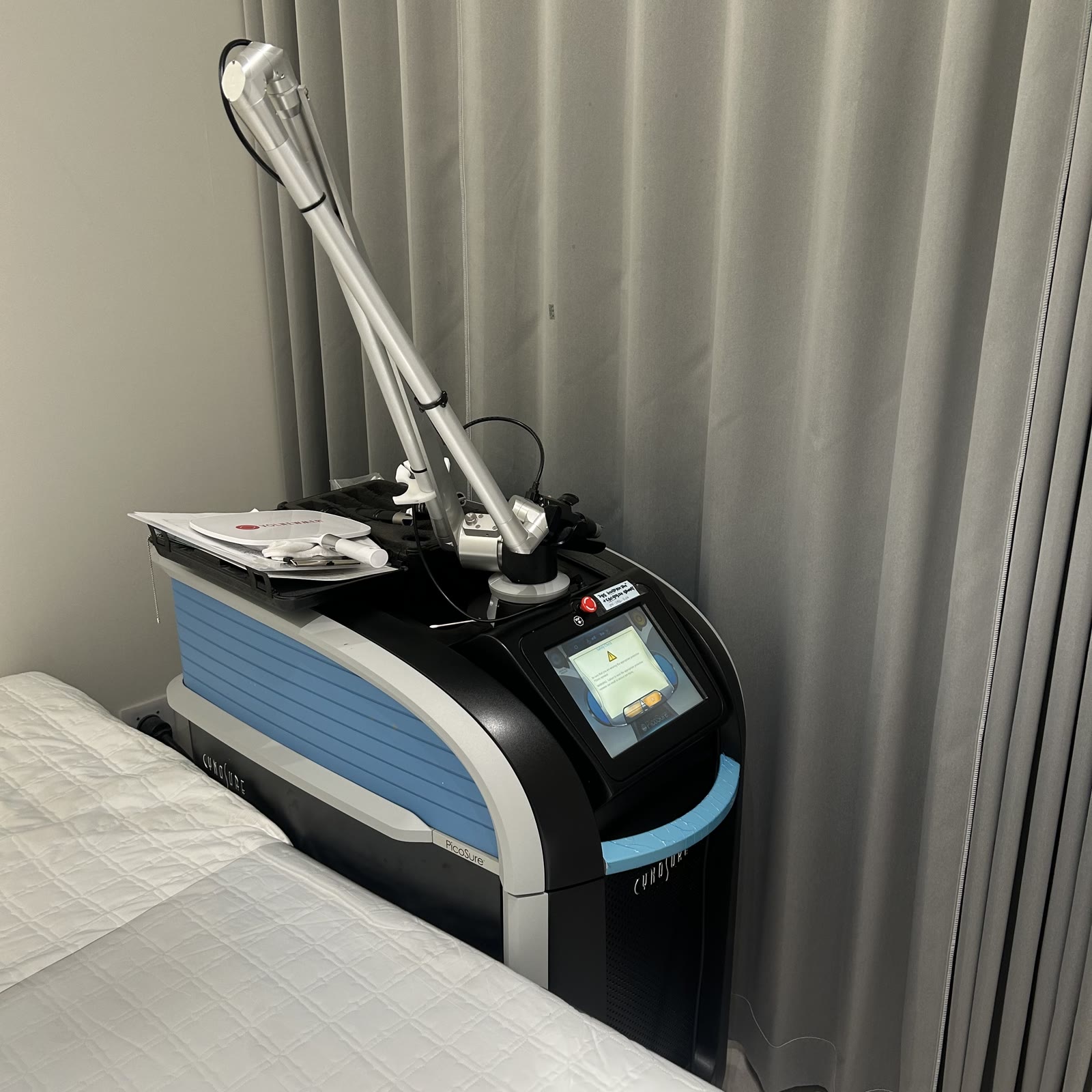
If you have been looking into laser toning for melasma and blemishes and are confused by the many names, such as pico toning, Genesis toning, and dual toning, it becomes easier to sort them out by first distinguishing how long the light is delivered and what it targets. Laser toning is a general term for treatments that fire low-energy laser light evenly across the entire face in multiple passes to gradually reduce pigment.
Q-switched laser toning heats pigment with light in nanosecond pulses, pico toning breaks pigment into fine particles with the impact of much shorter picosecond light, and Genesis toning warms the dermis with long pulses to address redness and skin texture. The three are not substitutes for one another; they are chosen or combined depending on whether your concern is pigment or redness. At our Suwon clinic, during consultation we first look at whether the pigment is in a shallow or deep layer and whether redness is also present, and then decide the device and number of sessions.
In this article, we go through how laser toning reduces pigment, the differences between the three types of toning, the PicoSure toning process, recovery and care, and side effects.
Key points about laser toning
- Laser toning works by firing light that is absorbed by melanin over a wide area at low energy to break up pigment little by little.
- Q-switched laser toning breaks up pigment mainly through heat, while pico toning does so mainly through a pressure shock.
- Genesis toning is used to warm the dermis with long pulses to address facial redness, pores, and skin texture.
- PicoSure toning takes about 10 minutes or less, with 5 to 10 or more sessions at 1- to 2-week intervals as a guideline.
How does laser toning reduce pigment?
Melasma, blemishes, and dull skin tone occur when melanin pigment in the skin increases or builds up unevenly. Laser toning fires light that is absorbed by melanin over a wide area at low energy to break up pigment little by little, and the broken-down pigment is then cleared away by the body over time.
Shattering pigment with strong energy all at once causes scabs and inflammation, and pigment that is sensitive to irritation, such as melasma, may actually become darker. That is why we use a method of gradually reducing pigment by repeating mild stimulation multiple times at short intervals.
How do laser toning, pico toning, and Genesis toning differ?
The three types of toning differ in how long the light stays in the skin and what they mainly target. The table below divides their methods and uses based on facts.
| Category | How the light is fired | Main target | Main concerns addressed |
|---|---|---|---|
| Q-switched laser toning | Short 1064nm light in nanosecond pulses | Thermal action on pigment | Widespread melasma and dull tone |
| Pico toning | Very short light in picosecond pulses | Pressure shock action on pigment | Blemishes, shallow pigment, and melasma |
| Genesis toning | 1064nm long pulses delivered in multiple sweeping passes | Thermal action that warms the dermis | Flushing, pores, and skin texture |
PicoSure is the name of a pico laser device, and PicoSure toning refers to pico toning performed with this device. PicoSure uses a 755nm wavelength that is well absorbed by melanin and is mainly used for blemishes in shallow layers and epidermal pigment. Genesis works by delivering heat to small blood vessels and collagen rather than breaking up pigment, so when melasma and redness are both present, we plan pigment toning and a vascular laser separately.
How is pico toning performed?
Devices and selection criteria
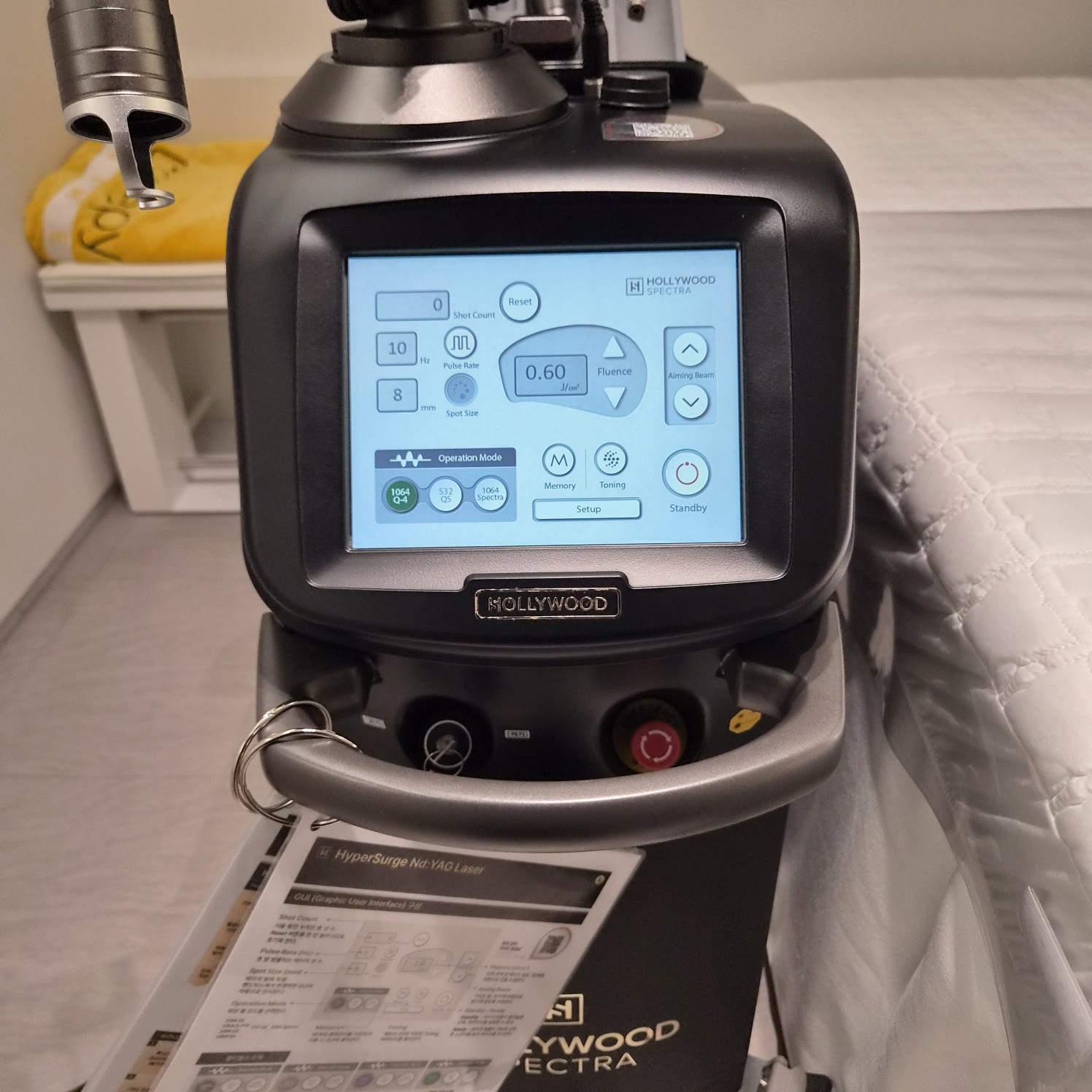
For pigment toning we use PicoSure and Hollywood Spectra, and for red blood vessels and facial redness we use Excel V Plus. Hollywood Spectra is a Q-switched Nd:YAG pigment laser that delivers uniform energy to pigment from shallow to deep layers. Which to use first is decided based on the depth of the pigment, whether redness is also present, and whether your skin has ever darkened or lost color (turned white) after previous laser toning.
Treatment steps at our Suwon clinic
- Personalized Consultation
- Self-Cleansing
- Treatment
- Finishing Care
The steps above are for PicoSure toning; the treatment is done in about 10 minutes or less, and you can return to daily life right away. Depending on skin condition, 5 to 10 or more sessions at 1- to 2-week intervals are the guideline; the 5- and 10-session packages include vitamin care and a modeling mask with every session, and a Mark-Vu detailed skin analysis at set sessions. If pigment and redness are both present, we discuss dual toning, in which PicoSure and Excel V Plus are done back to back on the same day.
See PicoSure toning treatment details
Recovery and care after laser toning
- You can wash your face and wear makeup on the day of treatment, but avoid scrubs and peeling treatments for about a week.
- Take a short break from anti-wrinkle cosmetics containing retinol and from brightening functional cosmetics.
- Your skin can easily become dry, so apply moisturizer often and be sure to wear sunscreen when you go out.
- Avoid heavy drinking, saunas and jjimjilbang (Korean bathhouses), hot baths, and strenuous exercise, and do not pick off any scabs that occasionally form.
Pigment that tends to darken again, such as melasma, requires sun protection and spaced-out maintenance care even after completing the sessions. It is hard to expect all the color to fade at once, and the energy and intervals are adjusted while watching the skin's response at each session.
Side effects and precautions for laser toning
Right after treatment there is slight redness and a burning sensation, which soon subside. Areas where pigment was treated may look darker for a few days and then fade, and the degree of reaction varies from person to person depending on the depth of the pigment and skin condition.
In rare cases, post-inflammatory hyperpigmentation or hypopigmented spots, where color is lost and turns white, may occur. The risk increases with repeated strong toning at short intervals or heavy sun exposure, so if you have a history of laser treatments elsewhere, please mention it during consultation.
If blisters form, if redness and pain do not ease and get worse, or if new white spots appear in the treated area, please contact the clinic right away.
What do we check before laser toning?
If any of these apply, start with a pigment diagnosis
- Brown patches with blurred edges have spread widely across both cheekbones.
- Small, dark blemishes are scattered here and there.
- My face reddens easily and the redness lingers for a long time.
- After previous toning, my skin has darkened or lost color.
If two or more of these apply, it is best to first check the depth of the pigment and whether redness is also present before choosing a type of toning. Whether to proceed, the device, and the number of sessions are decided together during consultation after an examination by our medical staff.
In short, the key to laser toning is to choose the method based on pigment depth and the presence of redness rather than by name, and to continue short-interval sessions together with sun protection.
FAQ
Q. Are pico toning and PicoSure the same thing?
A. PicoSure is the name of a pico laser device, and pico toning refers to toning performed with a pico laser. Pico toning done with the PicoSure device is specifically called PicoSure toning, and it uses a 755nm wavelength.
Q. Should I get laser toning or pico toning?
A. The two methods differ in how long the light is fired and how it acts on pigment, so the choice depends on the depth and type of pigment and how sensitive your skin is. Sometimes only one is used and sometimes they are alternated, and we decide after checking the pigment condition through examination.
Q. What is dual toning?
A. Dual toning here refers to a package in which PicoSure and Excel V Plus are done back to back on the same day. It is used to treat brown pigment and red blood vessels separately in skin that has both pigment and redness, and the package is decided during consultation.
Q. Will melasma fade with Genesis toning alone?
A. Genesis works by warming the dermis to address redness and skin texture, so it does not do much to break up pigment directly. If melasma is your main concern, we plan around laser toning that targets pigment and add another laser when redness is also present.
Q. How many laser toning sessions do I need?
A. For PicoSure toning, 5 to 10 or more sessions at 1- to 2-week intervals are the guideline, depending on skin condition. For pigment that tends to darken again, such as melasma, sun protection and spaced-out maintenance care continue even after completing the sessions.
Q. How can I find out the cost of laser toning?
A. The cost depends on the device, the number of sessions, and the care included. We provide the details after confirming during consultation whether you will receive PicoSure toning alone or dual toning, and you can also check the items by number of sessions on the treatment information page.
This content is provided as general treatment information and is not a substitute for diagnosis or treatment. Always consult a medical professional to decide whether and how to proceed with a treatment.