


Keratosis pilaris laser in Suwon: how to care for bumpy skin on the arms and legs
If the outer arms and thighs feel bumpy like sandpaper, with red or dark dots in each pore, and you feel self-conscious wearing short sleeves, it is worth first checking for keratosis pilaris. Keratosis pilaris is a skin condition in which keratin lodges like a plug in the openings of hair follicles, raising small bumps; it starts from an inherited skin tendency and becomes more noticeable the drier the skin is.
Rather than trying to eliminate it all at once, keratosis pilaris is managed with a foundation of moisturizing care that softens the keratin plugs, adding laser treatment when redness and brown marks around the pores or hairs visible within the pores stand out. At our Suwon clinic, we first look at whether the area around the bumps is red or brown, whether hairs are visible, and how wide the area is during the consultation, then decide whether to use toning or hair removal.
In this article, we go over the causes of keratosis pilaris, the criteria for telling it apart from goosebumps and folliculitis, how laser treatment works and the treatment steps, recovery and lifestyle care, and side effects, in that order.
Keratosis pilaris: key points
- Keratosis pilaris forms when keratin at the openings of hair follicles fails to shed and clumps together, and it is more noticeable in people with a family history and dry skin.
- Unlike goosebumps that appear briefly when you are cold, keratosis pilaris remains regardless of the season and gets rougher in winter.
- The texture is addressed with moisturizing and exfoliation care, brown marks with PicoSure toning, and visible hairs with laser hair removal.
- Scrubbing off dead skin with an exfoliating towel or rubbing with a scrub can leave inflammation and pigmentation, which may increase dark spots.
Why does keratosis pilaris occur?
Skin sheds old dead cells on a regular cycle, but with keratosis pilaris the dead cells at the follicle openings do not shed and instead clump together firmly. As these plugs block the follicles, small bumps rise above the skin, and fine hairs are sometimes curled up inside them.
It tends to occur more easily if family members have the same condition, and it is more noticeable if your skin is dry or prone to atopic dermatitis. It may worsen during adolescence, when keratin is produced quickly, and gradually fade with age, but it gets rough again in winter when humidity is low.
Scrubbing off dead skin or rubbing with a granular scrub may make the skin feel smooth for a moment, but it makes the skin drier and leaves inflammation and pigmentation around the pores, increasing red and dark spots. That is why keratosis pilaris care prioritizes dissolving and keeping the skin moist over peeling things away.
How do you tell keratosis pilaris apart from goosebumps and folliculitis?
On the outer arms and forearms, skin-colored or red bumps are densely clustered and feel rough when you run your hand over them. On the thighs, buttocks, and calves, it is common for the area around the bumps to be pigmented brown so they look like dots, and the thicker the hair in an area, the more visible dark hairs are within the pores. In rare cases it also appears on the cheeks and around the eyebrows; on the face, redness spreads broadly with small bumps, so it is easily mistaken for acne or facial flushing.
Goosebumps that appear briefly when you are cold and then disappear are a reaction in which muscles make the hairs stand up, so they are different from keratosis pilaris. If bumps that are filled with pus, itchy, or painful suddenly increase, it may be folliculitis, and bumps on the back and shoulders can look mixed with back acne, so we first tell them apart during the examination.
How is keratosis pilaris laser treatment performed?
How keratosis pilaris laser treatment works
The bumpy texture itself is fundamentally managed with moisturizing and exfoliation care. Moisturizers containing urea, lactic acid, or salicylic acid are used to soften keratin plugs, and applying them right after a shower to slightly damp skin helps absorption. If you stop applying them, the skin tends to get rough again, so it is important to keep it up consistently.
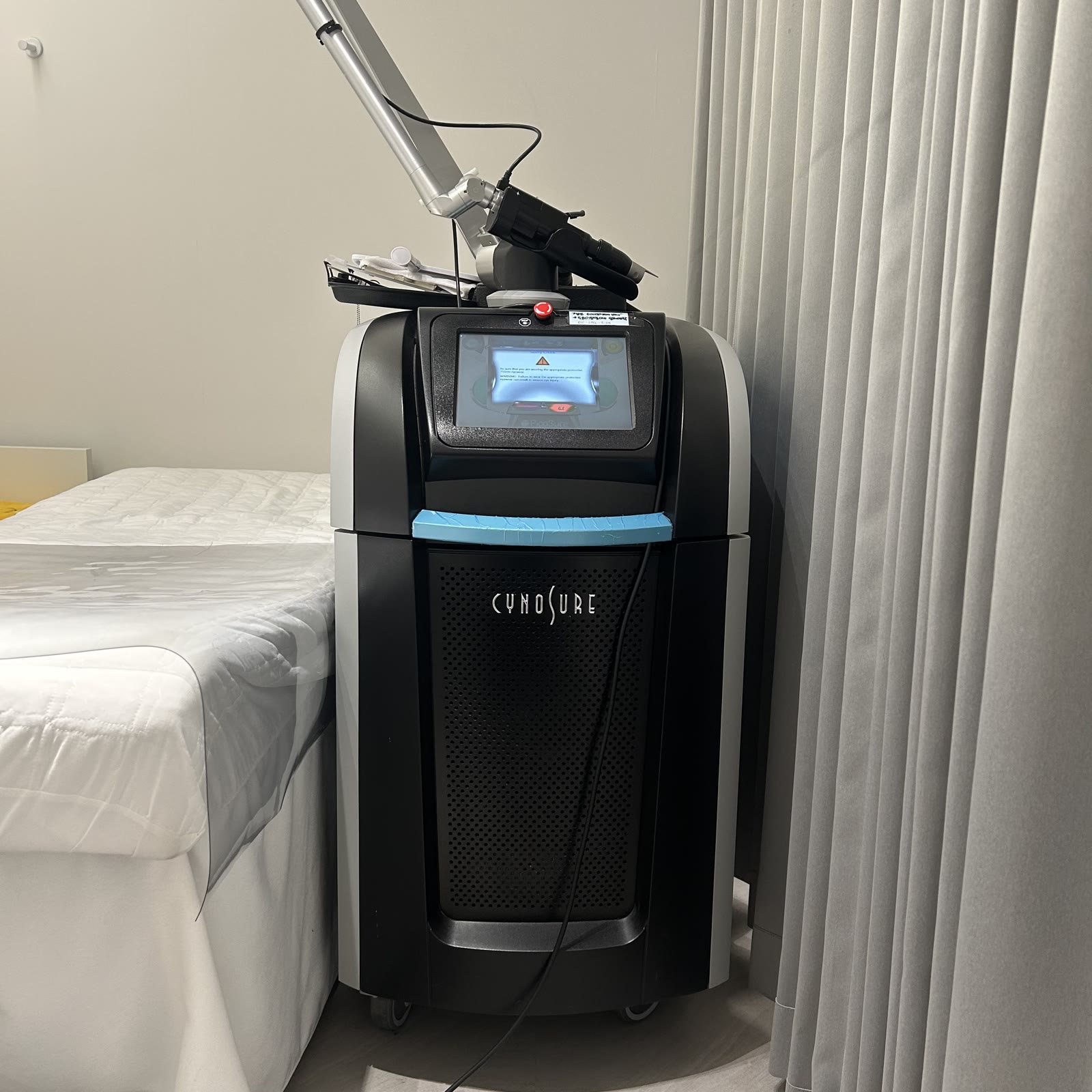
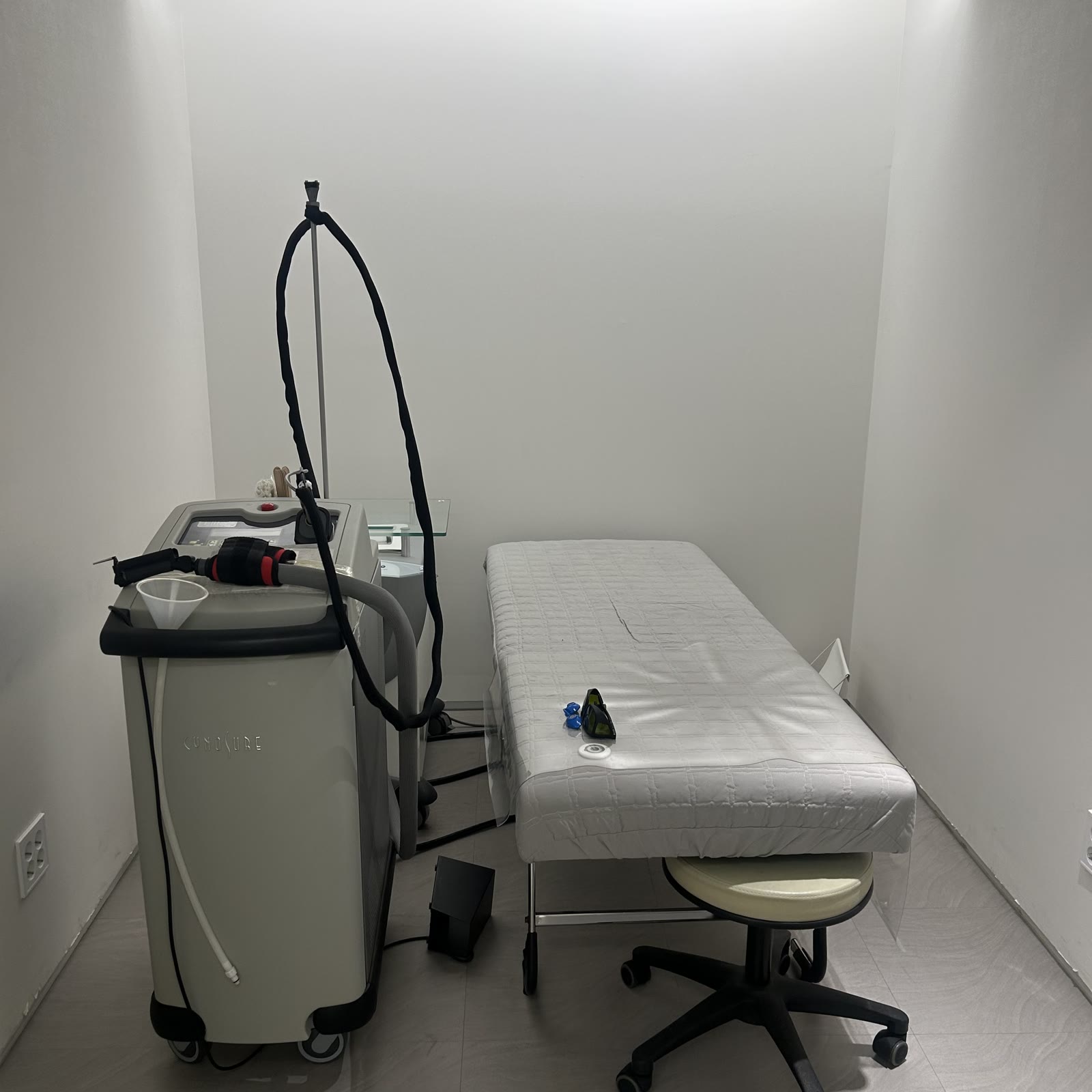
When brown dots remain around the pores, toning is done with PicoSure, a 755 nm picosecond laser. It works by firing light for an extremely short instant to break melanin pigment into fine pieces. When hairs are curled up inside keratin plugs and visible through the skin, laser hair removal to reduce hair is also considered, with sessions spaced according to the hair growth cycle.
Treatment steps at our Suwon clinic
- Personalized Consultation
- Self-Cleansing
- Treatment
- Finishing Care
PicoSure toning is done without anesthesia in about 10 minutes or less, and you can return to daily activities right afterward. Results vary depending on skin condition, so 5–10 or more sessions are scheduled at intervals of 1–2 weeks. Body toning areas are divided into partial toning, such as the underarms, backs of the knees, and elbows, and full toning, such as the back and chest. When also getting laser hair removal, avoid methods that pull hair out by the root, such as waxing and tweezing, and tanning from 4–6 weeks before treatment, and only shave hair before treatment.
See PicoSure toning treatment details
See women's body hair removal details
Recovery and lifestyle care after keratosis pilaris laser treatment
- After treatment, avoid heavy drinking, saunas and jjimjilbang, hot baths, and strenuous exercise.
- There may be slight redness and a burning sensation, but these soon ease.
- If scabs form, do not pick them off; let them fall off on their own.
- For about a week, avoid scrubs and peel treatments, and do not use retinol or functional whitening cosmetics.
- Since dryness may occur, apply moisturizer often, and apply sunscreen when going out.
At home, take short showers with lukewarm water, do not use exfoliating towels or body brushes, and do not pick at or squeeze the bumps with your hands. Rough fabrics and tight clothing increase friction, so it is best to wear soft cotton clothing and maintain indoor humidity in winter. Keratosis pilaris is a condition that comes from your skin's tendency, so continuing to moisturize even after completing laser sessions helps reduce it getting rough again.
Side effects and precautions for keratosis pilaris laser treatment
After laser treatment, redness, warmth, stinging, and mild swelling may occur, and most settle soon. The degree of reaction and speed of recovery vary from person to person.
In rare cases, blisters, scabs, or temporary darkening or lightening of the skin may occur. The risk of pigment changes increases if the treated area has been tanned or receives strong UV exposure during recovery, and for hair removal areas, rubbing hard, exfoliating, or taking hot showers on the day of treatment can increase irritation. If you are taking medication that makes you sensitive to light, please let us know before treatment.
If redness, swelling, or pain persists or keeps getting worse, please contact the clinic as soon as possible.
What should be checked before keratosis pilaris treatment?
If any of these apply, start with a keratosis pilaris examination
- My outer arms or thighs are bumpy regardless of the season.
- Brown or red dots appear to be embedded in each pore.
- Hairs are curled up inside the pores and show through as dark spots.
- Even after applying moisturizer consistently for a few weeks, the redness or dark marks remain.
If two or more apply, it is a good idea to check the type of bumps and the color of the marks before deciding on a laser. Whether to treat, which method to use, and the treatment area are decided together during the consultation after the doctor's examination.
In short, the key to managing keratosis pilaris is to address the rough texture with moisturizing, treat the remaining marks and hair separately with lasers, and keep up the care over time.
FAQ
Q. Does keratosis pilaris go away after one treatment?
A. Because it stems from an inherited skin tendency, it is hard to expect it to disappear all at once. We manage it by keeping the skin smooth with moisturizing and exfoliation care, and by treating redness, brown marks, and visible hair with lasers over several sessions.
Q. Does scrubbing off dead skin help keratosis pilaris?
A. Scrubbing may make the skin look smooth for a moment, but it can dry the skin out and leave inflammation and pigment around the pores, increasing dark spots. It is better to apply a moisturizer that gently softens dead skin on a regular basis and to cut back on rubbing.
Q. Does using a keratosis pilaris body wash help?
A. Body washes containing salicylic acid or lactic acid are used to soften the keratin plugs. However, since they are rinsed off and stay on the skin only briefly, the habit of applying moisturizer right after showering should come first.
Q. Can keratosis pilaris appear on the face too?
A. Small bumps with redness can also appear on the cheeks and around the eyebrows. Because this can easily look like acne or redness, we first tell them apart during the examination and then decide between moisturizing care and laser treatment based on the cause.
Q. How many laser sessions are needed for keratosis pilaris?
A. PicoSure toning is typically planned as 5 to 10 or more sessions at 1- to 2-week intervals depending on skin condition, while laser hair removal sessions are spaced according to the hair growth cycle. We adjust the number and interval of sessions along the way based on changes in the marks and hair.
Q. How can I find out the cost of laser treatment for keratosis pilaris?
A. The cost depends on the treatment area, its extent, and the number of sessions. We confirm during your consultation whether you need partial toning or full toning of areas such as the back and chest, and whether hair removal is included, and then explain the cost. You can also check the items on our treatment information page.
This content is provided as general treatment information and is not a substitute for diagnosis or treatment. Always consult a medical professional to decide whether and how to proceed with a treatment.