


Freckle laser in Suwon: how is it distinguished from nevus of Ota, and why does the treatment differ?
If the small brown spots scattered across your nose and cheekbones darken every summer and bother you, it is worth first checking whether they are freckles or deeper pigmentation. Freckles are small brown spots where melanin has increased in the epidermis, the outer layer of the skin, while nevus of Ota is a patch where pigment-producing cells are located much deeper, in the dermis.
Although both look like brown spots on the surface, the pigment lies at different depths, so the laser wavelength and intensity, number of sessions, and intervals differ. Freckles are addressed with toning that breaks up pigment in the shallow layer into fine particles or with a method that targets each spot individually, while nevus of Ota is treated several times at intervals with a wavelength that reaches the deep layer. At our Suwon clinic, during consultation we first look at the type and depth of pigment, and if several types are mixed, we divide the areas and decide on the devices and order.
In this article, we outline in order why freckles form and darken, how to tell them from nevus of Ota and melasma, treatment and process that differ by pigment depth, recovery care, and side effects.
Freckles: key points
- Freckles form in the epidermis when UV light stimulates melanin production in skin that is sensitive to sunlight.
- Acquired nevus of Ota consists of grayish-brown spots that appear symmetrically on both sides of the face after one's 20s, with pigment located deep in the dermis.
- Shallow pigment is addressed with toning or spot-by-spot removal, and deep pigment at intervals with a wavelength that reaches deep.
- Even after fading with treatment, they can return with UV exposure, so sun protection continues alongside.
Why do freckles form, and why do they darken in summer?
Freckles form when UV light stimulates melanin production in skin that genetically reacts sensitively to sunlight. They appear like small dots on the nose and both cheekbones at a young age, become darkest around puberty, and then tend to fade little by little with age.
Because the pigment is in the shallow epidermis, freckles quickly darken with sun exposure and fade again in winter when sunlight is weak. Besides the face, they can also appear on areas that often get sun, such as the arms, shoulders, and upper back.
Even if they are similar brown spots, they may not be freckles if they appeared newly in adulthood, spread symmetrically on both sides of the face, or have a grayish tint. In that case, we also suspect deeper pigment and confirm through an examination.
How do you tell freckles, nevus of Ota, and melasma apart?
Nevus of Ota is divided into the congenital type, which is present from birth as a bluish patch on one side around the eye, and the acquired type, which is absent in childhood but appears symmetrically on both sides of the face after one's 20s. Acquired nevus of Ota first looks like brown spots and is easily mistaken for freckles or melasma, so we look at the criteria below together.
| Category | freckles | Melasma | Acquired nevus of Ota |
|---|---|---|---|
| When it appears | From a young age | From the late 20s onward | From one's 20s onward |
| Shape and color | Small brown spots with clear borders | Brown patches with blurry borders | Clusters of grayish-brown or bluish spots |
| Common locations | Scattered across the nose and cheekbones | Spread widely over the cheekbones and forehead | Temples, outer forehead, cheekbones, and lower eyelids |
| Pigment depth | Epidermis | From the epidermis to the upper dermis | Deep in the dermis |
All three can also be present on one face. If shallow and deep pigment are treated at the same intensity, one side is irritated while the other responds weakly, so during the examination we divide the areas by pigment type and decide the order.
How is freckle laser treatment performed?
How it differs by pigment depth
A laser breaks melanin particles into fine pieces with the energy generated when pigment absorbs light, and the broken particles fade as the body clears them away on its own. Freckles in the epidermis are faded over several sessions with toning, which applies light broadly and evenly at low intensity, or spots with clear borders are targeted one by one.
Because the pigment of nevus of Ota is deep in the dermis, a wavelength that penetrates deeper into the skin is used. Pigment in the deep layer takes months for the body to clear, so the treatment period is longer, and the color may temporarily look more prominent along the way. In either case, applying strong intensity at once can cause inflammation that darkens the pigment or makes it turn white, so we decide the intensity and interval based on skin tone and pigment depth.
Treatment steps at our Suwon clinic
- Personalized Consultation
- Self-Cleansing
- Treatment
- Finishing Care
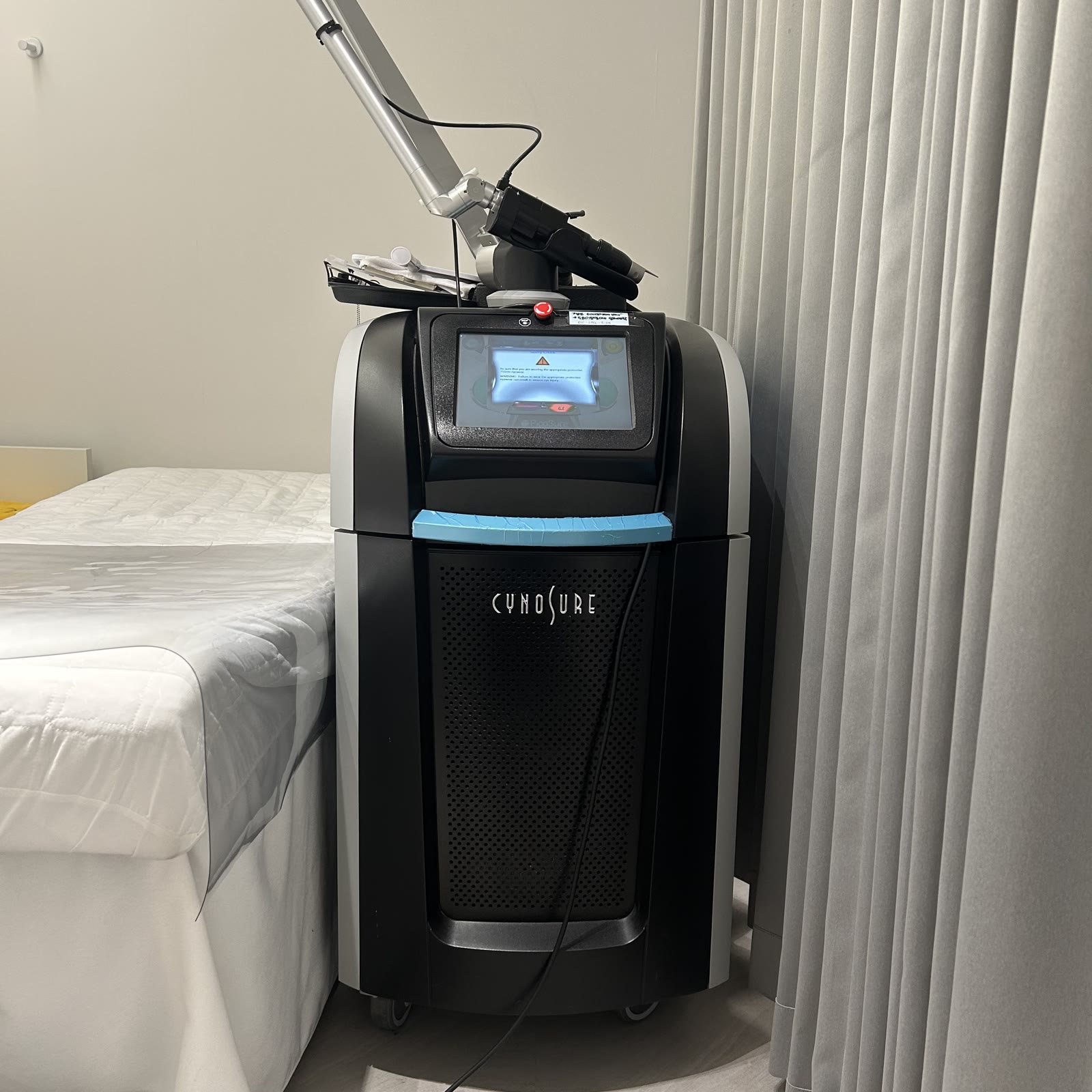
The order above is based on PicoSure toning. PicoSure is a picosecond laser with a 755nm wavelength; the treatment takes about 10 minutes or less, and you can return to daily life right away. Depending on skin condition, we recommend 5 to 10 or more sessions at 1- to 2-week intervals as a guideline, and the 5-session and 10-session packages include vitamin infusion care and a modeling pack at each session, with a Mark-Vu detailed analysis at set sessions.
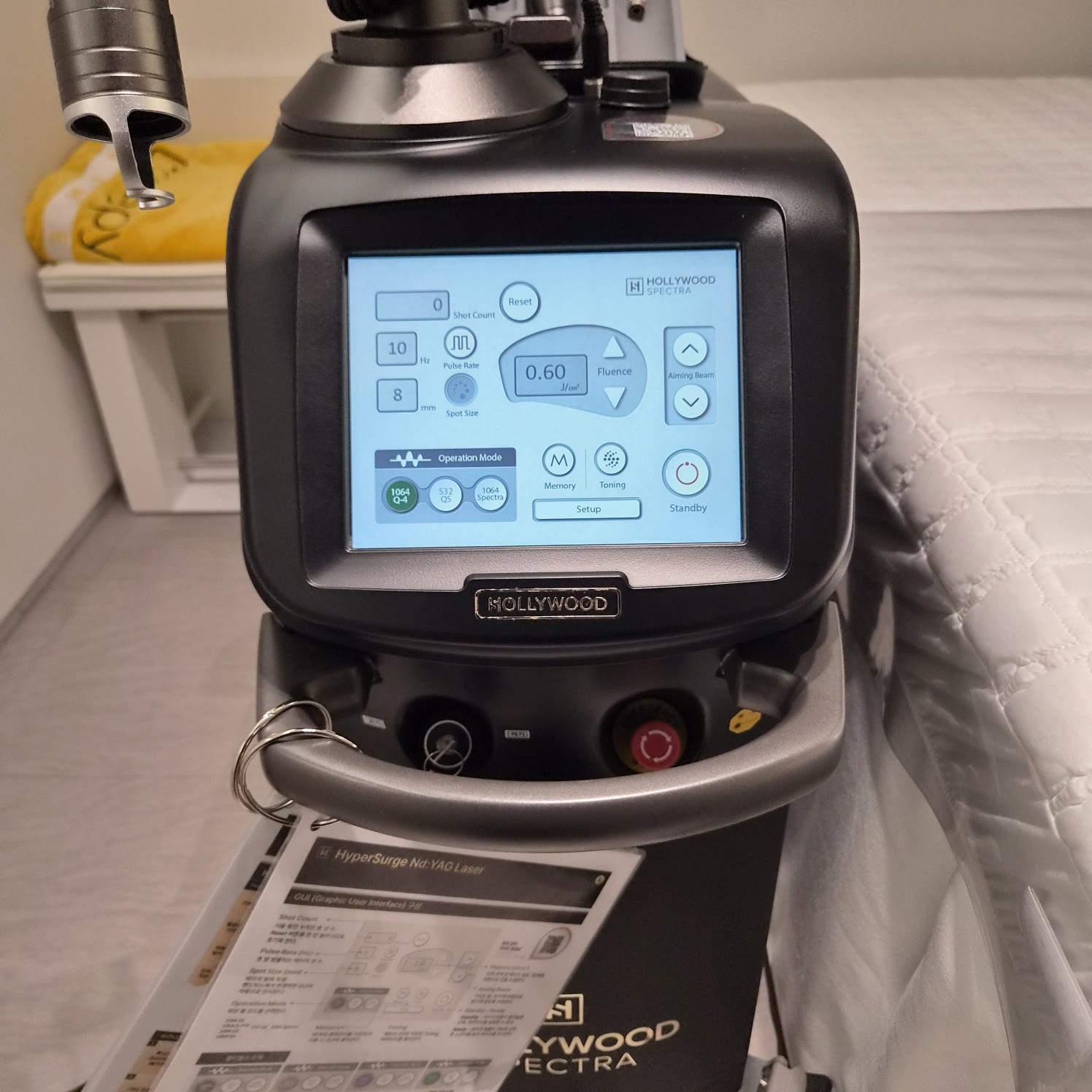
If deep pigment is mixed in, we also plan Hollywood Spectra, a Q-switched Nd:YAG laser that addresses pigment from shallow to deep. Dark spots with clear borders are sometimes removed one by one with Reepot, in which case we also take into account a schedule of applying regeneration tape for 2 weeks after the treatment and then removing it.
See PicoSure toning treatment details
Recovery and care during freckle treatment
- You can wash your face and wear makeup on the day of treatment, but avoid scrubs and peeling treatments for about a week.
- Do not use retinol-based anti-wrinkle cosmetics or whitening functional cosmetics during the treatment period.
- Avoid heavy drinking, saunas and jjimjilbang, hot baths, and strenuous exercise.
- Your skin can easily become dry, so apply moisturizer often and be sure to wear sunscreen when going out.
- If small scabs form, do not pick them off; let them fall off on their own.
Freckles are pigment that comes from your constitution, so they can return with UV exposure even after treatment. It is hard to expect them all to disappear at once, and it is better to continue while checking the degree of fading at each session. If spots were removed with Reepot, redness and flaking may appear during the 2 weeks the regeneration tape is applied.
Freckle laser side effects and precautions
Right after the treatment, slight redness, a burning feeling, and dryness are common and usually subside soon. Where spots were targeted and removed, small scabs form and fall off, after which pinkish marks remain for a while, and the degree of reaction and speed of recovery vary from person to person.
Rarely, post-inflammatory hyperpigmentation can make marks darker, or conversely, hypopigmentation can make the area turn white. These risks increase if the treatment is done on sun-tanned skin, if sun protection is neglected after the treatment, or if strong intensity is used at once. If you are pregnant or breastfeeding, or are taking medication that makes you sensitive to light, such as hormonal drugs or isotretinoin, please let us know before the treatment.
If blisters form on the treated area, or swelling and pain do not decrease but worsen after several days, please contact the clinic right away.
What should I check before freckle laser treatment?
If these apply to you, start with a pigment assessment
- The brown spots on my nose and cheekbones darken every summer.
- After my 20s, grayish-brown spots newly appeared symmetrically on both sides of my face.
- Brown spots and patches with blurry borders are both present on my face.
- I have had toning several times, but the color in certain spots does not fade well.
If two or more apply, before choosing a laser, it is best to first check the type and depth of pigment. Whether to proceed, the method, and the scope are decided together in consultation after the medical team examines you.
In short, the key with freckles is to first identify whether nevus of Ota or melasma is mixed in, continue sessions matched to pigment depth, and block UV light.
FAQ
Q. Is there a way to get rid of freckles at home?
A. Sun protection and whitening cosmetics can help slow new darkening, but it is hard for them to erase spots that have already formed. Consistently applying sunscreen and reducing the habit of rubbing your skin are the basics, and for dark spots we confirm the type through an examination.
Q. How many freckle laser sessions do I need?
A. It depends on the number and darkness of the spots and your skin tone. For PicoSure toning, we consult based on 5 to 10 or more sessions at 1- to 2-week intervals, and for removing spots one by one, the number of sessions is set separately, taking into account the 2-week care period of applying regeneration tape.
Q. Why does nevus of Ota take so long to treat?
A. Because the pigment is deep in the dermis, it takes months for the body to clear the broken-up pigment. That is why we continue slowly, leaving intervals between sessions to watch the response, and since there is a period when the color temporarily looks more prominent along the way, we check progress together.
Q. Do freckles come back after treatment?
A. Freckles form in skin that reacts to sunlight, so they can return with UV exposure. It is best to continue sun protection after treatment, and if you see spots darkening again, to consult about maintenance treatments at intervals.
Q. Can freckles on the arms or body be treated too?
A. Pigment on the body can be addressed on the same principle, but skin thickness and recovery speed differ from the face, so intensity and intervals are set separately. Freckles on the arms tend to cover a wide area, so we confirm together in consultation which areas to treat and how many times.
Q. How can I find out the cost of freckle laser treatment?
A. The cost depends on the device, number of sessions, and treatment range. We guide you after deciding in consultation whether to proceed with toning sessions or remove spots one by one, and you can also check the items by session on the treatment information page.
This content is provided as general treatment information and is not a substitute for diagnosis or treatment. Always consult a medical professional to decide whether and how to proceed with a treatment.