


Semi-permanent eyebrow tattoo removal in Suwon: how is it different from eyeliner and body tattoos?
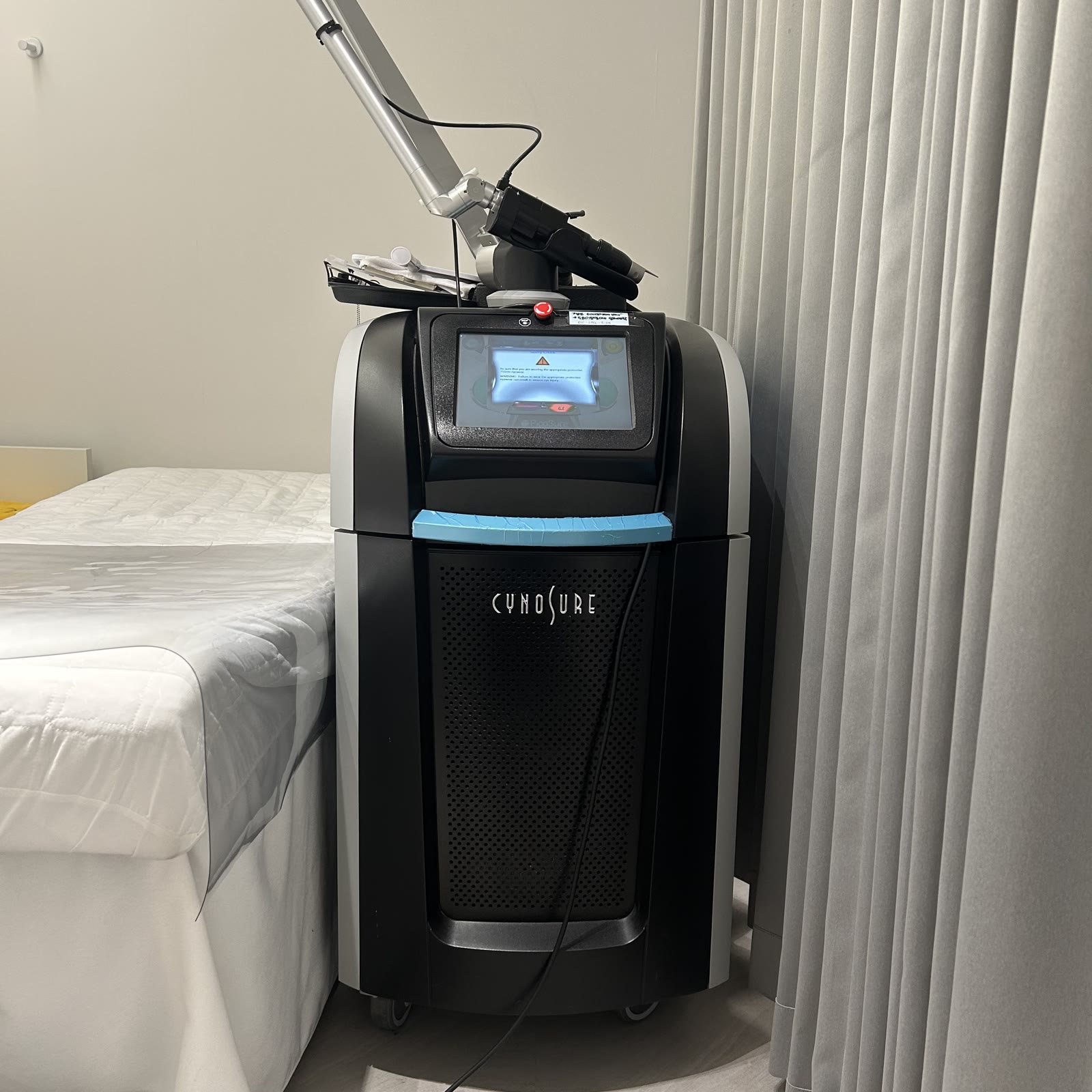
If a semi-permanent eyebrow tattoo you got in the past has turned reddish or bluish and it bothers you, it helps to first check the ink color and when it was done. Eyebrow tattoo removal works by using a laser to break the ink particles in the skin into very small pieces, which the body's lymphatic circulation carries away over several weeks so the color fades.
The principle is the same as for body tattoos, but semi-permanent eyebrow tattoos have shallow ink, use inks with several colors mixed together, and sit among the brow hairs right next to the eyes, so the removal plan is different. At our Suwon clinic, we first look at the ink color, whether it has changed color, how many times it was retouched, and whether you plan to redo it during consultation, and then decide the number of sessions and the goal.
In this article, we go through why eyebrow tattoos do not come off in one session, how they differ from body and eyeliner tattoos, how PicoSure tattoo removal works and the treatment steps, aftercare, and side effects.
Semi-permanent eyebrow tattoo removal: key points
- There is a limit to how much ink a laser can break up in one session, so the tattoo is lightened over several sessions with recovery time in between.
- Semi-permanent eyebrow tattoos have shallow ink over a small area, but the iron in skin-tone or brown ink can turn gray in reaction to the laser.
- Tattoo removal is done at 6- to 8-week intervals, and 5 to 10 or more sessions should be expected depending on the tattoo.
- For 2 weeks after treatment, avoid heavy drinking, smoking, saunas, and strenuous exercise, and let scabs fall off on their own.
Why don't semi-permanent eyebrow tattoos come off in one session?
There is a limit to how much ink a single laser session can break up, and it also takes several weeks for the broken fragments to leave through the lymph. Delivering strong energy all at once can damage the surrounding skin before the ink, causing scarring or depressions, so the process is done by gradually lightening the tattoo over multiple sessions with time to recover in between.
That is why the first two or three sessions may feel slow, and as the ink decreases, how much it fades with each session becomes more noticeable. If the intervals are too short, skin irritation only accumulates and there is not enough time for the ink to clear.
How is semi-permanent eyebrow tattoo removal different from removing body tattoos and eyeliner?
How the laser is used and what to watch out for depend on the location of the tattoo and the ink color.
| Category | Ink depth and area | Ink color | Points to watch |
|---|---|---|---|
| Semi-permanent eyebrows | Shallow, small area | Mix of brown, skin tone, and reddish brown; color change is common | Iron can turn gray, and brow hairs can be singed |
| Eyeliner | Shallow but along the eyelid margin | Mainly black | The eyes must be protected, and ink near the mucous membrane is hard for the laser to reach |
| Lips | Shallow | Red tones | Darkening reactions and swelling are watched closely |
| Body tattoos | Deep in the dermis, large area | Multiple colors | More sessions are needed depending on the size and number of colors |
If the tattoo was retouched several times or redrawn over an existing one, the ink is layered, so more sessions are needed, while a shallow eyebrow tattoo done only once recently may fade in relatively few sessions. Rubbing it at home or covering it with another color can leave scars on the skin or increase the amount of ink to remove later, so we decide the order together, including any plans to redraw it in the future.
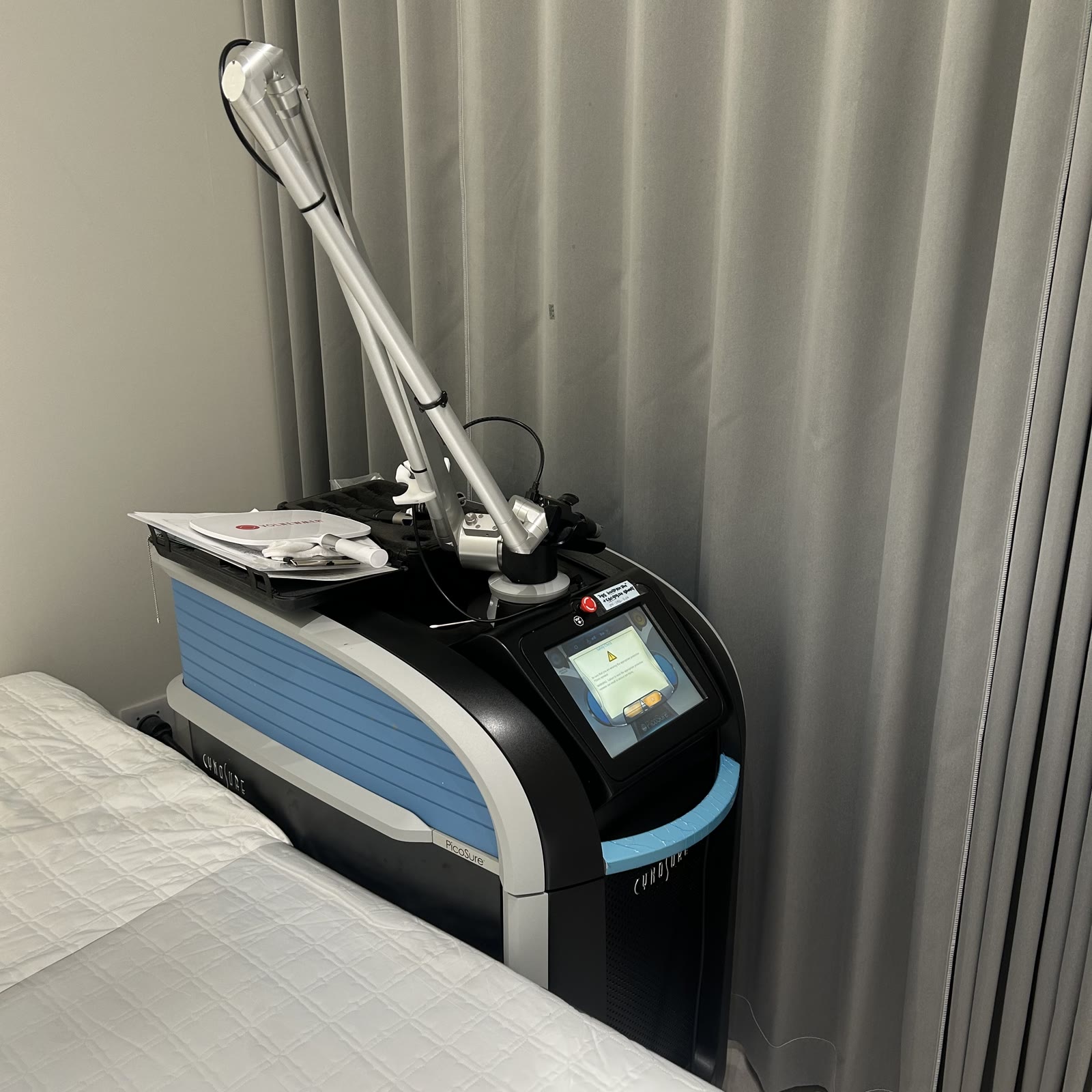
How PicoSure tattoo removal works and the treatment steps
How a picosecond laser breaks up ink
PicoSure, used for tattoo removal, is a picosecond laser that fires a 755 nm wavelength in extremely short pulses measured in trillionths of a second. It delivers an impact to ink particles and breaks them into small pieces before heat can spread to the surrounding area, so even on thin, sensitive skin like the eyebrows, sessions can be continued while adjusting the energy. For tattoos of differing depth and color, the wavelength and energy are reset to match the remaining ink color.
Eyeliner is treated with the laser while the eyes are covered with protective shields, and eyelashes may temporarily fall out. If the ink extends close to the mucous membrane on the inner side of the eyelid, there may be areas the laser cannot easily reach, so whether treatment is possible and its extent are checked first during the examination.
Treatment steps at our Suwon clinic
- Personalized Consultation
- Numbing Cream
- Treatment
- Finishing Care
The procedure takes about 30 minutes, and depending on the tattoo and individual differences, 5 to 10 or more sessions are done at 6- to 8-week intervals. Eyebrow tattoo removal comes in 1-session and 5-session options, and body tattoos are priced by coin size and business card size.
View PicoSure tattoo removal treatment information
Aftercare for eyebrow tattoo removal
- For 2 weeks after treatment, avoid heavy drinking, smoking, saunas and jjimjilbang, hot baths, and strenuous exercise to prevent inflammation.
- Do not pick at scabs and flaking skin with your hands or rub them with scrub products; let them fall off on their own.
- Do not apply eyebrow makeup to the treated area until the scabs have fallen off.
- When going outside, use sunscreen and a hat to reduce sun exposure on the treated area.
Right after treatment, redness and swelling appear, and a few days later small scabs and flaking skin come up. Between sessions, the next session is planned based on how much the tattoo has faded and the remaining ink color, and if you plan to redraw it after removal, the timing is set for after the skin has fully recovered.
Side effects and precautions of eyebrow tattoo removal
Pain, swelling, bruising, scabbing, and itching may occur, and temporary blisters may form and subside within a few days. Brow hairs or eyelashes may be singed or fall out during treatment, which is temporary.
Tattoo removal lasers can cause hyperpigmentation, thick scars (hypertrophic scars), or patches of lost pigment after treatment. If skin-tone or brown ink turns gray or black, the plan for later sessions is revised. Please tell us before treatment if you tend to form keloids, have recently tanned, often get lip blisters (herpes), or are pregnant. How quickly the tattoo fades and how much remains vary from person to person depending on the ink and skin condition.
If oozing or pus develops, pain and warmth keep getting worse even after several days, or your eyes hurt and your vision is uncomfortable, please contact the clinic right away.
What should be checked before eyebrow tattoo removal?
If any of these apply, start with an examination of the ink condition
- The color of my eyebrow tattoo has turned reddish or bluish.
- My brows have become thick from being redone several times.
- I want to fade my existing tattoo before getting a new one done.
- I also want to remove an eyeliner or lip tattoo.
If two or more of these apply, it is best to first check the ink color, depth, and how many layers have been added. Whether to proceed, and the method and scope of treatment, are decided together at your consultation after a physician examines you.
In short, the key to removing a semi-permanent eyebrow tattoo is to first check the ink color and any color-change reaction, then fade it gradually over several sessions with time to recover in between.
FAQ
Q. How many sessions does semi-permanent eyebrow tattoo removal take?
A. Sessions are spaced 6 to 8 weeks apart, and depending on the tattoo's depth and color and your skin condition, you can expect 5 to 10 or more sessions. A brow tattoo that was applied shallowly once may need fewer sessions, while one that was redone several times or has changed color will need more.
Q. Will my eyebrow hair fall out if I get laser tattoo removal?
A. Hairs may be temporarily singed or fall out during treatment, but the procedure does not destroy hair roots, so they usually grow back. Leave singed areas alone without rubbing or plucking, and we check the condition of your brow hair together at the consultation before treatment.
Q. My eyebrow tattoo turned gray after the laser.
A. When iron in brown or skin-toned ink reacts to the laser, it can turn gray or black. Because the wavelength and energy for the next session are reset according to the changed color, please let us know at your next visit if you notice a change.
Q. Can eyeliner tattoos also be removed?
A. Eyeliner tattoos are treated with the laser while the eye is covered by a protective shield. If the ink lies close to the mucous membrane on the inner eyelid, some areas may be hard for the laser to reach, so we first check feasibility and scope during the examination.
Q. Can I get a new eyebrow tattoo after removal?
A. You can once the treated skin has fully recovered, and the timing is decided based on how it has healed. If you plan to have your brows redone, let us know at the consultation, and we will set the number of sessions with the goal of fading rather than fully removing the tattoo.
Q. How can I find out the cost of eyebrow tattoo removal?
A. The cost depends on the tattoo's location, size, and number of sessions. We explain it after confirming at your consultation whether it is an eyebrow or body tattoo and how many sessions you will have, and you can also check the options by area on the treatment information page.
This content is provided as general treatment information and is not a substitute for diagnosis or treatment. Always consult a medical professional to decide whether and how to proceed with a treatment.