


How to Shrink Pores in Suwon: How Should Enlarged Pores Be Treated by Cause?
If the pores on your nose and cheeks stand out like dots every time you look in the mirror after washing your face, it is worth first checking why your pores look enlarged before looking for ways to shrink them. Pores are passages for hair and sebum, so their number does not decrease and they do not disappear; they look larger because of sebum, dead skin, loss of elasticity, and depressions left by acne.
That is why the way to shrink pores depends on the cause. For pores that open into round shapes due to excess sebum, the focus is on managing sebum and dead skin; for pores that stretch vertically with age, treatments that stimulate dermal elasticity; and for pores that became depressed after acne, treatments closer to scar treatment. At our Suwon clinic, we first look at the shape and location of the pores, the amount of sebum, and whether scars are present during the initial consultation and skin analysis, and then set up a week-by-week treatment plan.
This article walks through why pores enlarge, how to tell oily, sagging, and scarred pores apart, home care and how treatments work, the treatment process, recovery care, and side effects.
Key Points on How to Shrink Pores
- How enlarged pores look depends on which causes overlap among sebum, clogged dead skin, loss of elasticity, and acne depressions.
- Oily pores open into round shapes, sagging pores stretch vertically, and scarred pores are unevenly depressed.
- Home care is useful for keeping pores from getting larger, and for sagging or depressed pores, we also consider treatments that stimulate the dermis.
- Scabs, redness, and swelling after treatment mostly resolve within 3 to 7 days, and irritation should be avoided during that time.
Why do pores get larger?
In skin that produces a lot of sebum, sebum stays in the pores and pushes the passage outward so the opening widens into a round shape. When old dead skin then blocks the opening, the sebum oxidizes and looks dark, and dot-like pores stand out on the nose and inner cheeks.
With age, the collagen and elastic fibers that hold the pores in place decrease, so the pores sag downward and stretch into an elongated teardrop shape. This change tends to come sooner in skin with long-term sun exposure.
When acne inflammation damages the pore wall or pores are repeatedly squeezed by hand, the pore opening hardens in a depressed state. In this case, enlarged pores and small scars appear together, so sebum care alone makes only a small difference.
How can oily, sagging, and scarred pores be told apart?
| Category | Oily pores | Sagging pores | Scarred pores |
|---|---|---|---|
| Shape | Open in a round shape | Stretched vertically into an elongated shape | Unevenly depressed |
| Where they commonly appear | Forehead, nose, and inner cheeks | Outer cheeks and below the cheekbones | Cheeks that have had frequent acne |
| What appears alongside | Afternoon shine, blackheads, and small bumps | Less visible when the skin is pulled upward | Stand out even more with makeup |
| Main layer addressed | Sebum and dead skin inside the pores | Dermal collagen | Depressed dermal tissue |
The butterfly zone, which runs from under the eyes to the cheekbones, is where all three types tend to overlap. If one method alone seems slow to make a difference, first check whether several causes are mixed together.
How are pore-shrinking treatments performed?
Home Care and How Pore Treatments Work
At home, wash twice a day with a gentle cleanser, and on days you wear makeup, dissolve it first with cleansing oil and then finish with a cleanser. Exfoliating products containing salicylic acid (BHA) or AHA are used to dissolve dead skin at the pore openings; if they sting or cause redness, use them less often. Pulling out sebum with nose strips or squeezing by hand can damage the pore walls and widen the openings further, and opening and closing pores with hot and cold water only makes them less visible for a moment.
For oily pores, the foundation is care such as Aquapeel, which uses a solution and a device to dissolve and remove debris from inside the pores, along with lasers like Neobeam that deliver heat to the sebaceous glands. For sagging and scarred pores, the focus is on treatments that stimulate the dermis to promote collagen regeneration. Potenza delivers radiofrequency energy to the dermis at the desired depth through fine needles, and Fraxel-type lasers apply dense, fine heat stimulation to the skin to encourage regeneration. Both are generally planned as 3 to 5 sessions at 4-week intervals.
Treatment steps at our Suwon clinic
- Initial Consultation & Skin Assessment
- Weekly Treatment Planning
- Sessions are performed approximately once a week
- Mid-course Review & Plan Adjustments
- Final Evaluation & Maintenance Guidance
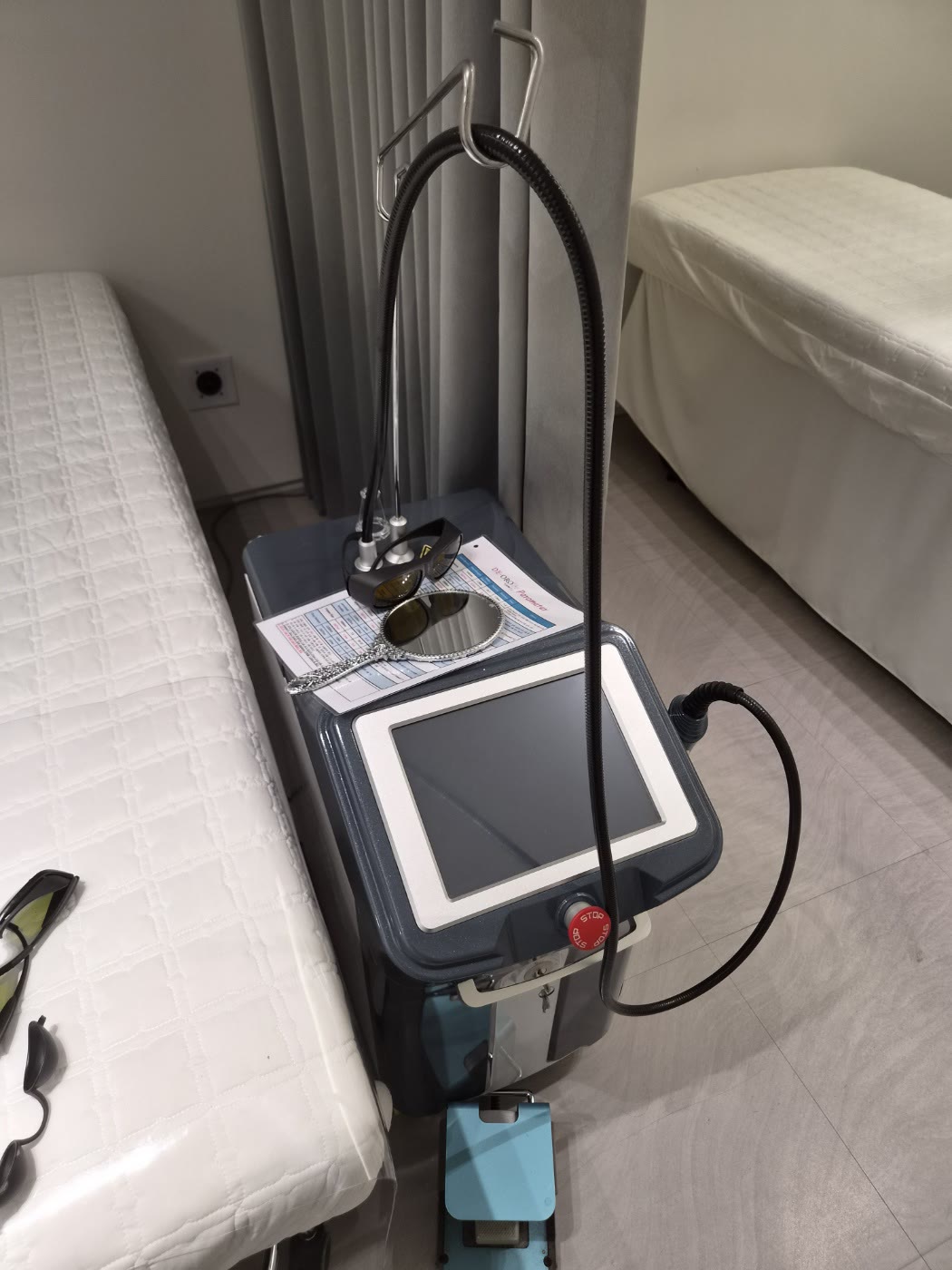
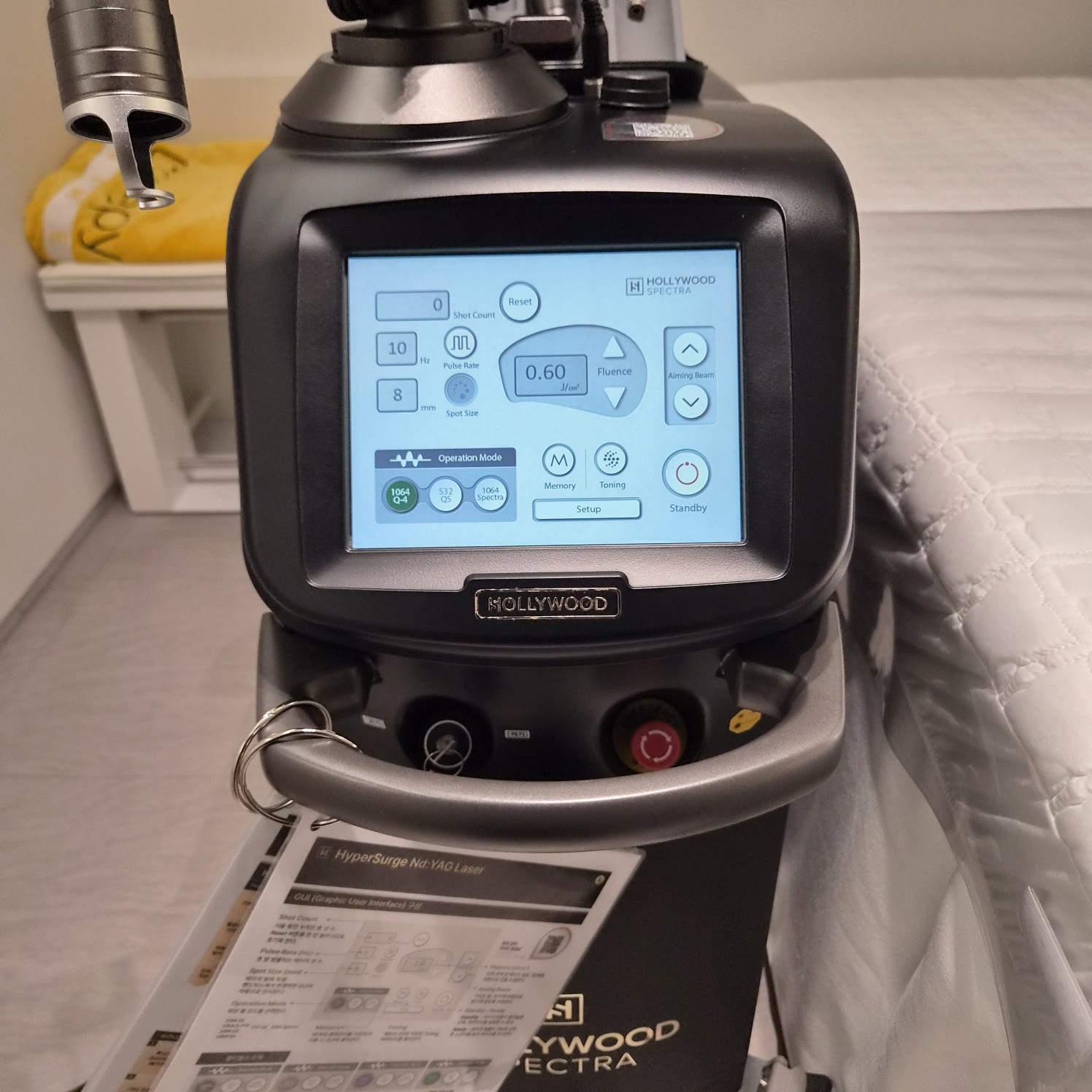
The 5-week pore package runs for a total of 5 weeks with sessions of 30 minutes to 1 hour each, and recovery time depends on that week's treatment plan. Week 1 includes Neobeam and Aquapeel, week 2 Potenza and Juvelook, week 3 Excel V tightening and Aquapeel, week 4 Hollywood Spectra and Aquapeel, and week 5 Diore Dual and cryo care. Because these treatments work by promoting collagen regeneration, we continue to observe changes for several weeks after the program ends. There is also a 5-session Hollywood Fraxel package that focuses only on the butterfly zone.
See 5-week pore package details
Recovery and Care After Pore Treatments
- Right after treatment, tiny scabs, redness, and swelling may appear, and most recover within 3–7 days.
- Apply repair cream and moisturizer regularly, and apply sunscreen when you go out.
- For about a week after treatment, avoid irritants such as saunas, alcohol, peels, and scrubs.
- Do not pick off scabs by hand; let them fall off on their own.
UV rays reduce elasticity around the pores, so it is best to apply sunscreen daily even after the recovery period. Because sebum builds up again, oily pores need continued exfoliation and sebum care even after the sessions are finished, and for sagging pores, the interval for maintenance care is decided in consultation based on skin condition.
Side Effects and Precautions for Pore Treatments
After Potenza and Fraxel, redness, warmth, swelling, and tingling can occur, and small scabs and marks may remain. Aquapeel and laser toning can also cause temporary redness or dryness, and the degree of reaction and recovery time vary from person to person.
Rarely, post-inflammatory hyperpigmentation, acne-like breakouts, or prolonged redness can occur. These risks increase if you get a lot of sun during recovery or apply irritating ingredients such as retinol, AHA, BHA, or vitamin C. If you are pregnant, are taking or have recently stopped isotretinoin, or are prone to keloids, please let us know before treatment.
If oozing occurs or pain continues and keeps getting worse, please contact the clinic.
What should be checked before pore-shrinking treatments?
If This Sounds Like You, Start with a Pore Type Assessment
- The pores on my nose and inner cheeks get shiny and open into round shapes every afternoon.
- The pores on my outer cheeks look stretched vertically into an elongated shape.
- The pores where I had acne are unevenly depressed.
- The pores in my butterfly zone have not changed after months of home care.
If two or more of these apply, it is best to first check your pore type and how many causes are mixed before choosing a treatment. Whether to have treatment, which method to use, and how wide an area to cover are decided together in consultation after the medical team examines you.
In short, the key to shrinking pores is to first separate the causes that make them look large, then continue cause-specific treatments and home care according to the planned sessions.
FAQ
Q. Can enlarged pores really shrink?
A. The number of pores does not decrease, but the goal is to make them less noticeable by addressing the sebum, dead skin, loss of elasticity, and depressions that make them look large. The degree of change varies from person to person depending on pore type, skin condition, and care method.
Q. How many pore-shrinking treatment sessions are needed?
A. Potenza and Fraxel-type treatments are generally planned as 3 to 5 sessions at 4-week intervals, and Aquapeel is continued every 1 to 2 weeks. For pores with mixed causes, we change the treatment each week, as in the 5-week pore package, and adjust the plan based on progress.
Q. Why don't butterfly zone pores shrink easily?
A. The butterfly zone is where sebum, loss of elasticity, and acne scars tend to overlap, so addressing only one cause can make progress feel slow. That is why we separate the causes and plan sessions that combine sebum care with dermal regeneration treatments.
Q. Can I wear makeup right after a pore treatment?
A. You can return to daily life right after Aquapeel. With Potenza and Fraxel, irritation should be minimized while scabs and redness remain, so please start wearing makeup from the time you are advised after treatment, depending on the type of treatment and your skin's reaction.
Q. Can blackheads on the nose also be managed with pore-shrinking methods?
A. Black dots on the nose are oxidized sebum inside the pores, so we continue care that dissolves and removes sebum and dead skin, such as Aquapeel, every 1 to 2 weeks. Because sebum builds up again, regular care is needed rather than a single session.
Q. How can I find out the cost of pore treatments?
A. The cost depends on the type of treatment, the area, and the number of sessions. We confirm during your consultation whether a single treatment suits your pore type or whether combining several treatments, as in the 5-week package, is better, and then explain the cost. You can also check the items on our treatment information page.
This content is provided as general treatment information and is not a substitute for diagnosis or treatment. Always consult a medical professional to decide whether and how to proceed with a treatment.