


Density vs. Thermage in Suwon: How Do These Two Radiofrequency Lifting Treatments Differ?
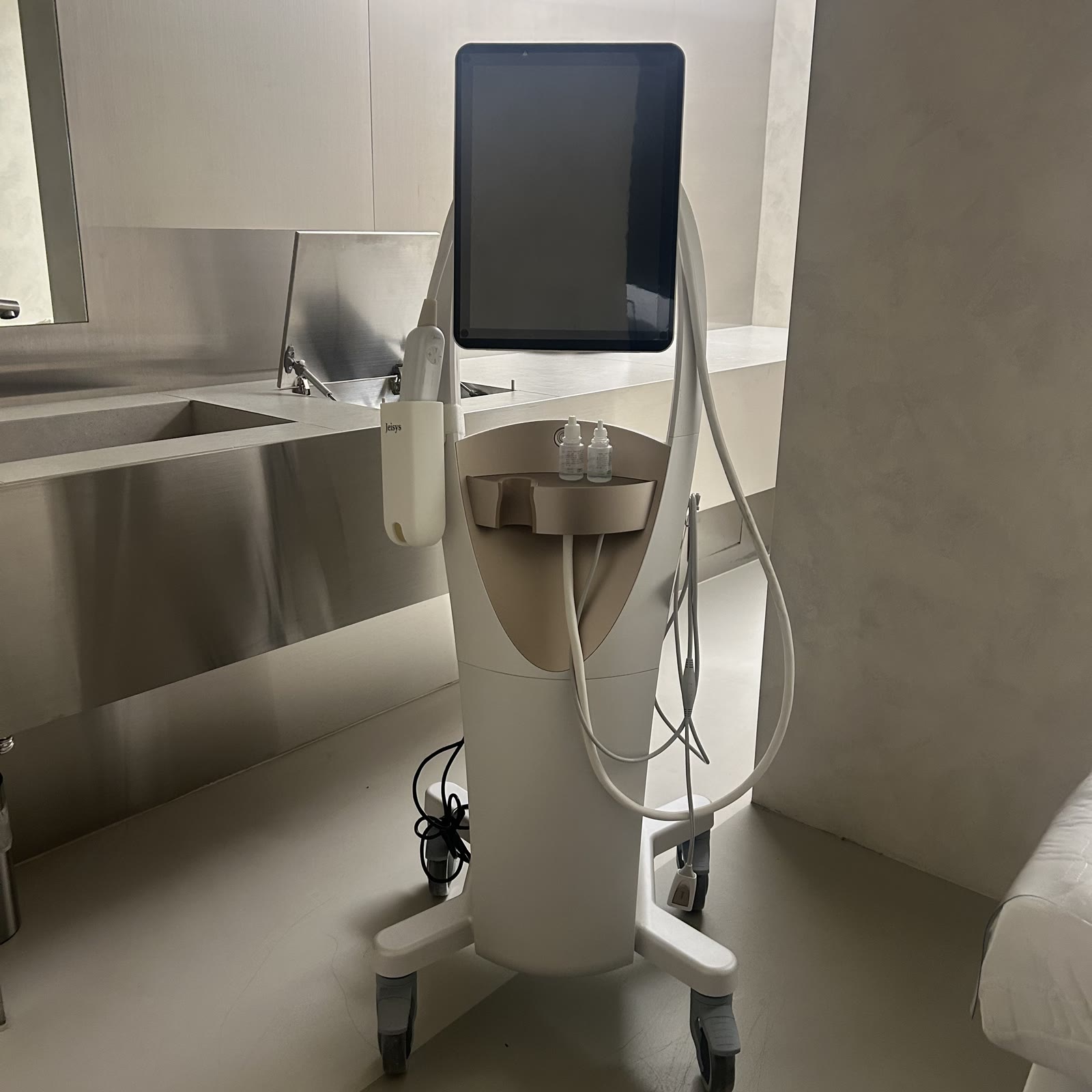
When your jawline starts to blur and your skin feels thinner, and you begin looking into radiofrequency lifting, the first thing you wonder about is the difference between Density and Thermage. Density and Thermage FLX are both lifting devices that use radiofrequency energy to deliver heat to the dermis, stimulating collagen to contract and be rebuilt.
The difference between Density and Thermage lies not in the size of the results but in how current flows from the tip, the types of tips used, anesthesia, and treatment intervals. At our Suwon clinic, we first look at which bothers you more, skin thickness, sagging, or fine lines, during the consultation, and then decide on the device, tip, and number of shots.
This article walks through how radiofrequency lifting works, how Density and Thermage differ in method, the treatment process and intervals, recovery and care, and side effects.
Key Points on Density vs. Thermage
- Both devices work by heating the dermis with radiofrequency to promote collagen contraction and regeneration.
- Thermage FLX uses monopolar radiofrequency, while Density uses both monopolar and bipolar depending on the tip.
- Density is generally recommended as 3 or more sessions at 1- to 2-month intervals, and Thermage FLX as maintenance treatment about once a year.
- The tightness right after treatment and the collagen changes over several months are assessed separately.
How do Density and Thermage radiofrequency lifting treatments work?
Radiofrequency uses the heat generated when skin tissue resists electrical current. While ultrasound focuses energy at single points to act on the deep fascia layer point by point, radiofrequency broadly heats the dermis beneath the area the tip touches.
When heat reaches the dermis, existing collagen fibers first contract, creating a feeling of tightness right after treatment, and then over several weeks to months, new collagen is formed and skin density and firmness gradually change. That is why the immediate tightness and the point at which actual changes appear are assessed separately.
To keep the epidermis from being damaged by heat, both devices have a cooling function in the tip, and the energy is adjusted to suit skin condition. During treatment, you will feel heat and cooling alternate.
Where does the difference between Density and Thermage lie?
Thermage FLX is a monopolar radiofrequency device. Current from a single tip passes through the body and exits through a return pad on the other side, delivering heat down to the deep layer of the dermis, with vibration and cooling functions working together.
Density uses 6.78MHz monopolar radiofrequency, and with the Hi tip, it also delivers bipolar radiofrequency in sequence within a single shot. With bipolar, current flows only between two electrodes inside the tip, so heat concentrates in the upper dermis, resulting in a setup that heats both the deep and shallow layers at once.
| Item | Density | Thermage FLX |
|---|---|---|
| Radiofrequency method | Monopolar; the Hi tip delivers monopolar and bipolar in sequence | Monopolar |
| Layer mainly reached by heat | Deep and shallow layers of the dermis | Deep dermis |
| Anesthesia step in the procedure | None | Numbing Cream (about 30–60 minutes) |
| Treatment interval | 3 or more sessions at 1- to 2-month intervals | Consider maintenance treatment about once a year |
The device, tip, and number of shots are set differently depending on whether the main concern is sagging, whether fine lines and skin texture are also a concern, or whether you have little facial fat and worry about hollowing. Which to choose is decided after examining your skin.
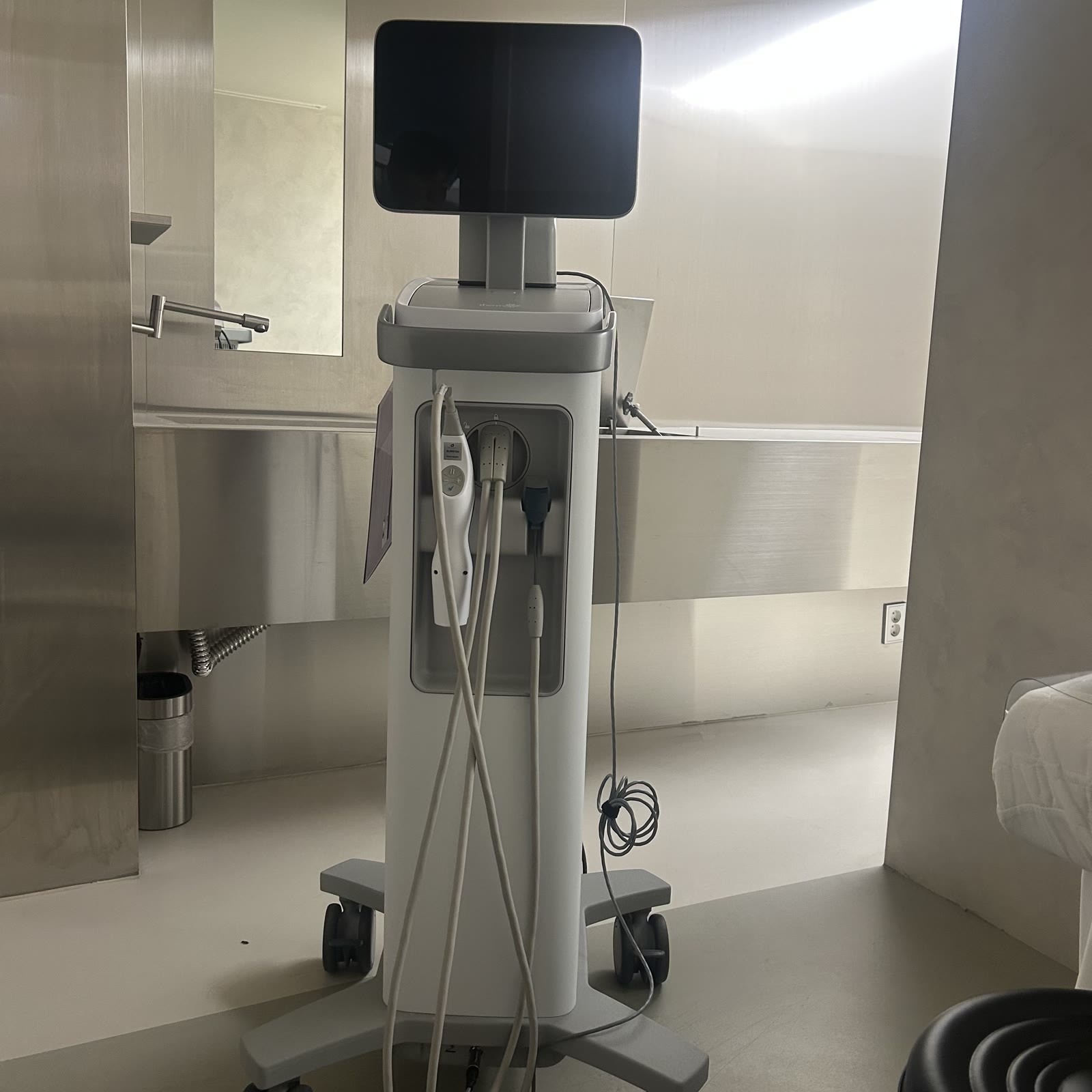
How are Density and Thermage performed?
How Tips and Shot Counts Are Decided
The number of shots is divided according to facial area, skin thickness, and the areas to be treated. In sagging areas like the jawline and cheeks, heat is concentrated in the deep layer, while in thin-skinned areas like around the eyes and forehead, the energy is lowered or applied mainly to the shallow layer. For Density, the distribution by area is decided between the Hi tip and the Alpha tip, and for Thermage FLX, within the total number of shots.
Treatment steps at our Suwon clinic
- Personalized Consultation
- Self-Cleansing
- Treatment
- Finishing Care
Density is performed in the order above, taking about 30 minutes in total, and you can return to daily life right after treatment. Depending on skin condition and individual differences, we generally recommend 3 or more sessions at 1- to 2-month intervals, and treatment options are divided into Hi 300, 600, and 1200 shots and Alpha 300 and 600 shots.
Thermage FLX proceeds in the order of a personalized consultation, photos (before treatment), topical anesthesia (about 30 to 60 minutes), treatment, and soothing care. Collagen changes are observed over 2 to 4 months, and for repeat treatments, maintenance about once a year is considered. Treatment options are divided into 300, 600, and 1200 shots.
View Density Treatment Information
View Thermage FLX procedure information
Recovery and Care After Density and Thermage
- After Density, you can wash your face and wear makeup right away, and wash with lukewarm water and a gentle cleanser for 3 days.
- After Density, avoid heavy drinking, saunas and Korean bathhouses, hot baths, and strenuous exercise for about 7 days.
- After Thermage FLX, avoid hot saunas, alcohol, and strenuous exercise on the day of treatment, and avoid irritating care such as peels and scrubs for a week.
- Both treatments tend to cause dryness, so apply moisturizer often and apply sunscreen when you go out.
The tightness right after treatment is a temporary contraction caused by heat, and collagen changes are checked gradually starting a few weeks later. It is hard to expect all sagging to be resolved in a single session, so with Density, we continue sessions while watching progress, and with Thermage FLX, we wait until the changes settle before planning next steps.
Side Effects and Precautions for Density and Thermage
Right after treatment, warmth, tingling, swelling, redness, a burning sensation, dryness, and itching may occur, and most of these soon subside. Areas close to bone, such as the jawbone and cheekbones, may feel sore when pressed for a few days, and the degree of reaction and recovery speed vary from person to person.
Rarely, blisters, burns, or an uneven, bumpy surface can occur. Because radiofrequency heat can also reach the fat layer, if you have little facial fat, please tell us in advance which areas you are worried about hollowing. If you have any medical conditions, medications, or previous treatments, please let us know during the consultation so we can reflect them in the plan. If you are pregnant or breastfeeding, or have an implanted electronic device such as a pacemaker or a metal implant, please let us know before treatment.
If redness or swelling lasts a long time, blisters form, or pain gets worse day by day, please contact the clinic right away.
What should be checked before Density or Thermage?
If This Sounds Like You, Start with a Skin Thickness Assessment
- My jawline has blurred and my cheeks feel like they have dropped.
- My skin has become thinner, and I am concerned about both fine lines and skin texture.
- I have little facial fat and am worried about hollowing.
- I am sensitive to heat and want to know about the anesthesia method.
If two or more of these apply, it is best to first check your skin thickness and the degree of sagging before choosing a device. Whether to have treatment, which method to use, and how wide an area to cover are decided together in consultation after the medical team examines you.
In short, Density and Thermage differ in the layer they deliver heat to and in their schedules, so the key is to first check your skin thickness and areas of concern and then choose the tip and number of shots accordingly.
FAQ
Q. Do Density and Thermage work on the same principle?
A. Both work on the same principle of using radiofrequency to deliver heat to the dermis and promote collagen contraction and regeneration. The difference is that Thermage FLX uses monopolar radiofrequency, while Density's Hi tip uses monopolar and bipolar in sequence within a single shot.
Q. How do I choose between the Density High Tip and Alpha Tip?
A. It is decided during the examination based on your skin thickness, sensitivity to heat, and the areas to be treated. The tip and number of shots vary depending on how sagging areas and thin-skinned areas are divided, so we check your areas of concern together during the consultation.
Q. Is the tight feeling right after Thermage the result?
A. The tightness right after treatment is a reaction in which existing collagen briefly contracts due to heat. The formation of new collagen is a process that unfolds over 2 to 4 months, so we compare with your pre-treatment appearance again at that point, and the degree of change varies from person to person.
Q. How often should I get Density and Thermage?
A. For Density, 3 or more sessions at 1- to 2-month intervals are considered one course, and for Thermage FLX, maintenance treatment about once a year is considered. The actual interval varies with age, skin condition, and lifestyle, and is decided after the examination.
Q. I have relatively little facial fat. Can I still get Density or Thermage?
A. Radiofrequency heat can also reach the fat layer, so if your cheeks are on the hollow side, the energy and distribution of shots need to be adjusted. If you tell us in the consultation which areas you are worried about hollowing, we will plan to avoid those spots or lower the intensity there.
Q. How can I find out the cost of Density and Thermage?
A. The cost depends on the device, tip, number of shots, and number of sessions. We check your facial area and the areas to be treated during the consultation and then explain the number of shots needed. You can also check the items for each treatment range on our treatment information page.
This content is provided as general treatment information and is not a substitute for diagnosis or treatment. Always consult a medical professional to decide whether and how to proceed with a treatment.