


Buccal fat lifting in Suwon: should fat or sagging be looked at first, and how is it addressed?
If the area below the cheekbones and beside the mouth bulges downward and blurs your jawline, and it bothers you, it is worth first checking whether there is a lot of buccal fat or whether the supporting structures have weakened. Buccal fat is a fat pad located deep in the skin from below the cheekbones to beside the mouth, and when the fascia and ligaments that held it in place loosen, it descends and looks heavy, like jowls.
Buccal fat lifting addresses different layers depending on the cause. If the fat is thick, we focus on radiofrequency or microwave treatments that warm the subcutaneous fat layer; if there is little fat but the tissue has loosened, we focus on ultrasound lifting that concentrates heat on the fascial layer; and if both are mixed, we divide the layers and plan them together. At our Suwon clinic, during consultation we first look at fat thickness, skin elasticity, and where the sagging began, then decide on the device and range.
In this article, we outline in order why buccal fat looks saggy, how to tell cheeks with a lot of fat from sagging cheeks, the treatment methods that differ by layer and the process, recovery care, and side effects.
Buccal fat: key points
- Buccal fat is tough fat located deep near the muscles, so its size does not change much even when you lose weight.
- If the area under the cheek stays thick even when lying down, it leans toward fat; if it smooths out when you lift the cheekbone area, it leans toward sagging.
- The fat layer is addressed with radiofrequency or microwave and the fascial layer with ultrasound, and if both causes are mixed, we divide the layers.
- Reducing fat too much can make the cheeks look hollow, so we first separate where to reduce and where to keep.
What is buccal fat, and why does it look saggy?
Facial fat divides into shallow fat just beneath the skin and deep fat between the muscles. Buccal fat is firm fat on the deep side, so unlike shallow fat that can be pinched from the outside, its size does not change much even when you lose weight through exercise or diet.
When you are young, firm fascia and dermis hold this fat in place. As collagen decreases with age and the fascia and ligaments loosen, the fat is pushed downward, creating bulging flesh beside the nasolabial folds and above the jawline, and from the side, the border of the jawline becomes blurred.
Even with the same cheek sagging, a face that naturally has a lot of fat and a face with little fat but loosened skin require different layers to be addressed. That is why the starting point of planning is to separate the cause of sagging before thinking about treatment names.
How do you tell buccal fat from cheek sagging?
If the area under the cheek stays thick even in a lying position, there tends to be a lot of fat. Conversely, if the bulging flesh smooths out when you gently lift the cheekbone area with your hand, it is closer to sagging caused by weakened support.
If the front of the cheek looks hollow but only the area beside the mouth looks heavy, both an area lacking fat and a sagging area are present. If the whole face is thin and the area below the cheekbones is already concave, fat-reducing treatments are chosen carefully with a narrowed range. In reality, faces with both causes mixed are common, so we assess the proportion in consultation.
Even when you come in for jawline lifting, the area addressed differs depending on whether the cause is buccal fat sagging or fat under the chin. If fat under the chin is the main issue, we look at the double-chin range; if the area under the cheek is heavy, we also look at the range extending from below the cheekbones to the jawline.
How is buccal fat lifting performed?
Treatment principles that differ by layer
Ultrasound concentrates energy at a single point to reach the desired depth, while radiofrequency and microwave warm a certain area broadly. The table below summarizes the layers each device mainly addresses.
| Method | Main layer addressed | Action | Device |
|---|---|---|---|
| Ultrasound | Fascial layer | Concentrates heat at a single point to contract tissue | Ulthera |
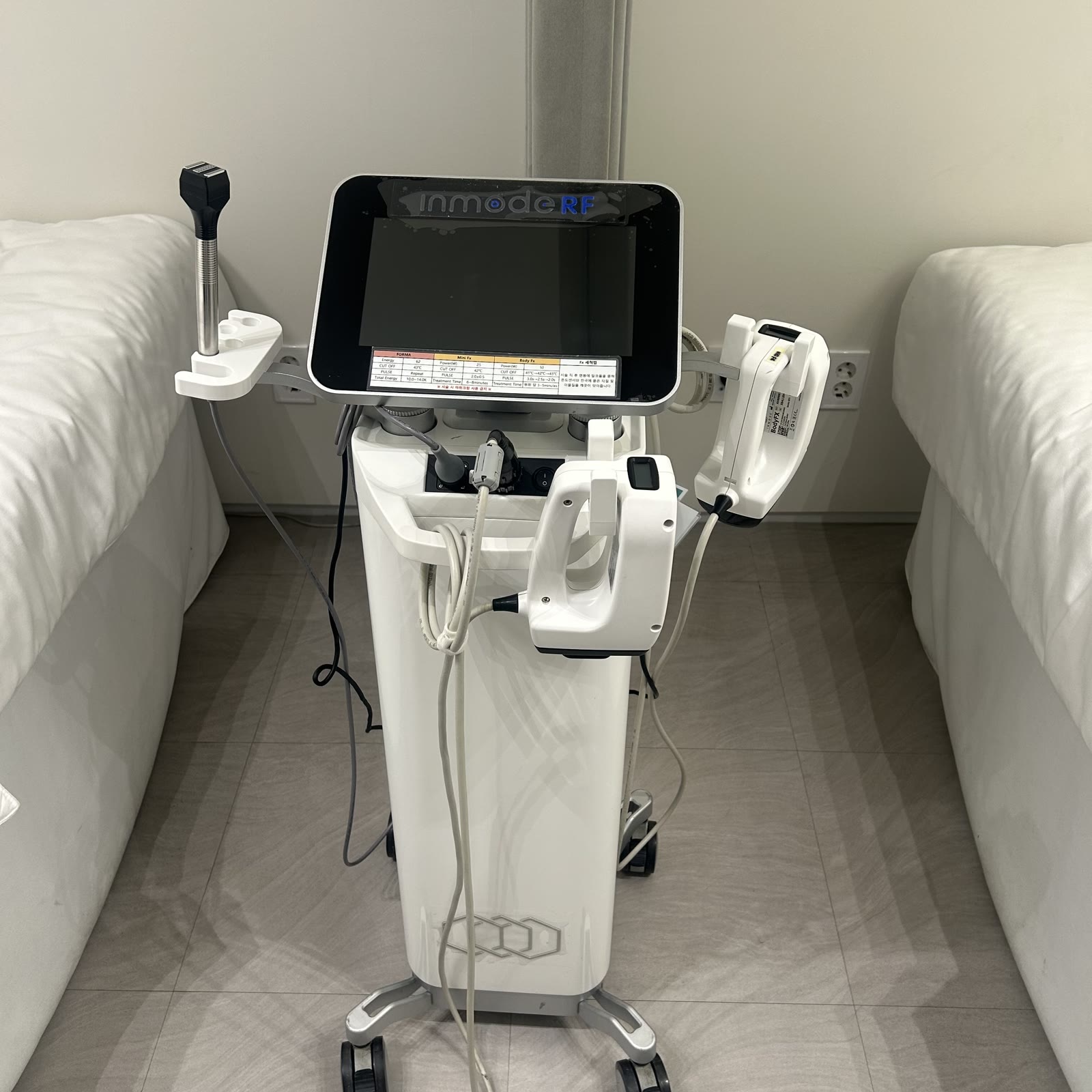
| Radiofrequency and high-voltage pulses | Subcutaneous fat layer | Warms the fat layer and helps reduce fat cells | InMode FX |
| Radiofrequency | Dermis | Warms the dermis to stimulate collagen production | InMode FORMA |
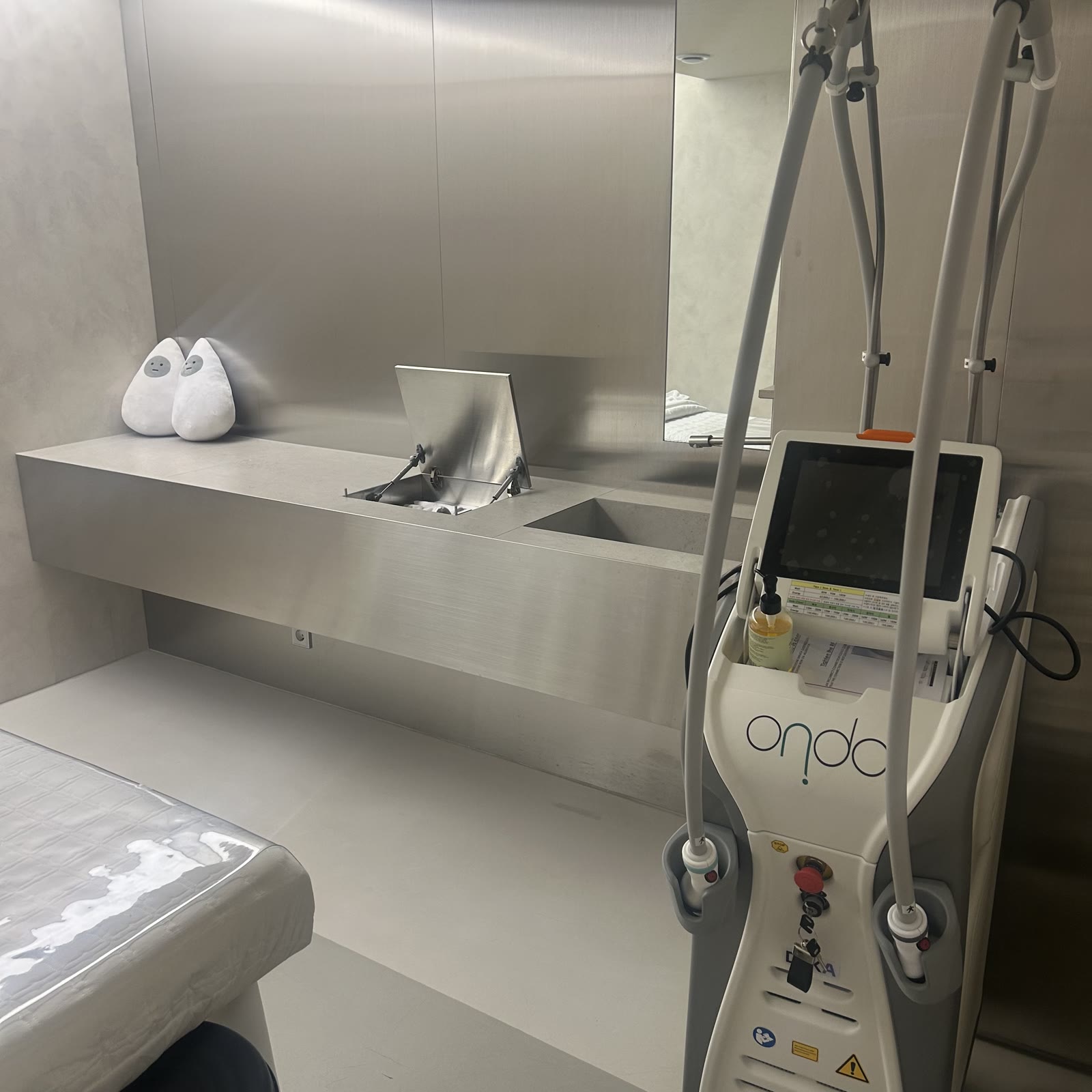
| Microwave | Dermis or subcutaneous fat layer | Chooses the layer to warm according to handpiece depth | ONDA |
Treatment steps at our Suwon clinic
- Personalized Consultation
- Self-Cleansing
- Treatment
- Finishing Care
The order above is based on InMode. InMode addresses the fat layer of the cheeks and double chin in FX mode and dermal elasticity in FORMA mode; the treatment takes about 30 minutes or less, and you can return to daily life right after. Depending on individual differences, we recommend at least 3 to 5 sessions at 2- to 3-week intervals as a guideline.
ONDA uses 2.45GHz microwaves, targeting the dermis with the 3mm handpiece and the subcutaneous fat layer with the 7mm handpiece, and because the handpiece cools the surface as it works, it is performed without anesthesia. The range is divided into a double chin and jawline package and a full-face package. If sagging is the main issue, we address the fascial layer with Ulthera, which takes about 1 hour after numbing cream.
View InMode Treatment Information
View ONDA treatment information
Recovery and care after buccal fat treatment
- You can wash your face and wear makeup right after the treatment; use a gentle cleanser.
- For 3 days after the treatment, wash your face with lukewarm water to reduce skin irritation.
- For about 7 days after the treatment, avoid heavy drinking, saunas and jjimjilbang, hot baths, and strenuous exercise.
- Skin that has been exposed to heat dries out easily, so apply moisturizer often and wear sunscreen when you go out.
Fat reduction and collagen changes progress over several weeks rather than right after the treatment. Keeping to the interval between sessions, we check together at the next visit how the thickness under the cheeks and the border of the jawline have changed, and decide again on the range and intensity for the next session.
Side effects and precautions for buccal fat lifting
Right after the treatment, heat, stinging, redness, mild swelling, dryness, and itching may appear, and they usually subside within a few days. After InMode, red or purple bruises may form and fade over several days, and the degree and duration of reactions vary from person to person.
Rarely, burns, blisters, or unevenness of the skin surface can occur, and after Ulthera, a white line phenomenon in which white line marks are visible on the skin may appear. If facial fat is naturally scarce and fat reduction is done strongly, the risk of the cheeks looking hollow increases, so areas with little fat are planned with lower intensity and range. If you recently had filler or threads, have a pacemaker or metal implant, or are pregnant, please let us know before the treatment.
If blisters form, the treated area turns white, or swelling and pain do not decrease but worsen after several days, please contact the clinic right away.
What should I check before buccal fat treatment?
If these apply to you, start by checking the cause of sagging
- The area below my cheekbones and beside my mouth bulges downward, blurring my jawline.
- Even after losing weight, the thickness under my cheeks has barely changed.
- When I lift the cheekbone area with my hand, the flesh beside my mouth smooths out.
- The front of my cheeks or my temples actually look hollow.
If two or more apply, before choosing a lifting treatment, it is best to first check whether fat or sagging is the main issue. Whether to proceed, the method, and the scope are decided together in consultation after the medical team examines you.
In short, the key with buccal fat is to first separate the proportion of fat and sagging, decide where to reduce and where to keep, and then choose a method suited to the layer.
FAQ
Q. Doesn't deep cheek fat go away with dieting?
A. Buccal fat is tough fat located deep down, so its size tends not to change much even when you lose weight. If sagging is also present, we look at the supporting fascial layer as well as the fat layer, and decide in consultation which layer to focus on.
Q. Can I get contouring injections for deep cheek fat?
A. For areas under the cheeks where shallow fat is thick, contour injections that help break down fat are sometimes used. If deep fat and sagging are the main issues, injections alone tend to be insufficient, so after an examination we discuss whether to also use an energy-based treatment.
Q. Won't reducing buccal fat make my cheeks look hollow?
A. If you have little facial fat and receive strong fat reduction, your cheeks may look hollow. That is why we first separate where to reduce and where to keep, and adjust the intensity and range separately for each area, such as below the cheekbones, the front of the cheeks, and the temples.
Q. When do the results of buccal fat lifting start to show?
A. You may feel tightness from the heat right after the treatment, but fat reduction and collagen changes appear over several weeks to several months. With Ulthera, changes are seen gradually over 1 to 2 months, and the degree and timing vary from person to person.
Q. Can I get lifting and fat reduction treatments on the same day?
A. There are packages in which devices that address different layers are received together on the same day. Depending on whether your skin is sensitive to heat or whether your schedule allows for swelling, they may be split up, so we decide the order and interval of devices together in consultation.
Q. How can I find out the cost of buccal fat lifting?
A. The cost depends on the device, treatment range, and number of sessions. We guide you after deciding in consultation whether to treat only the double chin and jawline or the full face, and you can also check the items by range on the treatment information page.
This content is provided as general treatment information and is not a substitute for diagnosis or treatment. Always consult a medical professional to decide whether and how to proceed with a treatment.