


Botox vs. filler in Suwon: what should you consider based on the cause of your wrinkles?

If forehead lines or nasolabial folds bother you and you are unsure whether to get Botox or filler, it is worth first checking what causes the wrinkles. Botox blocks the nerve signals to the muscle so that wrinkles that fold with facial expressions form less, while filler fills hollow areas with hyaluronic acid gel to reduce shadows and contours.
The difference between Botox and filler lies in what they act on. Wrinkles that appear only when you make expressions come from the muscle, so Botox is considered first, while areas that look hollow even at rest come from volume, so filler is considered first. At our Suwon clinic, we look at your wrinkles both when making expressions and at rest during consultation, check your previous treatment history and the change you want, and then decide on the procedure and product.
In this article, we go through how Botox and fillers work, how to tell which type your wrinkles are, the principle that distinguishes Korean-made and low-resistance Botox and the treatment process, recovery and care, side effects, and what to check before the procedure.
Key points on Botox vs. filler
- Botox reduces muscle strength, while filler adds volume to hollow areas.
- For wrinkles that appear only with expressions, Botox is considered first; for areas that are hollow even at rest, filler is considered first.
- According to the treatment guide, wrinkle Botox lasts 3 to 6 months and filler lasts 6 to 12 months.
- Hyaluronic acid filler can be dissolved with hyaluronidase, while with Botox you wait until the effect wears off.
How do Botox and fillers work?
Botulinum toxin, the ingredient in Botox, blocks the release of acetylcholine, which carries contraction signals from nerve endings to muscles. When the muscles that raise the forehead or frown between the brows lose strength, the skin above them folds less, and large muscles such as the masseter shrink in volume as they are used less.
Most fillers are made of hyaluronic acid, which holds on to surrounding water once in the skin to create volume. They fill empty spaces left by lost fat and bone, such as beside the nasolabial folds, hollows under the eyes, and the chin, and are gradually absorbed by the body over time.
Even though both are injections, what they do is nearly opposite, so if expression lines and hollowness are both present in one area, the two procedures may be planned separately.
Botox vs. filler: which type are my wrinkles?
| Category | Botox | Dermal Fillers |
|---|---|---|
| What is injected | Botulinum toxin | Hyaluronic acid gel |
| Where it works | Facial expression muscles and chewing muscles | Dermis and subcutaneous fat layer |
| What it does | Reduces muscle strength to lessen folding wrinkles and reduces muscle volume | Adds volume to hollow areas to fill in contours |
| Duration per the treatment guide | Wrinkle Botox: 3 to 6 months | 6–12 months |
| How to reverse it | Wait until the effect wears off | Can be dissolved with hyaluronidase |
If wrinkles appear on your forehead, between your brows, or around your eyes only when you make expressions in front of a mirror and smooth out when you relax, they are made by muscle. If the area beside the nasolabial folds or under the eyes is hollow and casts a shadow even at rest, volume has been lost there, and if a mark remains even when relaxed, as with long-standing frown lines, both methods are considered together. If the reason your facial line looks wide is muscle, Botox is considered, and if it is fat, injections that act on the fat layer, such as contour injections, are considered.
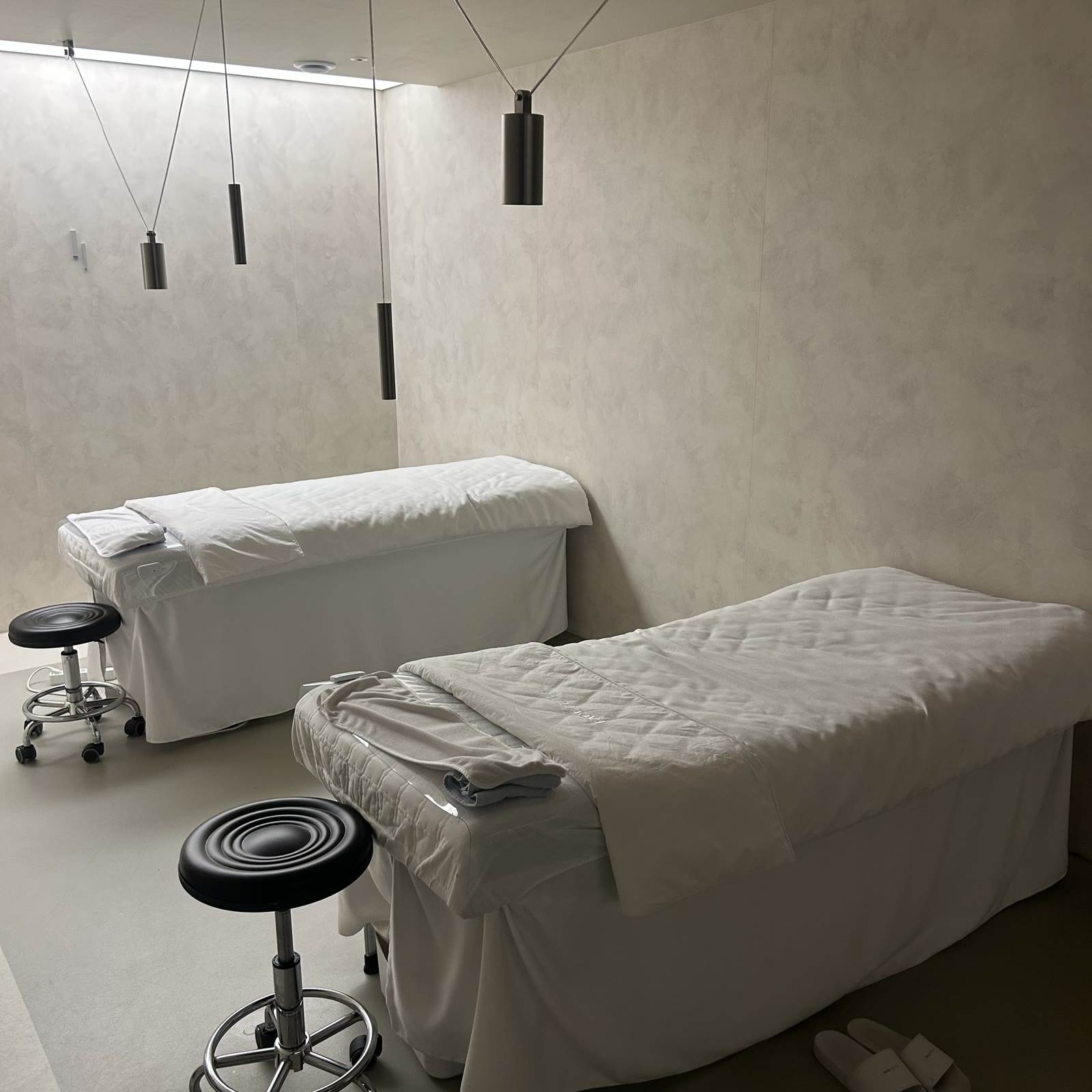
How are Botox and filler procedures performed?
How Korean-made, imported, and low-resistance Botox are distinguished
Depending on the manufacturer and purification method, Botox products differ in the amount of complexing proteins attached around the neurotoxin. These proteins can trigger the body to remember the drug as a foreign substance and form antibodies with repeated treatments, so products with the complexing proteins removed are called low-resistance products. Our Suwon clinic offers wrinkle, square jaw, and body Botox in Korean-made, Korean-made low-resistance, and German-made low-resistance products, and we choose the product based on the amount used at one time, the plan for repeat treatments, and previous reactions.
Treatment steps at our Suwon clinic
- Personalized Consultation
- Numbing Cream
- Design
- Disinfection
- Treatment
The order above is based on wrinkle Botox, which takes about 10 minutes, and you can return to daily life right after. Wrinkle Botox lasts an average of 2 to 3 months depending on how much you use your facial expressions and your lifestyle, so retreatment at intervals of 3 to 4 months is the standard. Filler proceeds in the order of personalized consultation, photos (before the procedure), numbing cream / local anesthesia, design, disinfection, the procedure, and photos (after the procedure), taking about 10 minutes, and we choose between Korean-made and imported products according to the area and the shape you want.
View Wrinkle Botox Procedure Information
See Belotero filler treatment details
Recovery and care after Botox and filler
- For both procedures, you can wash your face and wear makeup from 2 to 3 hours after the procedure.
- For 3 to 7 days after treatment, avoid heavy drinking, smoking, saunas and Korean bathhouses, hot baths, and strenuous exercise.
- After Botox, do not rub the treated area hard, and avoid intense massage or meridian massage for a month.
- For 2 to 3 weeks after filler, avoid anything that presses on the treated area, such as hats, sleeping face down, glasses, ultrasound and radiofrequency treatments, facial meridian massage, and dental treatment.
After filler, take the medication prescribed for the treated area consistently for 3 days, and remove the DuoDERM dressing 1 to 3 days later. How long filler lasts differs by area, so areas that move a lot, such as around the mouth, and areas that move less, such as the bridge of the nose, have separate times for follow-up.
Side effects and precautions for Botox and filler
For both procedures, bruising, swelling, and pain may occur at the injection site, and most ease within 1 to 2 weeks. After Botox, bumps from the drug ease within 2 to 3 hours and may last about 1 to 2 days depending on skin condition, and results and reactions vary from person to person.
Rarely, drooping eyelids, a change in eyebrow position, or asymmetric expressions may occur after Botox, and a foreign-body sensation or asymmetric shape may occur after filler. If filler blocks a blood vessel, skin necrosis can occur, and around the glabella and eyes there is a risk of vision loss. Please let us know before the procedure if you are pregnant or breastfeeding, have a neuromuscular disorder, have antibiotic allergies, or are taking any medication.
If pain gets worse after filler, the skin turns white or purplish, blisters form, or your vision becomes blurry, or if swallowing or breathing becomes difficult after Botox, please contact the clinic right away.
What should be checked before Botox or filler?
In cases like these, first check the cause of your wrinkles
- Wrinkles appear on my forehead, between my brows, or around my eyes only when I make expressions.
- Even at rest, the area beside my nasolabial folds or under my eyes is hollow and casts a shadow.
- I feel that Botox has been lasting a shorter time than before.
- I can still feel filler that was injected before.
If two or more apply, it is best to check whether the wrinkles come from muscle or volume loss and whether previous treatments are having an effect before choosing a procedure. Whether to have the procedure, the method, and the range are decided together in consultation after the medical team examines you.
In short, the difference between Botox and filler lies in the cause of the wrinkles, so the key is first distinguishing whether they are expression lines or volume loss.
FAQ
Q. Can I get Botox and fillers on the same day?
A. You can receive both on the same day, and in areas with both expression lines and hollowness, the two procedures may be planned separately. If it is the same area, the injection order and interval are set in consultation so that the filler shape settles, and after the procedure you follow the precautions for both.
Q. How do mouth corner Botox and mouth corner filler differ?
A. Botox for the corners of the mouth reduces the strength of the muscle that pulls the corners down, while filler for the corners of the mouth fills the hollow beside the corners to reduce the shadow that makes them look droopy. If both muscle strength and hollowness are present, the two may be combined.
Q. What is the difference between contour injections and Botox?
A. Botox reduces muscle strength and volume, while contour injections act on the fat layer with a drug that reduces fat. Which procedure is considered first depends on whether the reason your face looks wide is muscle or fat, so we start by identifying the cause at consultation.
Q. When do the results of wrinkle Botox start to show?
A. The feeling of the expression muscles losing strength begins gradually a few days after the procedure, and wrinkle Botox lasts an average of 2 to 3 months. To maintain the change, retreatment at intervals of 3 to 4 months is the standard, and the degree depends on how much you use your expressions.
Q. What is the difference between Korean-made and imported Botox?
A. Depending on the manufacturer and purification method, the amount of complexing proteins attached around the neurotoxin differs, and products with these removed are called low-resistance products. We choose the product at consultation based on the number and interval of repeat treatments and the amount used at one time.
Q. How can I check the cost of Botox and filler?
A. The cost depends on the number of Botox areas and the product, and on the type and volume of filler. We explain after confirming the cause of your wrinkles and the treatment range at consultation, and you can also see the items by area and product on the treatment guide page.
This content is provided as general treatment information and is not a substitute for diagnosis or treatment. Always consult a medical professional to decide whether and how to proceed with a treatment.