


Causes of Chin Acne in Suwon: Why Does Acne on the Forehead and Back Differ by Location?
If large, painful pimples keep appearing in the same spots only on your chin and around your mouth, it is worth first looking for the causes of chin acne in your daily life. Acne is a condition in which a lot of sebum is produced and the pore openings become clogged with dead skin, causing inflammation inside, and this mechanism is the same anywhere on the face and body.
What differs by area is what sets off that mechanism. Typical causes of chin acne are hormonal changes, the habit of resting your chin on your hand, and friction from masks; for the forehead, hair and hair products are common triggers; and for the back and chest, sweat and friction from clothing. At our Suwon clinic, we first look at where the acne clusters, its size, and when it gets worse, such as with your menstrual cycle or exercise, during the consultation, and then decide on the treatment method.
This article walks through the causes of acne by area, how to tell acne from folliculitis, how sebaceous gland lasers work and the treatment process, recovery and recurrence management, and side effects.
Key Points on the Causes of Chin Acne
- The chin and the area around the mouth have clusters of sebaceous glands that respond first to hormonal changes, so deep inflammation tends to recur in the same spots.
- Common triggers are hair product residue for the forehead, pillows and phones for the cheeks, and sweat and clothing friction for the back and chest.
- Red bumps on the buttocks and thighs are often folliculitis rather than acne, so they are distinguished through an examination.
- Sebaceous gland laser sessions are spaced 2 weeks apart, and reducing the area-specific triggers at the same time helps reduce recurrence.
What causes chin acne?
Adult acne often clusters on the chin, around the mouth, and along the jawline. When hormones fluctuate before or after your period, or with stress or lack of sleep, the sebaceous glands in this area respond first, and large, painful pustular acne recurs in the same spots. Resting your chin on your hand, friction from masks and phones, and the habit of squeezing pimples by hand also add to the cause.
Other areas of the face have their own triggers as well. The forehead has many sebaceous glands and is constantly touched by bangs, so when hair oil, wax, or conditioner residue gets on it, small, dense whitehead-like bumps appear along the hairline. On the cheeks, the hygiene of items that touch the skin directly, such as pillowcases, phone screens, and makeup tools, has an effect, and the neck is where friction from shirt collars and shaving irritation overlap.
There is a widely shared idea that the location of acne on the face reveals the condition of internal organs, but in an examination we look at causes that can actually be confirmed, such as the distribution of sebaceous glands, hormones, friction, and cosmetics.
How can back and chest acne be told apart from folliculitis?
| Area | Common triggers | What to distinguish it from |
|---|---|---|
| Back and chest | Sweat-soaked clothing, friction from bag straps and bra bands, and shampoo and conditioner left on the back | Fungal folliculitis, in which itchy red bumps of uniform size appear |
| Buttocks and thighs | Sitting for long periods and friction from tight clothing | Folliculitis caused by bacteria entering the hair follicles |
| Neck and jawline | Shaving irritation and friction from shirt collars | Folliculitis that appears after shaving |
The back and chest have as many sebaceous glands as the face and sweat a lot, so inflammatory acne tends to spread widely. In contrast, the buttocks and thighs have few sebaceous glands, so even if bumps look like acne, they are often folliculitis or friction irritation, and folliculitis caused by fungi requires medication other than acne medication. Even similar red bumps call for different medications depending on the cause, so if they appear in several areas at once, each area is checked separately.
How is chin acne treated?
How Sebaceous Gland Lasers Work
Facial acne is treated with a combination of extraction, anti-inflammatory injections, topical and oral medications, and lasers that act on the sebaceous glands, depending on the stage. Neobeam is a laser that delivers 1450nm-wavelength energy to the sebaceous glands and works toward reducing excessive sebum production. It has an acne mode for advanced acne and a toning mode for overall sebum management. It is also an option that can be considered when oral acne medication is difficult to use.
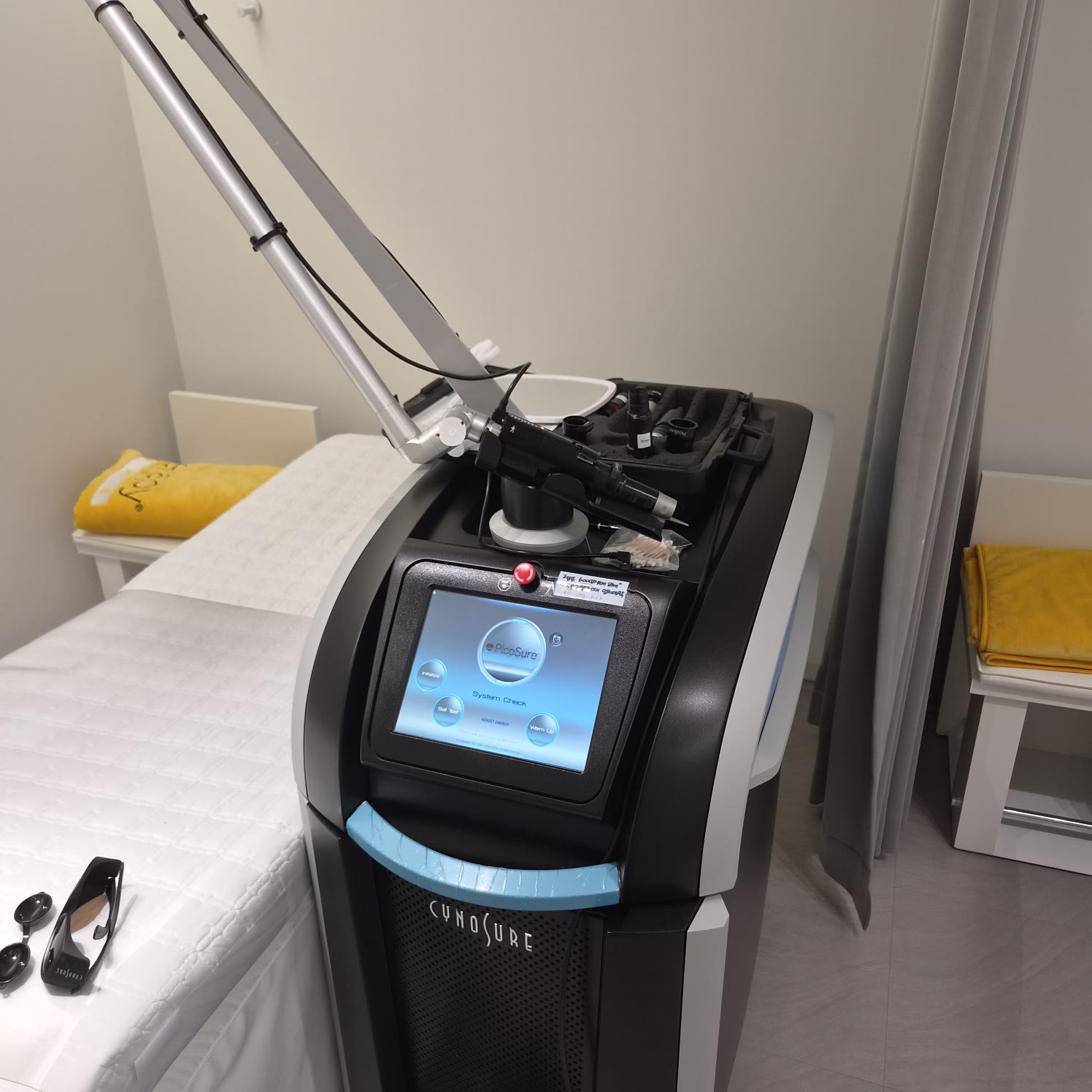
Because the back and chest cover a large area, the foundation is topical and oral medication, exfoliation care, and lifestyle adjustments. Large, swollen lesions are calmed with anti-inflammatory injections, and brown marks left after inflammation subsides are treated separately with lasers that act on pigment, such as PicoSure toning. The back and chest are treated with full toning, and smaller areas such as the elbows and the backs of the knees with partial toning.
Treatment steps at our Suwon clinic
- Personalized Consultation
- Self-Cleansing
- Treatment
- Finishing Care
Neobeam takes about 5 to 10 minutes without anesthesia, and you can return to daily life right after treatment. Because results vary with sebum production and skin condition, sessions are generally planned as at least 5 or more at 2-week intervals. Plans that combine extraction and anti-inflammatory injections (TA) come in 1, 3, and 5 sessions.
See Neobeam (acne) treatment details
Recovery and Recurrence Management After Chin Acne Treatment
- You can wash your face and wear makeup right after treatment.
- For 3–7 days after treatment, avoid heavy drinking, smoking, saunas and jjimjilbang, hot baths, and strenuous exercise to prevent inflammation.
- There may be slight redness and a burning sensation, but these soon ease.
- Since dryness may occur, apply moisturizer often, and apply sunscreen when going out.
- Avoid scrubs and peeling treatments for about a week.
To reduce recurrence, the triggers for each area need to be reduced as well. Cut back on resting your chin on your hand and squeezing pimples, and keep pillowcases, towels, phone screens, and masks clean. Keep your bangs off your forehead, apply hair products mainly to the ends of your hair, and when showering, wash your hair first and your body afterward to rinse off shampoo left on your back. It is best to wash right after exercise and change out of sweaty clothes.
Side Effects and Precautions for Acne Lasers
After laser treatment and extraction, redness, warmth, dryness, and tingling may occur, and most of these soon subside. Reactions and recovery speed vary from person to person.
Red marks and brown pigment may remain where inflammation has subsided, and on the back and chest, pigment tends to last a long time due to sweat and friction even when covered by clothing. Areas that received anti-inflammatory injections may rarely look slightly sunken, and adding irritation with scrubs or peels during recovery can prolong redness. If you are pregnant, planning a pregnancy, or taking medication that makes you sensitive to light, please let us know before treatment.
If pus and pain keep getting worse after treatment, or if redness and warmth spread widely, do not touch the area and please contact the clinic.
What should be checked before treating chin acne?
If This Sounds Like You, Start by Checking the Causes for Each Area
- Large, painful pimples appear in the same spots on my chin and around my mouth before or after every period.
- Small, dense whitehead-like bumps form along my hairline.
- Acne on my back and chest spreads widely after exercise or in summer.
- Itchy red bumps of uniform size appear on my buttocks or chest.
If two or more of these apply, it is best to first check whether it is acne or folliculitis and which triggers overlap in each area before deciding on a laser. Whether to have treatment, which method to use, and how wide an area to cover are decided together in consultation after the medical team examines you.
In short, the key with chin acne is to combine sebaceous gland treatment with ongoing care that reduces area-specific triggers such as hormones, habits, and friction.
FAQ
Q. Why does chin acne keep appearing in the same spot?
A. The chin and the area around the mouth have clusters of sebaceous glands that respond first to hormonal changes, so when your period or stress comes into play, large, painful pimples tend to recur in the same spots. Cutting back on resting your chin on your hand and on mask friction also helps reduce recurrence.
Q. Can forehead acne be caused by hair products?
A. If small bumps are dense along the hairline, hair oil, wax, or conditioner residue may be the cause. Switching products or applying them only to the ends of your hair and watching for a few weeks helps identify the cause.
Q. Is back acne treated differently from chin acne?
A. The mechanism is the same, but because the area is large, the foundation is topical and oral medication and lifestyle adjustments. Large, swollen lesions are calmed with anti-inflammatory injections, and remaining brown marks are managed separately with lasers that cover wide areas, such as PicoSure full toning.
Q. Should buttock acne be treated as acne too?
A. The buttocks have few sebaceous glands, so bumps there are more often folliculitis or friction irritation than acne. The medication used differs depending on whether the cause is bacteria or fungi, so we first confirm what kind of lesion it is through an examination before starting acne treatment.
Q. How many laser sessions are needed for chin acne?
A. Neobeam is generally planned as at least 5 or more sessions at 2-week intervals, depending on sebum production and skin condition. Whether to combine extraction and anti-inflammatory injections, or to change the plan partway through, is decided in consultation based on progress.
Q. How can I find out the cost of chin acne treatment?
A. The cost depends on the treatment plan and number of sessions. We confirm during your consultation whether you want the laser alone, combined with extraction and anti-inflammatory injections, or with toning for marks on the body, and then explain the cost. You can also check the items on our treatment information page.
This content is provided as general treatment information and is not a substitute for diagnosis or treatment. Always consult a medical professional to decide whether and how to proceed with a treatment.